When the ideological spectrum bends so far that its terminal ends snap together, the sound is unmistakable. It echoes the quiet panic of a political class waking up to the realization that the infrastructure of human cognition is being privatized.
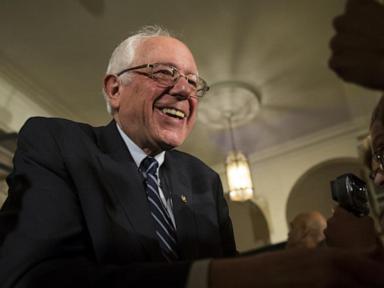
At the recent Pro-Human Assembly in Washington, an unusual alignment took place. Vermont Senator Bernie Sanders and populist strategist Steve Bannon found themselves sharing common ground on artificial intelligence. This is not merely a quirk of modern media scheduling. It is a symptom of a deeper, systemic terror gripping both the populist left and the nationalist right. They recognize that the concentration of algorithmic power in the hands of a few tech conglomerates poses an existential threat to democratic self-governance.
The primary driver behind this strange convergence is the realization that current machine learning trajectories are bypassing human agency entirely. When tech monopolies dictate the architecture of information, labor, and communication, national sovereignty becomes an empty phrase. Sanders approaches this from the angle of corporate accountability and labor displacement, warning that unchecked automation will widen economic inequality to irreversible extremes. Bannon frames the danger through the lens of civilizational competition and state control, arguing that decentralized tech lords are hollowing out traditional structures of authority. Despite their divergent foundational philosophies, both figures arrive at the exact same conclusion. The unchecked sprint toward superintelligence must face hard public intervention.
Look closely at the mechanics of this alignment and a stark reality emerges. Silicon Valley has long operated under the libertarian assumption that code is law and disruption is inherently virtuous. For decades, Washington functioned as a permissive bystander, content to let venture capitalists write the rules of the road. That tolerance is fracturing. The debate is no longer about privacy settings or antitrust fines. It is about whether human beings retain the ultimate veto over decisions affecting societal survival.
Consider the geopolitical dimension, which remains the sharpest point of divergence between these unexpected allies. Bannon advocates for a rigid technological nationalism, pushing for severe restrictions on talent and chip exchanges with geopolitical rivals like China. He views the race for artificial intelligence through a zero-sum lens reminiscent of Cold War competition. Sanders, conversely, leans toward international treaties and cooperative pauses, emphasizing that a runaway technological arms race threatens the global working class regardless of national borders.
Yet, beneath these strategic disagreements lies an acute shared diagnosis. The architects of large-scale models are transforming public squares into proprietary enclosures. Citizens are no longer participants in a republic; they are data sources for recursive optimization loops. When algorithms curate news, determine creditworthiness, and filter political discourse, the traditional mechanisms of democracy atrophy.
The political establishment is scrambling to catch up to a reality it failed to regulate during its infancy. Congressional voices from both sides of the aisle are beginning to question whether executive branch agencies or corporate boards should hold absolute sway over technological deployment. The concentration of capital required to train frontier models ensures that only a handful of corporate entities can play the game. That financial centralization translates directly into political capture.
What makes this cross-ideological friction compelling is its refusal to fit neatly into partisan boxes. Mainstream technocrats often dismiss safety concerns as alarmism or Luddite obstructionism. Yet the warnings coming from the fringes suggest that the stakes transcend normal legislative squabbling. If the foundational systems of intelligence and communication are surrendered to private monopolies, the form of government left behind will be a managed technocracy in name only.
The convergence of disparate political movements around technological oversight signals the end of the Silicon Valley honeymoon. The question dominating the horizon is not whether artificial intelligence will advance, but who retains the authority to pull the emergency brake when the trajectory points toward a cliff.
Bernie Sanders and Steve Bannon call for more AI regulation
This video provides additional context on the surprising alignment between Bernie Sanders and Steve Bannon regarding the tightening of artificial intelligence regulations.