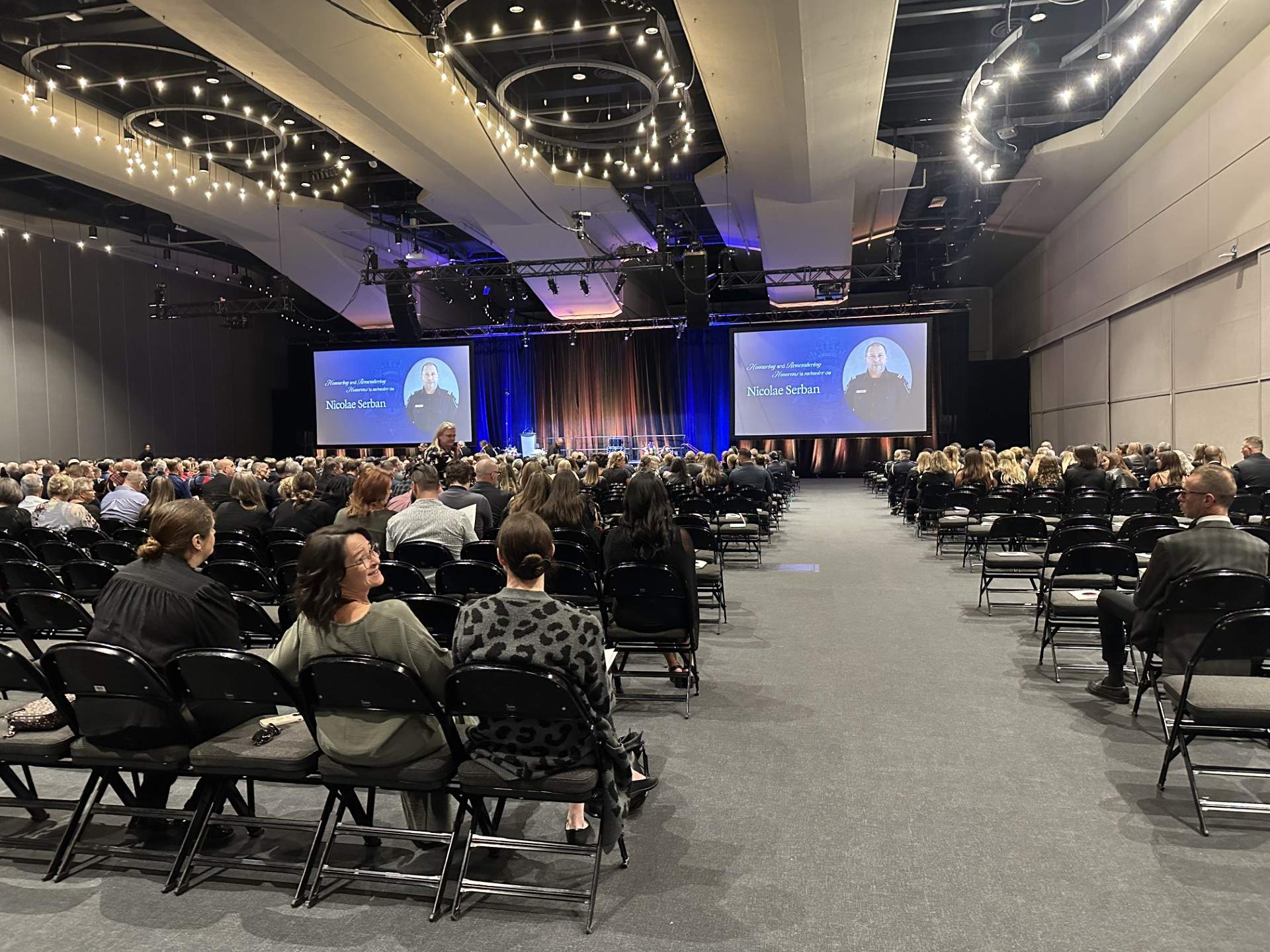
The Edmonton Convention Centre was quiet in a way that heavy rooms often are, filled with the collective grief of hundreds who gathered to remember 57-year-old correctional officer Nicolae Serban. A sea of dark uniforms bore witness to a man described by his institution's warden as a steady, joyful presence who never carried a bad mood into the cellblocks of the Edmonton Institution for Women. Yet behind the regimental brass, the polished boots, and the slow march of pipers lies an unexamined reality about the hidden dangers correctional staff face far beyond the razor wire. Serban and his young colleague, 25-year-old Ramandeep Kaur Maan, lost their lives in a violent highway collision during a routine inmate transport duty.
Public attention typically fixes on dramatic prison incidents, cell riots, or legislative policy debates. Routine transit operations remain invisible until a catastrophe tears a hole through families and institutions. When transport vans leave the security perimeter, officers step out of controlled environments and into the unpredictable chaos of public highways. They manage high-stakes security logistics inside standard vehicles, navigating heavy traffic, adverse weather, and long-distance hauls with minimal structural protection.
The Logistics of Vulnerability
Every single day, correctional systems across North America quietly execute thousands of movements. Inmates require transport for medical treatments, court appearances, administrative transfers, and institutional evaluations. These operations demand absolute vigilance from small teams of officers who act as drivers, security guards, and crisis negotiators all at once.
The mechanics of transport create an inherently high-risk environment. Officers must secure individuals within confined spaces while maintaining awareness of external threats. Communication dead zones on rural highways often isolate transport crews from immediate backup. When a vehicle failure or collision occurs at highway speeds, the safety margins evaporate in milliseconds.
Institution administrators face a constant balancing act. Budgets remain tight, staffing shortages strain everyday operations, and institutional mandates require constant movement of persons in custody. Officers frequently work extended shifts or absorb overtime to cover transport assignments, pushing fatigue levels past safe thresholds. Exhaustion behind the wheel of a heavy transport vehicle is an accident multiplier that correctional agencies have historically struggled to address.
Beyond the Uniform
The public face of a correctional officer is often reduced to a steel gate and a set of keys. Colleagues and loved ones who filled the convention hall painted a vastly different portrait of Nicolae Serban. He was a man who brought warmth into a facility designed to separate and punish, organizing sports nights, sharing his love for tennis and hockey, and earning the genuine respect of both staff and the women serving sentences inside.
When a life like Serban's is cut short on a transit run, the ripple effects expose the fragility of the human infrastructure holding the corrections system together. Inmates at the Edmonton facility voiced their own sorrow, proving that effective correctional work relies heavily on human connection and mutual respect rather than mere physical containment. Officers like Serban bridge the gap between institutional isolation and rehabilitation. Losing them breaks trust networks that take decades to build.
Systemic Blind Spots
Public mourning provides a temporary window into a profession that society prefers to keep out of sight until tragedy strikes. Regimental funerals offer solemn tribute, yet they rarely trigger systemic overhauls of the hazards that killed the officers in the first place. Transport protocols require rigorous re-evaluation, from vehicle safety specifications to staffing formulas that account for officer fatigue.
If correctional services expect staff to manage dangerous external transits safely, agencies must invest heavily in modern transport infrastructure, dedicated security escorts when necessary, and strict caps on consecutive operational hours. Relying on the extraordinary dedication of workers to compensate for ordinary systemic deficiencies is a failing strategy.
The flag-draped caskets inside the convention hall have been lowered, and the bagpipes have faded into silence. What remains is a stark choice for institutional leaders. They can return to business as usual until the next highway tragedy forces another round of public grief, or they can confront the hidden risks of transport duty and build an operational framework that truly respects the lives wearing the uniform.