Salt gets into everything after week three. It cakes on the eyelashes, rots the leather of your boots, and turns the skin on your knuckles into a map of dry, stinging cracks. By month four, the ocean ceases to be a body of water. It becomes a persistent, gray ceiling and a floor that refuses to stay still.
Consider a hypothetical sailor named Marcus, nineteen years old, whose entire world for six and a half months has been the low-frequency hum of a nuclear reactor, the metallic tang of recycled air, and the rhythmic, stomach-churning roll of a steel hull cutting through the Pacific. When you spend two hundred days staring at the same bulkheads, sharing a mess hall with five thousand other people whose sweat smells like burnt coffee and damp wool, your brain begins to fracture under the weight of its own isolation. You do not just want to touch land. You want land to swallow you. You want a sensory explosion. You want noise, color, heat, and a face that does not belong to a tired nineteen-year-old from Ohio or a twenty-five-year-old petty officer from San Diego.
Then the gray horizon finally breaks. A coastline emerges, smeared in tropical humidity and the sweet, rotting scent of mangrove and street food. It is Thailand.
To the command staff, this arrival is a masterclass in logistics. Five thousand sailors spill off the gray behemoth of an aircraft carrier and into a coastal tourist haven, bringing with them pockets heavy with hazard pay and months of accumulated unspent wages. The local economy braces for the impact. Convenience stores stock extra bottled water and energy drinks. Taxis line the port in rows that stretch toward the misty hills.
But beneath the surface of this vibrant port call lies an invisible, high-stakes collision between desperate human biology and geopolitical optics.
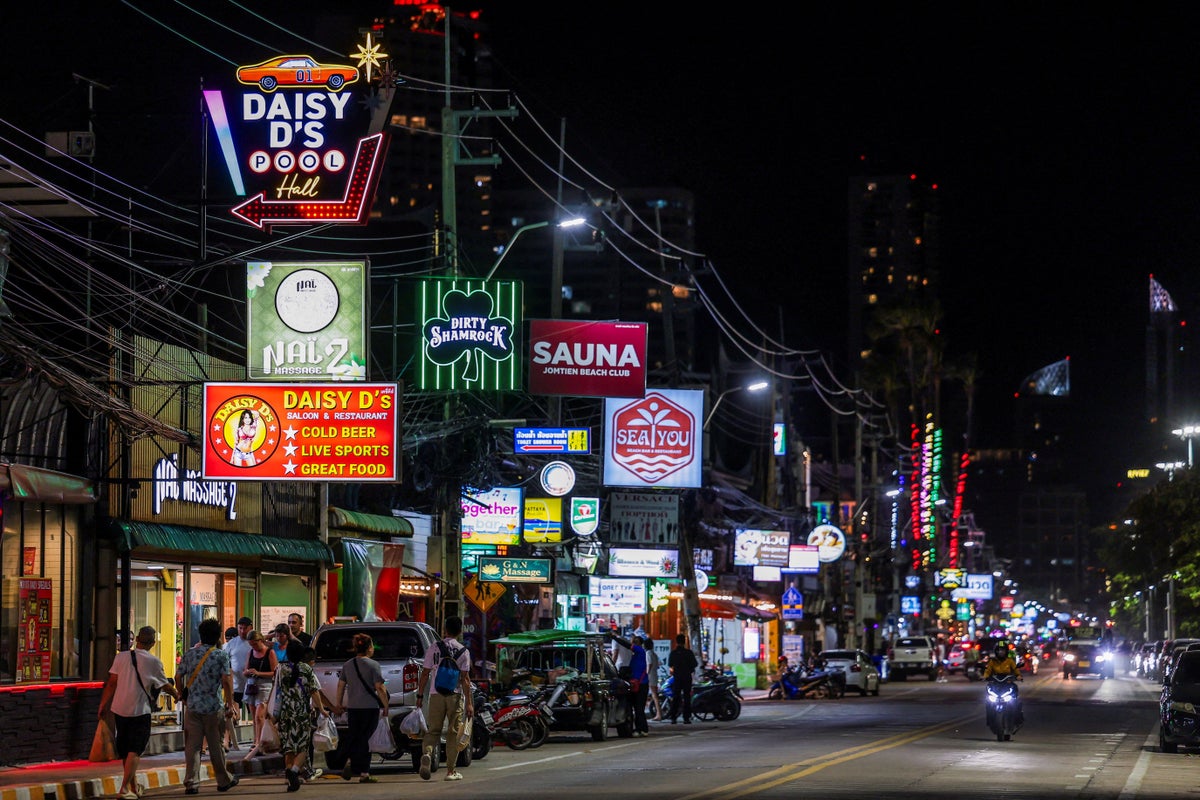
Long before the first liberty boat hits the pier, local authorities issue a sharp, unvarnished warning. It is not the standard brochure advice about drinking the tap water or avoiding street scams. It is a direct, urgent advisory regarding prostitution, local laws, and the catastrophic risks of straying into the gray markets that fringe the neon-lit entertainment districts.
Why? Because human vulnerability is a predictable commodity.
When young men and women—most of them barely old enough to legally buy a drink back home—are released from a floating sensory deprivation chamber into a city where their currency makes them kings, the guardrails of normal life vanish. The human brain, starved of dopamine and intimacy for two-thirds of a year, makes terrible bargains in the first forty-eight hours ashore. The allure of easy companionship in a foreign port is as old as seafaring itself. Yet, the modern reality of these transactions is laced with dangers that do not show up on a liberty card: extortion rings, counterfeit alcohol, targeted robberies, and severe legal liabilities in a country where local laws are unforgiving and foreign consulates can only do so much once you are sitting in a local holding cell.
The Royal Thai Police and naval liaisons know the script by heart. Every time a carrier group drops anchor, a predictable spike occurs in late-night hospital visits, missing-wallet reports, and diplomatic incidents that start with a misunderstanding in a dimly lit bar. The warnings are plastered across briefing boards on the ship and echoed by local officials on the docks. Yet warnings are just words. They bounce off the titanium-plated invincibility that every young sailor wears like cheap cologne.
I remember standing on a similar dock years ago, watching the wave of sailors descend upon a foreign shore after a grueling deployment. The air was thick with the scent of grilled pork skewers and exhaust fumes. You could feel the collective exhale of five thousand people shedding their uniforms mentally, even the ones still wearing them. Within an hour, the lines blurred. The tidy divisions between disciplined military life and the chaotic underbelly of a port city dissolved into a haze of cheap beer and flashing lights.
Most sailors make it through. They find a quiet restaurant, buy a terrible souvenir they will throw away by next Christmas, call their mothers from a spotty Wi-Fi connection, and return to the ship before muster with nothing worse than a blistering sunburn and a monumental hangover.
That is the quiet victory of a port visit.
But for the minority who chase the phantom of immediate, no-questions-asked relief down the wrong alleyways, the cost is steep. They trade the final chapter of their deployment for a nightmare of legal entanglements, medical scares, and disciplinary masts that can torpedo a career before it has even properly begun.
The ship sits out in the deep water, a gray mountain of steel waiting to pull up its anchor and drag its crew back into the silent, monotonous embrace of the sea. When it leaves, the neon signs in the tourist town flicker off one by one. The street vendors sweep up the plastic cups. The warnings fade from the local papers. And out on the water, beneath a sky completely devoid of light pollution, five thousand sailors look back at the fading lights of the coast, wondering how the shore managed to feel so dangerous after surviving two hundred days of nothing at all.