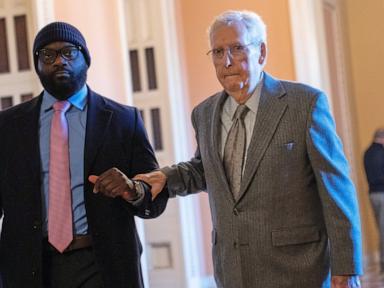
The marble corridors of the Rayburn House Office Building possess a specific, heavy silence at 6:00 AM. It smells of floor wax, old parchment, and the distinct, metallic tang of institutional air conditioning. For thirty years, a fictional congressional aide we will call Sarah walked those halls. She watched the posture of a nation change by watching the shoulders of its leaders. She saw vibrant, sharp-witted young firebrands slowly turn into fragile, slow-moving statues, their knuckles whitening around walking canes while their staffs quietly ran the country in their stead.
When a prominent, long-serving lawmaker passes away in office, the official press releases always follow a rigid script. They speak of legacies. They speak of tireless service to the republic. What they never mention is the quiet, terrifying panic that happens behind the closed doors of committee rooms in the months leading up to that final breath.
We are living in a moment where the average age of our leadership is hovering at historical highs. It is an era of governing by gerontocracy, and the cracks in the foundation are no longer possible to hide. The sudden vacancy of a Senate seat does not just trigger a political scramble; it shines a harsh, blinding spotlight on a vulnerability that the political establishment has spent decades trying to obscure.
How old is too old to hold the fate of a nation in your hands?
The Architecture of Endurance
Politics is a game built on seniority. The system is designed to reward survival. The longer you stay in your seat, the more power you accumulate, the more committees you chair, and the more federal dollars you can funnel back to your home state. This creates a powerful incentive for politicians to never leave. They hold onto their positions like sailors gripping the rigging in a category five hurricane.
But biology does not care about committee assignments.
Consider the human brain. Neurologists tell us that cognitive processing speed typically peaks in a person's twenties and then begins a long, slow, imperceptible decline. For most of us, this means we might misplace our car keys or struggle to recall a stranger's name at a party. It is an annoyance.
Now, transpose that reality onto a Senate floor. Imagine a lawmaker who must digest a three-thousand-page omnibus spending bill, comprehend the geopolitical nuances of a sudden crisis in East Asia, and vote on a complex regulatory framework for artificial intelligence—all before lunchtime.
It is a monumental task for a thirty-five-year-old mind in peak condition. For an eighty-five-year-old mind, it can become an exercise in pure survival.
The political machine adapts to this decline in ways that are both fascinating and deeply troubling. When a leader begins to fade, the staff steps into the vacuum. This is the open secret of Washington. Young, ambitious twenty-somethings, barely out of college, find themselves drafting legislation, negotiating policy points with lobbyists, and whispering voting instructions into the ears of their employers.
The voter casts a ballot for a seasoned statesman. What they often get is a syndicate of unelected, anonymous staffers running the show behind a veil of venerated tradition.
The Human Cost of Letting Go
It is easy to look at aging politicians with cynicism, to accuse them of vanity or an insatiable lust for power. But the truth is far more human, and far more tragic.
Imagine spending fifty years of your life being the center of gravity in every room you enter. People laugh at your jokes. They scramble to open doors for you. Your phone rings constantly with calls from presidents, CEOs, and foreign heads of state. Your identity is entirely fused with your title. Without the office, who are you? Just an old man or woman sitting in a quiet room, waiting for the end.
The terror of irrelevance is a powerful drug. It drives people to work past their limits, to ignore the warning signs of their own failing bodies, and to convince themselves that they are indispensable.
"If I leave," they tell themselves, "the country will fall apart."
It is a delusion born of isolation. The Capitol is a bubble that insulates its inhabitants from the reality of their own decay. Staffers shield their bosses from embarrassing public moments, steering them away from unscripted press encounters and carefully managing their schedules to ensure they are only seen when they are at their best.
But occasionally, the mask slips.
A long, vacant stare during a press conference. A sudden, unexplained freeze at a microphone. A physical collapse on a flight back to the home district. These are not just medical emergencies; they are moments of profound vulnerability, broadcast to a global audience. They remind us that under the expensive suits and the grand titles, our leaders are made of the same fragile, decaying matter as the rest of us.
The Invisible Mandate
When we talk about the health of our leaders, we are really talking about trust.
A representative democracy requires a social contract. We delegate our collective power to an individual with the understanding that they will use their judgment, their intellect, and their energy to protect our interests. When that individual is no longer capable of fulfilling that duty, the contract is broken.
Yet, we find ourselves stuck in a paralysis of politeness. We hesitate to bring up cognitive testing or age limits because we fear being labeled ageist. We treat the obvious decline of our leaders as a private family matter rather than a public crisis.
This silence is not compassionate. It is dangerous.
National security decisions are made in seconds, not days. A president or a key congressional leader must be ready to respond to a crisis at three in the morning, with a clear mind and a steady hand. If we cannot guarantee that our leaders possess that capacity, we are playing a high-stakes game of roulette with our collective future.
The solution is not as simple as drawing an arbitrary line in the sand and forcing everyone over seventy-five to retire. Wisdom is real. Experience is invaluable. Some octogenarians possess a sharpness and a depth of understanding that far surpasses their younger colleagues.
But we must establish a culture of transparency.
We expect our leaders to disclose their tax returns. We expect them to disclose their campaign contributions. Why do we not expect them to disclose the basic state of their physical and cognitive health? Annual, independent medical evaluations should be a non-negotiable requirement for anyone holding federal office. The results should not be kept in a vault; they should be available to the public.
Only then can voters make an informed choice. Only then can we move past the whispers and the speculation.
The Sunset on the Hill
The sun sets over the Potomac River, casting long, dark shadows across the National Mall. In the offices of the Capitol, the lights stay on.
Behind one of those glowing windows, a senator sits at a desk. The desk is cluttered with briefing papers they can no longer easily read. Their hands shake slightly as they reach for a glass of water. Outside the door, a group of young staffers whispers in the hallway, deciding how to phrase the senator's next public statement so it sounds like it came from the statesman of old.
We cannot stop the march of time. We cannot legislate away the frailty of the human body. But we can choose to value our democracy more than the comfort of our politicians. We can demand a government that is run by the living, for the living, rather than a museum of past greatness held together by the quiet desperation of those who do not know how to say goodbye.