The steel hull of the marlin vibrates with a low, bone-deep hum. Beneath the deck, millions of gallons of crude oil sit heavy in the dark, a liquid fortune bound for a refinery half a world away. On the bridge, the captain grips a mug of lukewarm coffee, his eyes scanning the horizon where the hazy blue of the sky meets the jagged, sun-bleached cliffs of the Musandam Peninsula.
To his left lies Iran. To his right, Oman. Between them is a strip of water just twenty-one miles wide at its narrowest constriction.
This is the Strait of Hormuz. It is not just a geographical feature. It is a chokehold on human civilization. On any given day, roughly a fifth of the world’s petroleum passes through this single, precarious corridor. If you have ever flipped a light switch in Tokyo, bought groceries in Berlin, or pumped gas into a sedan in Ohio, your life is tethered to this specific stretch of water.
For decades, the global economy operated under a fragile, unspoken assumption: the strait would remain open, governed by international rules and policed by the overwhelming shadow of the United States Navy.
That assumption just shattered.
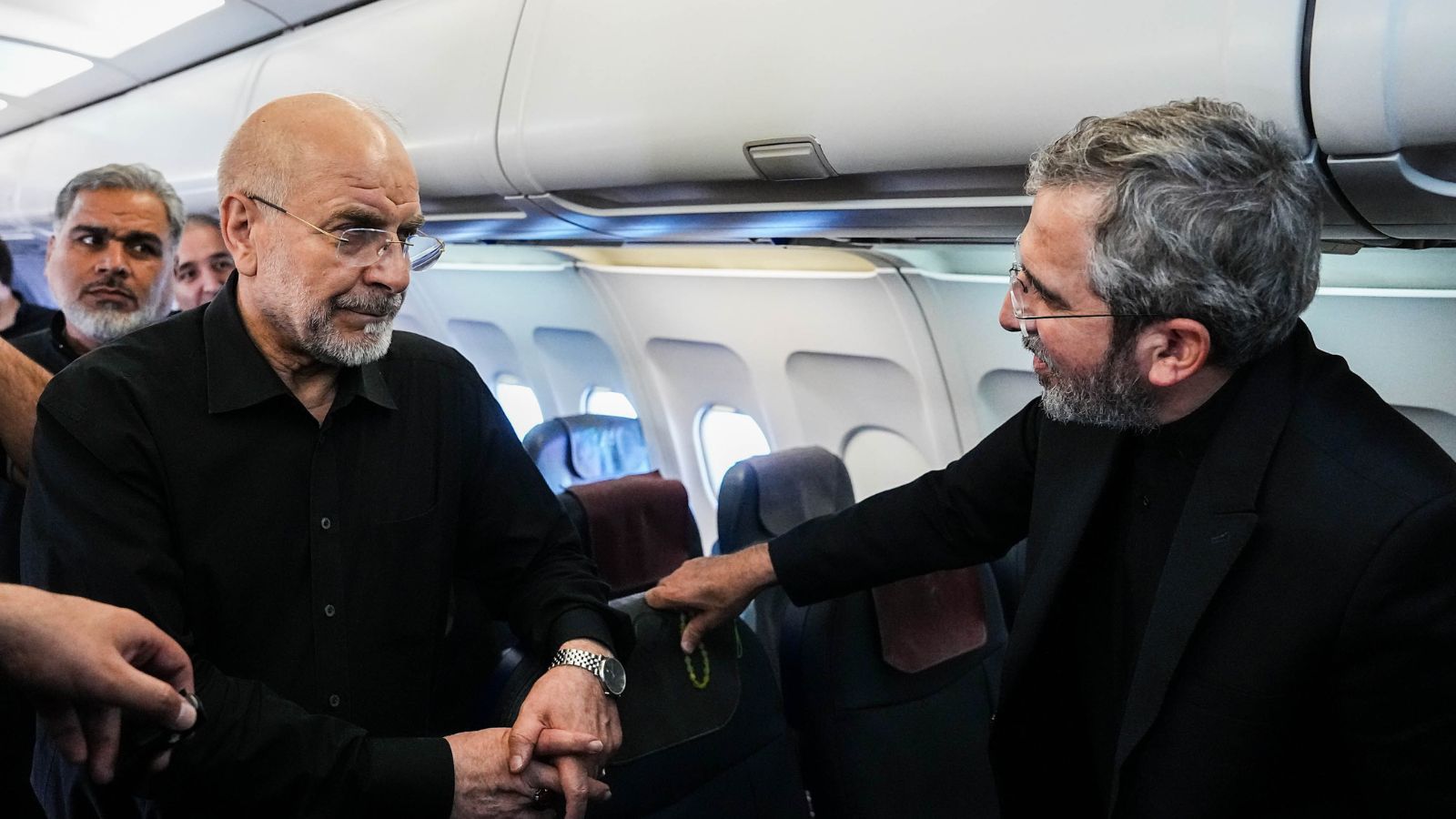
When Mohammad Bagher Ghalibaf, the speaker of Iran’s parliament, stood before cameras and declared that "Hormuz will never go back to how it was," he wasn’t just issuing a standard political warning. He was rewriting the rules of global transit. He was announcing that Tehran intends to manage the strait on its own terms.
To understand what that means, we have to look past the dry press releases and the sterile military briefings. We have to look at the water itself, and the people whose lives are caught in the crosshairs of a silent, escalating conflict.
The Mirror on the Water
Consider a hypothetical merchant sailor named Marcus. He is thirty-two, sends eighty percent of his paycheck home to his mother in Manila, and spends months at a time surrounded by nothing but open ocean. For Marcus, the Persian Gulf used to be just another leg of a grueling routine.
Not anymore.
Now, entering the strait feels like walking into a darkened room where you know someone is waiting in the corner. The crew practices drills they used to laugh at. They check the water for limpet mines—small, magnetic explosives that can be attached to a ship’s hull under the cover of night. They watch the radar for the sudden, erratic movements of Iranian fast-attack craft. These small, heavily armed speedboats swarm around massive supertankers like hornets around an elephant.
It is a psychological war of attrition.
The heat in the gulf during the summer months is oppressive, thick with humidity that coats your skin like oil. But the tension is colder. When an Iranian naval vessel hails a commercial ship over the radio, demanding identification and cargo manifestos, the tone is not polite. It is proprietary.
Iran is signaling ownership. By stating that the waterway will never return to its previous status quo, Tehran is telling the world that the era of Western-guaranteed freedom of navigation in these waters is drawing to a close. They are drawing a line in the water.
The Physics of the Jugular
Why does this twenty-one-mile gap matter so much? To grasp the scale, think of the global energy supply as a human body, and the Strait of Hormuz as the jugular vein.
If you constrict a vein elsewhere in the body, it hurts. It causes complications. But if you sever the jugular, the system collapses in minutes.
The global economy cannot simply route around Hormuz. The vast majority of oil from Saudi Arabia, Iraq, the United Arab Emirates, Kuwait, and Iran itself has no other way out to the open ocean. Pipelines exist, but they can only carry a fraction of the volume. The world needs the tankers. The tankers need the strait.
When tension spikes here, a chain reaction ripples through society at blinding speed. It starts on the trading floors in New York and London, where the price of a barrel of crude jumps by five, ten, or twenty dollars in a matter of hours.
Then it hits the logistics companies. Shipping insurance rates skyrocket. Suddenly, sending a vessel into the Gulf costs five times what it did a week prior.
Finally, it hits you. It appears as an extra fifteen dollars at the gas pump. It manifests as a spike in the cost of winter heating food prices rise because the trucks delivering produce now cost more to operate. This is how a speech delivered in a Tehran auditorium transforms into a quiet crisis at a suburban kitchen table thousands of miles away.
The Strategy of the Asymmetric
The United States military operates on a philosophy of overwhelming force. Supercarriers, stealth fighters, guided-missile destroyers. It is a doctrine built for open oceans and decisive engagements.
Iran knows it cannot match that power head-on. So, they changed the game entirely.
Instead of building massive cruisers, they built thousands of fast-attack boats, stocked up on anti-ship missiles, and perfected the art of naval mining. They turned the geography of the strait into a weapon. In a narrow, crowded shipping lane, a billion-dollar American destroyer is at a distinct disadvantage against a swarm of cheap, explosive-laden drones and speedboats hiding among commercial traffic.
This is asymmetric warfare. It is the art of making the cost of engagement too high for your opponent to bear.
But the real strategy isn't to start a shooting war. The strategy is to project absolute control over the flow of goods. By asserting that they will "manage the strait," Iranian leadership is telling the international community that access to global energy is now contingent on Tehran’s terms.
Imagine a tollbooth erected on the busiest highway in the world, managed by a power that feels it has nothing left to lose under crushing international sanctions. That is the new reality Ghalibaf is describing.
The Human Cost of Uncertainty
We often talk about geopolitics as if it were a chess match played with wooden pieces. We forget that the pieces bleed.
Behind every headline about live updates and military readiness are thousands of people living in a state of suspended animation. There are the families of the sailors on deployment, watching the news with knots in their stomachs. There are the local fishermen in towns like Bandar Abbas or Khasab, who have fished these waters for generations and now find their traditional grounds turned into a militarized zone.
The uncertainty is a weapon in itself. It exhausts people. It breeds a quiet, pervasive dread.
A captain of a container ship recently described the feeling of transiting the strait at night. You turn off the ship’s non-essential lights to blend into the darkness. You stare into the radar scope, watching tiny blips approach and fade away. Every commercial radio channel is a chaotic mix of military warnings, automated distress signals, and tense exchanges between foreign navies. You realize, with absolute clarity, that your survival depends entirely on the restraint of a twenty-year-old conscript sitting behind a missile console on a distant shore.
One mistake. One miscalculated maneuver by a speedboat. One misunderstood radio transmission. That is all it takes to turn a cold standoff into a hot war.
The Shift That Cannot Be Undone
The core of the issue is that Ghalibaf is likely correct about one thing: the region will not go back to how it was.
Even if the current diplomatic crisis cools, the illusion of safety has evaporated. The international community has seen how fragile the pipeline of global commerce truly is. Shipping companies are already recalculating their long-term strategies, looking for alternative routes that do not exist, or preparing for a future where high-risk premiums are a permanent cost of doing business.
The United States faces a grueling dilemma. Maintaining a massive naval presence in the Gulf to guarantee the safety of commercial shipping is extraordinarily expensive and politically fraught. Yet, pulling back means surrendering the world's primary economic artery to an adversarial power. There are no easy answers. No clean solutions.
The sun begins to set over the Strait of Hormuz, painting the water in deep shades of amber and bruised purple. The marlin clears the narrowest point of the channel, heading out into the wider expanse of the Arabian Sea. The captain relaxes his grip on the coffee mug. His knuckles are white.
For this voyage, they made it through. But behind them, the strait remains, a twenty-one-mile stretch of volatile water where the rules of the world are being rewritten in real-time, and where the next spark could ignite a fire felt in every corner of the globe.