The oxygen tank sits behind the curtain. You will not see it in the wide shots when the white cassock emerges at the top of the airplane stairs in Lima, nor will you hear the quiet wheeze of an eighty-something man trying to negotiate the damp, salt-heavy air of the Pacific coast before climbing toward the thin, unforgiving breath of the Andes.
Wait.
Watch the hands first. When a man has spent the better part of a year fighting off respiratory crises, hospital stays, and the slow, stubborn arithmetic of aging, his hands tell the truth before his face does. They grip the metal railing a fraction of a second longer than protocol expects. The knees hesitate before taking the next step down. And yet, against the quiet advice of doctors who measure life in blood-oxygen saturation and resting heart rates, the Pope is boarding a flight for a twelve-day homecoming to Latin America and Peru.
Most news reports treat an apostolic journey like a logistics spreadsheet. Twelve days. Four cities. Seventeen speeches. Three papal masses. They mention his recovery as a parenthetical caveat—a footnote about wheelchair ramps, shortened itineraries, and extra rest periods between motorcades. They miss the entire point. When a fragile, still-recovering pontiff crosses an ocean to stand in the dust of Peru, the itinerary is not a schedule. It is a wager.
The Weight of Coming Home
Consider a hypothetical parishioner waiting on the edge of the tarmac in Chiclayo or Lima—let us call her Elena, a sixty-four-year-old retired schoolteacher who has spent the last three years watching her neighborhood fray at the edges under the weight of political chaos, rising food prices, and the quiet departure of her grandchildren to Madrid and Miami. To Elena, Rome is a marble abstraction. The Vatican is a place where men in scarlet silk debate centuries-old footnotes while the buses in her district run late and the clinic down the street runs out of insulin.
She does not care about diplomatic communiqués. She cares about whether the man who claims to speak for the Shepherd actually remembers the smell of woodsmoke, wet concrete, and fried plantains.
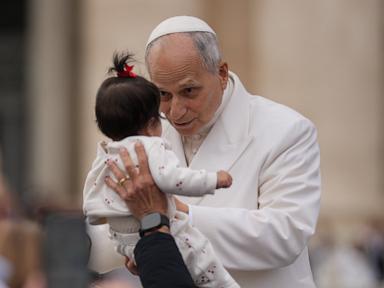
I remember the first time I stood in a crowd waiting for a papal motorcade in South America—the hours of standing on hot asphalt, the smell of cheap sunscreen and roasted corn, the sudden, electric ripple that moves through fifty thousand people three minutes before the white vehicle turns the corner. You expect majesty. You expect a gilded spectacle. Instead, when the car slows down, what strikes you is the vulnerability of a single human body sitting behind thin glass, waving with an arm that clearly aches, carrying the projected hopes of millions of strangers who want him to fix things no human being can fix.
That is the invisible bargain of a papal trip. It is an absurdly asymmetric transaction. Millions of people bring their grief, their unpaid debts, their sick children, and their political exhaustion to the curb, and one old man in white shows up with nothing in his pockets except a microphone and a bruised set of lungs.
The Biology of Stubbornness
Why do it now? Why risk a grueling twelve-day marathon across multiple climate zones—from the humid, overcast coast of Lima to the breathless altitudes of the Andean highlands and the oppressive heat of the Amazon basin—when a quiet autumn in the Vatican gardens would keep his pulse steady and his physicians calm?
Think of a marathon runner who tore a hamstring six months ago and insists on running a mountain trail not to win a medal, but because his family lives at the summit. Doctors look at the body as a machine to be preserved; the longer the engine runs without redlining, the better the outcome. A pastor, particularly one shaped by the streets of Buenos Aires and the mission parishes of Peru, looks at the body as a candle. A candle kept inside a glass jar in Rome lasts a very long time, and lights almost nothing.
The medical reality of a recovering pontiff traveling at high altitude is not trivial. At sea level in Rome, atmospheric pressure pushes oxygen effortlessly across the delicate membranes of the lungs. Climb ten thousand feet into the Andes, and that pressure drops by roughly a third. Even for a healthy thirty-year-old, the heart beats faster, the head throbs, and sleep fractures into shallow, restless intervals. For an octogenarian recovering from severe pulmonary inflammation and mobility limitations, every staircase becomes a steep hill, and every twenty-minute homily demands the cardiovascular output of a brisk uphill walk.
Vatican planners know this. Behind the scenes of every modern papal trip lies a quiet shadow operation: mobile intensive care units trailing the motorcade out of camera range, pre-mapped routes to the nearest cardiac-capable hospitals, oxygen concentrators tucked into sacristies behind velvet drapes, and strict time limits on handshaking lines. The wheelchair is no longer an occasional concession; it is the primary vehicle of ministry.
Yet vulnerability, oddly enough, is the one currency that never devalues in Latin America.
A Continent That Speaks in Scars
To understand why Peru—and Latin America more broadly—occupies such a fierce, magnetic pull on this papacy, you have to understand the geography of faith in the Southern Hemisphere. Nearly forty percent of the world’s Catholics live in Latin America, yet for centuries the region was treated as a junior partner to European theology—a place to be instructed rather than listened to.
When a Latin American pope returns to the region, the dynamic flips. He is not a foreign dignitary inspecting a colony; he is an elder brother walking back into a house where the roof is leaking and the family has been arguing since dinner.
And Peru, in particular, is a country that knows how to endure a storm. Over the past decade, Peruvians have lived through a dizzying carousel of presidents, constitutional crises, deadly protests, and the lingering trauma of a pandemic that hit the country harder per capita than almost anywhere else on earth. In cities like Trujillo, Puerto Maldonado, and Lima, the Church is not a museum piece. It is the soup kitchen operating out of a concrete courtyard; it is the priest mediating between indigenous communities and illegal gold miners; it is the parish hall where mothers gather with laminated photos of missing children.
When people ask why the Pope is spending twelve days in a single region rather than dividing his time across three continents, the answer lies in the difference between a postcard and a conversation. You cannot rush grief. You cannot speed-read a region where the Amazon rainforest is burning on one border while the Pacific coast floods on the other. Twelve days gives time for the noise to die down—time to move past the airport brass bands and the presidential photo-ops into the cramped, unglamorous rooms where real pastoral work happens.
What Happens When the Cameras Turn Away
Consider what happens next: the motorcade leaves the main plaza, the television networks cut back to studio anchors debating Vatican politics, and the Pope sits down in a folding chair inside a local parish center with twenty indigenous leaders from the Peruvian Amazon.
There are no teleprompters in that room. There is no diplomatic spin. An elder from the Madre de Dios region speaks in halting Spanish about mercury poisoning in the rivers where his grandchildren fish. A nun who has lived in the jungle for forty years describes the threats she receives from timber traffickers. An old man in white listens, leans forward with his elbows on his knees, and occasionally scribbles three words on the back of a crumpled envelope.
This is the part of a papal trip that rarely makes the evening news, yet it is the engine driving the entire twelve-day ordeal. Policies in Rome do not change because a committee writes a white paper; they change because an old man looked a weeping grandmother in the eye in a humid room three thousand miles away and couldn't sleep on the flight home.
I used to think papal travel was mostly theater—an expensive, exhausting ritual designed to remind the world that the Catholic Church still mattered. I changed my mind watching an elderly priest in a rural parish outside Cusco explain what a single papal visit had done for his community years earlier. Nothing material had changed overnight. The roads were still unpaved; the local clinic was still underfunded. "Before he came," the priest told me, stirring sugar into a chipped mug of coca tea, "my people felt invisible, as if God had moved to the capital and left no forwarding address. After he left, they stood up straighter. They realized someone at the center of the world knew their names."
The Arithmetic of Twelve Days
Twelve days is an eternity in modern diplomatic travel. Most heads of state touch down for thirty-six hours, sign a trade memorandum, wave from a balcony, and fly home before jet lag sets in. A twelve-day journey across Latin America and Peru is an intentional rejection of efficiency.
It is messy. Plans will shift at the last minute. A scheduled outdoor address may be shortened because the afternoon wind turns cold; an evening meeting with seminarians might be replaced by a brief blessing from a balcony while doctors check his pulse backstage. Critics will seize on every cough, every slurred syllable, every moment he remains seated while others stand. They will write columns asking whether it is irresponsible to put a fragile leader through such physical strain, or whether the spectacle of a weakened pontiff undermines the authority of the office.
They have it completely backward.
In a culture obsessed with youth, optimization, and seamless performance, there is something quietly subversive about an eighty-something leader refusing to hide his frailty. When he steps off the plane in Lima, leaning on a cane or rolling down a ramp in a wheelchair, he is preaching his sharpest sermon before he opens his mouth. He is telling a continent battered by poverty, illness, and political betrayal that a broken body is not a disqualified life—that you do not wait until you are fully healed to show up for the people you love.
The flight path from Rome to Lima stretches over six thousand miles of ocean, cloud, and mountain range. Somewhere over the Atlantic, while the cabin lights are dimmed and the aides sleep in their seats, an old man will sit awake beside a small oval window, rehearsing speeches in a language that feels like home, breathing from a clear plastic tube, counting the hours until the Andes rise out of the morning mist.
Down below, on a thousand dusty sidewalks from the Pacific surf to the edge of the jungle, people are already dragging plastic chairs out onto the curb to save a spot.