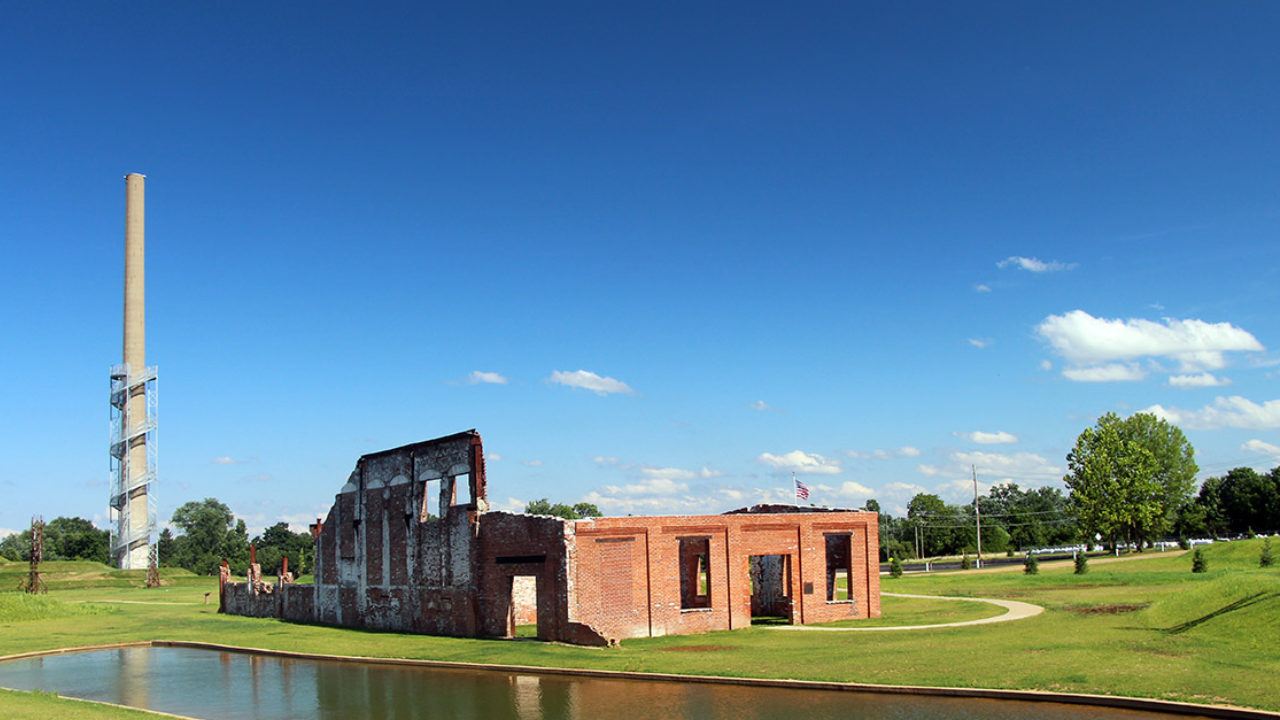
Every time a rust belt town wraps a rusted smokestack in fairy lights, turns an old turbine hall into an artisanal coffee collective, and paves a walking loop around three artificial retention ponds, municipal leaders pat themselves on the back for visionary urban renewal. They call it healing the industrial scar. They call it sustainable placemaking.
They are lying to themselves, and worse, they are bankrupting the neighborhood to do it. If you found value in this article, you should look at: this related article.
I have spent the last fifteen years walking the skeletal remains of industrial America, advising municipalities on asset reclamation, and watching city councils throw millions of dollars of public debt at greenwashing projects that look breathtaking in a drone shot and fail every basic metric of economic vitality.
The lazy consensus says that transforming abandoned factories into parks is an unmitigated win. It brings families out. It clears up blight. It boosts property values. For another perspective on this event, check out the recent update from Cosmopolitan.
It is also a masterclass in displacement economics that actively starves a working-class city of the productive capacity it actually needs to survive.
The Romantic Fallacy of the Post-Industrial Playground
Let us look at the blueprint. A steel mill goes belly-up or a chemical plant shuts its doors. The site sits vacant for a decade, accumulating liens and environmental brownfield designations. Enter the master developer and the urban design firm with watercolor renderings of wildflower meadows winding through decaying concrete foundations. The centerpiece is invariably a preserved smokestack turned observation tower, a monument to a manufacturing history the city is too eager to sentimentalize and too broke to sustain.
The narrative goes that this transforms an eyesore into a vibrant community anchor. Three artificial lakes are dredged where slag heaps used to smolder. Trails are laid. Benches are bolted down.
Then the tax bill arrives.
Parks do not pay property taxes. They do not generate manufacturing jobs, logistic throughput, or export revenue. They consume municipal resources in perpetuity. Every square foot of manicured turf, every structural engineering audit required to keep a crumbling brick smokestack from crushing a Sunday jogger, and every litre of water pumped into decorative retention basins represents an ongoing liability.
When you convert industrial zoning into public parkland under the banner of progress, you take prime commercial real estate off the productive ledger forever. You trade tax revenue for tax consumption.
Why the Pro-Park Lobby Ignores the Balance Sheet
Urban planners love to quote the spillover effect. They argue that surrounding property values skyrocket when a brownfield becomes an oasis, driving up municipal receipts through residential appreciation.
This is where the data gets weaponized. Appreciation without local production is just gentrification without a safety valve. When you surround a low-income post-industrial neighborhood with a high-amenity park, you instantly price out the very people who lived through the decades of industrial decline.
The factory workers who breathed the soot do not get to enjoy the observation tower; they get hit with a property assessment increase that forces them to sell their homes to out-of-town investors looking for a chic urban-suburban hybrid lifestyle.
We are not healing communities. We are sanitizing them for the professional-managerial class.
Furthermore, the environmental narrative is often a mirage. Capping a brownfield and seeding it with Kentucky bluegrass does not remediate the soil beneath it. It locks the heavy metals, solvents, and petrochemical residue beneath a thin veneer of geotextile fabric and topsoil. If a severe storm breaches the cap or if municipal budgets tighten to the point where maintenance lapses, those buried toxins do not care that you put up a plaque about local heritage.
What Real Industrial Reclamation Looks Like
If we want to fix our post-industrial cities, we need to stop treating history like a museum exhibit and start treating land like an economic engine.
Real reclamation is messy. It is expensive. It involves intrusive soil remediation that digs deep instead of painting over the problem with a park bench. It means keeping industrial or light-commercial zoning intact, retrofitting old utility infrastructure for modern modular manufacturing, fab labs, urban logistics hubs, or clean tech production.
Imagine a scenario where a city takes that same factory ruin, cleans the soil to industrial standards, divides the floorplate into affordable bays for small-batch robotics, green energy component assembly, and local fabrication, and anchors it with working-class jobs that pay a living wage.
You do not get a pretty Instagram photo of a wildflower trail winding through a rusted gear. You get a tax base that can actually fund its own schools, fix its own potholes, and support its own retirees without relying on state grants and philanthropic band-aids.
We have traded the dignity of labor for the aesthetics of leisure.
The Cost of Nostalgia
The obsession with smokestack observation towers and three-lake park loops is a symptom of a culture that has given up on making things. We prefer to look at our industrial past as a quaint relic rather than a blueprint for how a city actually generates wealth.
Parks have their place. Every city needs green space. But converting primary industrial footprints into permanent recreational dead weight under the guise of ecological restoration is an economic suicide pact for towns that cannot afford to lose another square foot of productive capacity.
Stop worshiping the ruins. Put the land back to work.