We often think of autocracies as rigid, unchanging structures built on tanks and barbed wire. That's an old way of looking at power. Look at Turkey. For years, observers watched Istanbul and Ankara through a flawed lens, expecting either a total democratic breakthrough or a standard military dictatorship. They got neither. Instead, what emerged is a highly sophisticated, deeply personalized system of control that mirrors Moscow while remaining distinctly Turkish. Political scientist Ahmet Insel nailed it when he described this shift as a rapid slide toward a Putinism with Turkish colors. It isn't a carbon copy of the Kremlin. It's something entirely homegrown, yet it shares the exact same DNA of vertical power, institutional decay, and arbitrary rule.
If you want to understand how modern authoritarianism works, you have to look past the surface-level elections and the loud campaign rallies. You need to look at how a state gets hollowed out from the inside until the institutions themselves become nothing more than loudspeakers for one man.
The Illusion of the Turkish Ballot Box
Western analysts love to obsess over Turkish elections. They point to high voter turnout and fiercely contested mayoral races as proof that the democratic spirit is alive and kicking. They aren't entirely wrong about the spirit of the voters, but they misunderstand the system itself. Elections in this environment don't serve the same function they do in a healthy democracy. They aren't a tool for checking power. They are a tool for legitimizing it.
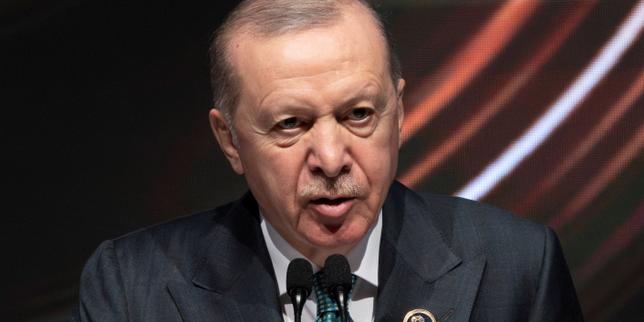
Think about how Vladimir Putin uses elections in Russia. The goal isn't to create a fair playing field. The goal is to stage a massive ritual that demonstrates the absolute dominance of the ruler, leaving the opposition fragmented and demoralized. In Turkey, Recep Tayyip Erdogan has mastered this dance. He uses the entire apparatus of the state to tilt the field so aggressively that winning becomes an uphill battle in a landslide for anyone else.
When every mainstream television channel, every major newspaper, and the entire public administration bureaucracy answer to one party, an election isn't an open contest. It's a heavily staged performance. The opposition can win local battles, sure. They took Istanbul and Ankara in past municipal races, sparking waves of hope. But the central state immediately moves to choke those local victories by cutting funding, launching politically motivated lawsuits, and stripping local authorities of their traditional autonomy. The message is clear. You can vote, but the center always wins.
Erasure of the Rules
The defining feature of this Turkish style Putinism is what political scientists call de-institutionalization. In a standard state, laws provide predictability. Investors know what to expect. Citizens understand their rights, even if those rights are limited. Under Erdoganism, predictability goes out the window. The law is whatever the presidential palace decides it is on any given Tuesday morning.
This shift accelerated dramatically after the failed coup attempt in 2016. What followed wasn't just a purge of suspected plotters. It was a complete overhaul of how the country is governed. The state of emergency became the permanent reality. The prime minister's office was abolished, packing all executive power into a single, sprawling presidential palace.
We see this most clearly in the economic sphere. Central banks are supposed to be independent for a reason. They keep politicians from printing money to win votes. But in Turkey, the central bank became a revolving door for governors who refused to follow the unorthodox economic theories dictated by the palace. Presidential decrees can alter major financial regulations overnight. This isn't just bad economic policy. It's a deliberate governance strategy. When laws are unstable, everyone from the billionaire industrialist to the small business owner must stay on the good side of the ruling party just to survive. If you step out of line, an unexpected tax audit or a sudden regulatory change can wipe you out in days.
Building the Party State
You can't run a personalized autocracy without a loyal machine. In Russia, that machine is a mix of security services and the United Russia party. In Turkey, the Justice and Development Party, known as the AKP, has spent over two decades fusing itself with the permanent state apparatus.
Go into any provincial governorship or public agency in Turkey today. You won't find neutral civil servants. You will find party loyalists whose careers depend entirely on their devotion to the leadership. This fusion has completely transformed the nature of public life. The state doesn't serve the public anymore. It serves the party, which in turn serves the leader.
This creates a closed loop of patronage. If you want a government contract, you need connections to the party. If you want a job as a school principal, you need the right political backers. This creates a massive block of voters who are bound to the regime not just by ideology, but by sheer economic survival. They know that if the regime falls, their livelihoods, pensions, and businesses might vanish with it. It's a highly effective way to build a wall of defense around a ruler, making the cost of political change feel terrifyingly high for millions of ordinary citizens.
The Cultural Warfare Weapon
To keep this massive machine running, you need a powerful narrative. You can't just rely on fear and government jobs. You need a story that connects with people's deepest anxieties and identities. This is where the Turkish version of Putinism takes on its unique local coloring.
Putin uses a mix of Soviet nostalgia and Russian Orthodox traditionalism to frame his regime as a defender of civilization against a corrupt, decaying West. Erdogan does almost the exact same thing, but he swaps out Orthodox Christianity for Sunni Islam and Neo-Ottoman nationalism. The narrative is simple but incredibly potent. It claims that Turkey was held back for decades by a secular, Westernized elite that despised the country's true religious and historical identity. The regime presents itself as the ultimate historical correction, a force that is finally restoring Turkey to its rightful place as a global power and the leader of the Muslim world.
This narrative turns every political debate into a existential battle. If you criticize the government's economic policy, you aren't just expressing an opinion. You are acting as a tool of foreign powers trying to bring Turkey down. If you advocate for civil liberties, you are labeled a Western agent attacking traditional family values. By constantly stoking these cultural fires, the regime ensures that its base remains mobilized and angry, viewing the political opposition not as rivals, but as existential threats to the nation itself.
The Real Weakness of the Machine
Despite its immense power, this system has a massive flaw. It is entirely dependent on the physical and political survival of one individual. True institutional autocracies, like the Chinese Communist Party, can pass power from one leader to the next because the institution matters more than the person. Personalized regimes can't do that easily.
When you spend two decades destroying independent institutions, purging alternative leaders within your own party, and centralizing every decision in a single office, you leave behind a vacuum. There is no clear line of succession. There is no shared institutional trust. The moment the leader falters, the entire structure risks fracturing under the weight of its own internal rivalries and conflicting interests.
We see the strain showing. The constant economic volatility, driven by arbitrary decision-making, has eroded the living standards of the very working-class voters who formed the bedrock of the regime's support. You can blame foreign plots for inflation for a year or two, but eventually, people notice that their paychecks don't cover their groceries. The regime's reliance on increasingly radical nationalist allies to maintain its parliamentary majority shows that the old days of broad, majoritarian consensus are gone. The system is keeping control, but it requires more energy, more coercion, and more aggressive rhetoric just to stand still.
What Happens From Here
Understanding this reality means abandoning the naive hope that a single election cycle will magically fix everything. The democratic facade is tough, and the deep institutional damage will take a generation to repair, regardless of who wins the next political standoff.
If you are tracking international politics or looking at emerging markets, stop evaluating Turkey through the lens of western democratic standards. Start evaluating it through the lens of personalized, competitive authoritarianism.
Pay close attention to these indicators over the next twelve months:
- Watch the shifting judicial appointments to see how the regime tightens its grip on the remaining lower courts.
- Track the sudden regulatory penalties handed down to independent media and digital platforms.
- Monitor how local municipal budgets are stripped or redirected by the central ministries.
The survival of this system depends entirely on keeping the opposition fragmented and ensuring the public believes there is no viable alternative. The moment that illusion breaks, the entire vertical power structure becomes incredibly fragile.
Ahmet İnsel has spent decades analyzing the shifting tides of Turkish politics, charting its journey from democratic promise to authoritarian reality. For a deep look into how these dynamics played out during the critical moments of this transformation, listen to his detailed analysis in this Ahmet Insel Discussion on Turkey's Political Shift. This discussion offers essential context on the roots of the current regime's centralized power.