The coffee in the paper cup was still hot when the morning shifted off its axis.
On a quiet stretch of Reseda Boulevard, time did not slow down; it simply fractured. There is an ordinary cadence to public transit in Los Angeles—the hum of the diesel engine, the low murmur of passengers staring at glowing screens, the rhythmic sway of handrails as the Metro bus navigates the familiar intersections of the Valley. People are half-awake, dreaming of spreadsheets, morning meetings, or the quiet comfort of a postponed alarm.
Then came the impact.
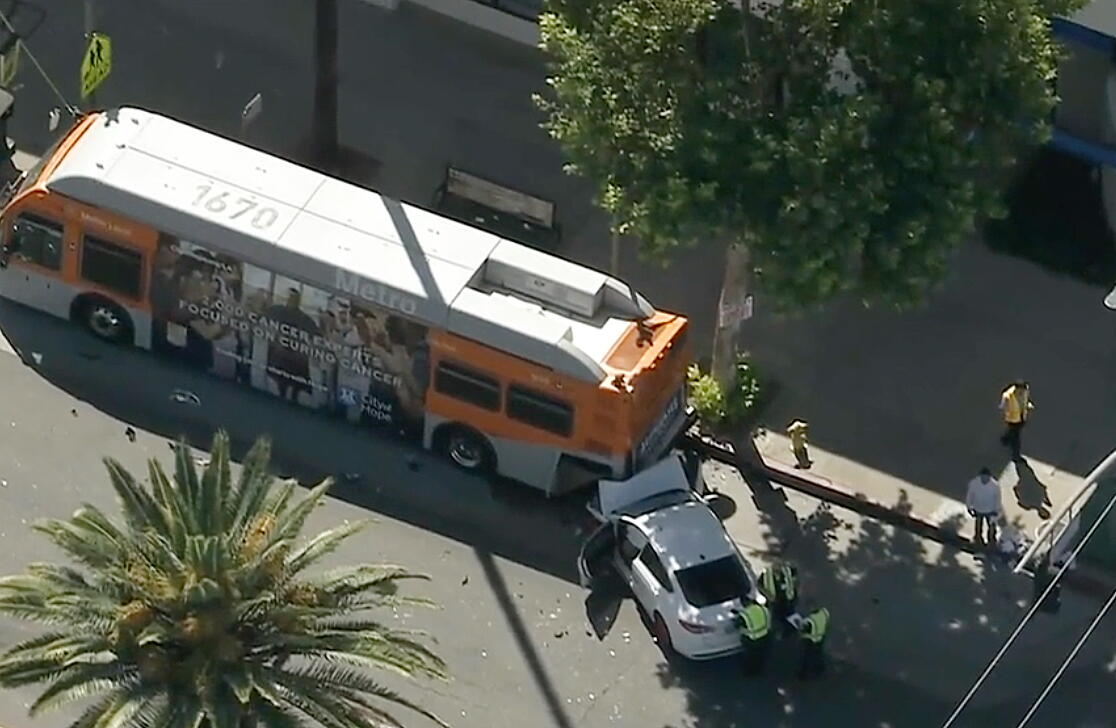
Six people walked out of that metal hull and into the antiseptic brightness of hospital emergency rooms. Six lives whose Tuesday morning plans were instantly rewritten by the violent intrusion of a passenger car into the side of a municipal transit vehicle.
We read the headlines in passing. Six taken to the hospital after car crashes into Metro bus in Reseda. The words are clinical, sanitized by the speed of daily news cycles. They reduce human chaos to a traffic statistic. But behind that dry sentence lies a cascade of sudden physics, shattered glass, and the terrifying realization that our safety on public roads is remarkably fragile.
Consider what happens in the milliseconds before metal meets metal.
To understand an accident like the one on Reseda, you have to look past the crumpled fenders and the flashing amber lights of first responders. You have to look at the geometry of our streets. Reseda Boulevard is wide, busy, and lined with the constant pulse of urban traffic—a place where cars, delivery trucks, cyclists, and heavy buses share a delicate, unspoken contract. We trust each other to follow the invisible rules written on yellow lines and traffic signals.
When that contract breaks, the consequences are immediate and unforgiving. A bus weighs tens of thousands of pounds. A standard passenger car, even a heavy SUV, is completely outmatched in terms of sheer mass. Yet, inside that bus, human bodies are unbelted, standing, or sitting casually, trusting the vehicle's size to protect them. When a car strikes a bus broadside, the physics of momentum do not care about schedules or destinations. Energy transfers instantly, turning handrails into obstacles and aisle floors into launching pads.
The emergency dispatchers received the call at a frantic hour, just as the morning rush was hitting its stride. Firefighters and paramedics arrived to find a scene that defied the morning's quiet routine. Debris littered the asphalt. The side of the Metro bus bore the ugly, indented signature of a high-speed collision.
Six individuals—ranging from commuters heading to work to perhaps a student running late or an elderly resident making a routine trip—found themselves strapped to gurneys. Their injuries, thankfully non-life-threatening in the immediate aftermath, were severe enough to require emergency transport. Concussions, lacerations, fractured bones, and the heavy, invisible weight of acute shock.
For the families of those six people, the phone call is the stuff of nightmares. You pick up the phone, and suddenly the mundane arc of your day is vaporized. There's been an accident.
We talk endlessly about transit safety, congestion, and the need for better urban planning, but we rarely confront the human vulnerability at the center of it all. Every time we step onto a bus or slide behind the steering wheel, we are participating in a massive, collective act of faith. We trust strangers not to look at their phones, not to misjudge a yellow light, not to let a moment of distraction erase someone else's future.
The intersection in Reseda is quiet now. The glass has been swept from the asphalt. The tow trucks have cleared the wreckage, and the Metro buses are running their routes again, keeping time with the city's relentless pulse.
Yet, for the six people recovering behind closed doors, Tuesday will never be just another day. They are left to grapple with the sudden fragility of existence—the sobering truth that life can change in the space of a single, screeching heartbeat.