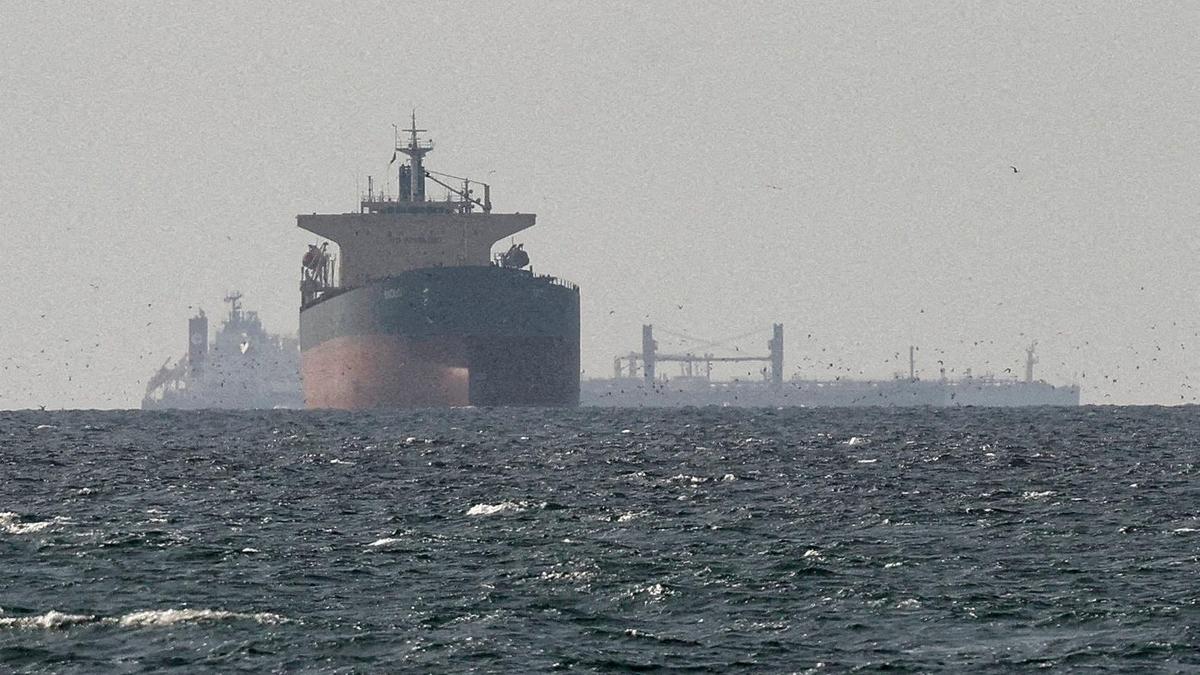
When a government declares that a U.S. naval blockade has almost no impact on its food supply, the rest of the world naturally gets suspicious. It sounds like propaganda. You might assume a naval blockade would immediately halt imports and trigger empty grocery store shelves. That is what history books usually teach us about sieges. But the situation in Iran right now is messy, complex, and doesn't fit the standard textbook definition of economic isolation.
Agriculture Minister Gholamreza Nouri Ghezeljeh recently claimed that the current U.S. blockade, active since mid-April 2026, isn't biting into the country’s ability to feed its people. He pointed to two things: domestic production and alternative import routes. If you dig into the mechanics of how a country of 90 million people actually feeds itself, his claims start to make more sense than they do on the surface.
The 85 Percent Math
The most striking number the Iranian government is pushing is that 85 percent of agricultural goods are produced domestically. If that number holds even close to reality, it changes the entire equation. Most countries in the Middle East are desert-heavy and rely almost entirely on imports for grains and staples. Iran is different. It has a varied climate, massive mountain ranges, and significant agricultural land in the north and west.
When a country produces the vast majority of its own flour, produce, and poultry, it becomes incredibly difficult to starve it into submission via a naval blockade. Sure, you can block the ports. You can stop container ships from unloading at Bandar Abbas. But if the local farms are already keeping the grain silos full, those ships are just a secondary supply line rather than a primary lifeline.
Honestly, even if that 85 percent figure is inflated—which is standard in government reporting—the country still isn't starting from zero. It's starting from a place of significant domestic capacity. The real test isn't whether they can keep people fed; it's whether they can keep the prices low enough that the population doesn't revolt.
The Geography of Sanctions
Geography is arguably Iran’s best defense against a sea-based blockade. A naval blockade stops ships, not trucks. Iran shares land borders with Turkey, Iraq, Armenia, Azerbaijan, Pakistan, and Afghanistan. It connects to the Central Asian states via rail networks and overland routes that the U.S. Navy simply cannot touch.
If the ports in the Persian Gulf are effectively closed to commercial traffic—or at least high-risk enough that shipping companies won't touch them—the logistics network shifts north. We saw this during previous rounds of intense sanctions. When the maritime routes get too expensive or dangerous, the trade routes move inland.
It’s expensive. It’s inefficient. It’s slow. But it isn't impossible.
Bringing grain by train from Russia or through Turkey doesn't offer the same throughput as a massive bulk carrier ship. You lose speed. You lose scale. You pay a premium for every kilometer of truck transport. But you still get the food. The government isn't saying the blockade is cheap; they are saying it is survivable. There is a huge difference between a lack of supply and a hike in prices.
Why Inflation Is the Real Enemy
This is where the government’s narrative gets a bit shaky. They focus on "food supply," which is a binary: either you have food, or you don't. But for the average Iranian citizen, the metric that matters is inflation.
A naval blockade forces the country to rely on more expensive, circuitous import routes. You have to pay middlemen, overland truckers, and suppliers who are willing to risk secondary sanctions. These costs add up. By the time that wheat or fertilizer arrives in Tehran, it costs significantly more than it would have coming off a ship directly into a port.
The result isn't empty shelves. The result is price tags that climb every week.
If the government prints money to subsidize these costs, inflation spikes. If they don't, the people can't afford the food that is sitting on the shelf. So, when the minister says the blockade has "little impact," he is technically correct about the physical availability of goods. He is likely ignoring the economic pain that the general public is experiencing. People have food, but they are paying more for it than they did a month ago.
The Fertilizer Factor
You cannot talk about food security without talking about what goes into the soil. Nitrogen-based fertilizers are essential for high-yield farming. They are also energy-intensive to produce.
The current conflict has disrupted energy flows in the Persian Gulf. If Iran struggles to produce or import the necessary chemical inputs for their farms, that 85 percent domestic production claim will start to drop. It might not happen today, and it might not happen this month. But agricultural cycles have a lag.
Farmers decide what to plant and how much fertilizer to use months before the harvest. If this blockade drags on through the planting season, the real impact won't be a lack of ships at the port. It will be lower yields on the farms. That is the long-term threat that doesn't make for a catchy government press release.
Looking at the Strategic Reality
The U.S. strategy of a naval blockade is about economic pressure, not humanitarian disaster. The goal is to make the Iranian state spend its dwindling foreign currency reserves on keeping the population fed rather than on military or regional ambitions.
The Iranian government is trying to project strength by downplaying the blockade. They want to show the international community—and their own citizens—that the pressure isn't working. It's a game of perception. By claiming they have everything under control, they keep public panic at a minimum.
If the public believes there is a massive shortage coming, they start hoarding. Hoarding creates artificial shortages, which turns into real chaos. By insisting that the supply lines are secure, the state is actively trying to prevent the very panic that could destabilize the market.
What This Means for You
If you are watching global commodity markets or geopolitical trends, don't take the "all is well" rhetoric at face value, but don't buy into the "collapse is imminent" narrative either.
Iran has learned how to live under pressure. They have been refining their sanctions-evasion networks, land-border trade routes, and domestic production capabilities for years. This isn't their first time dealing with restricted access to the sea.
Expect a slow, grinding decline in purchasing power rather than a sudden famine. Watch the price of staples in Tehran markets. Watch for reports of fertilizer shortages. These are the real indicators of how effective the blockade actually is. The ships might stay away from the coast, but the trucks will keep moving across the borders until the economy simply runs out of room to maneuver. For now, the system is holding, but it’s becoming more expensive every day.