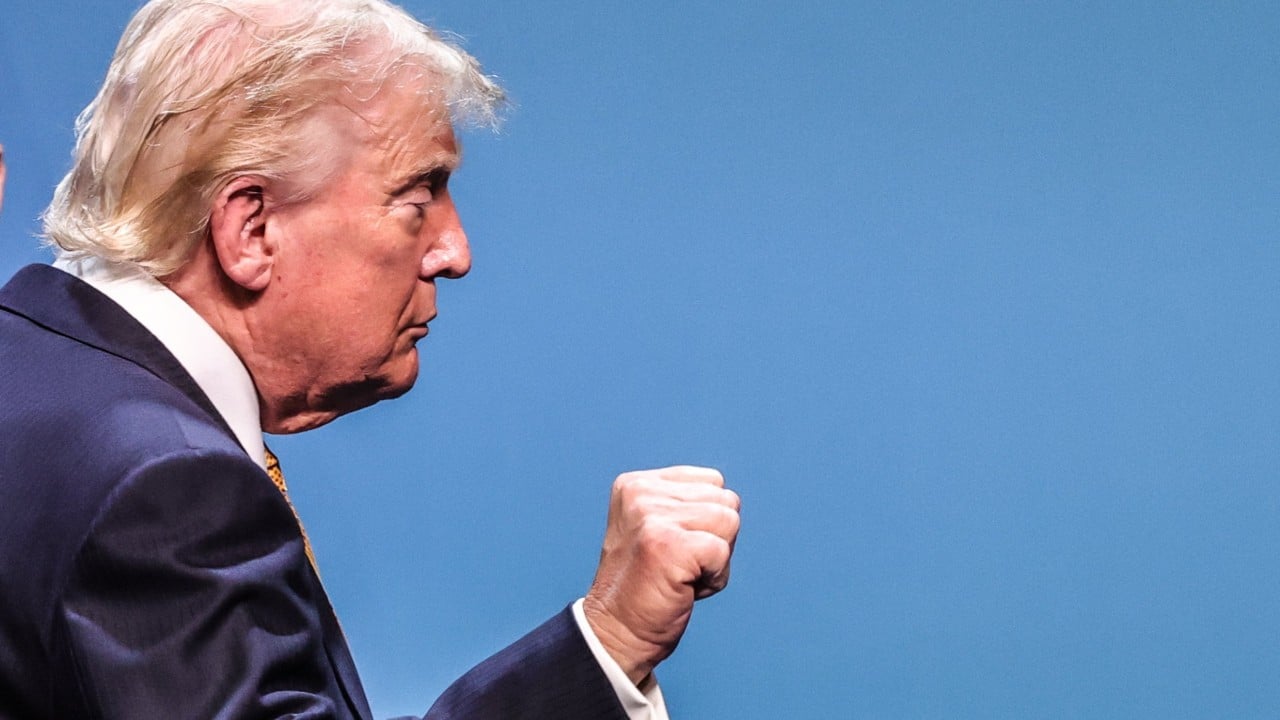
Donald Trump wants to charge admission to the world's most critical oil chokepoint.
By declaring the US the new "Guardian of the Hormuz Strait" and demanding a 20% toll on all cargo transiting the waterway, the White House has thrown global energy markets into a spin. Brent crude jumped past $86 a barrel almost immediately. Asian stock markets tanked.
The administration frames this fee as a simple reimbursement plan for US military security.
But in the real world of shipping, international law, and energy logistics, this plan is practically unenforceable. It is a massive tax on global trade disguised as a security fee, and it is pushing Asia to bypass the Persian Gulf entirely.
How the 20% Strait of Hormuz Toll Shatters Shipping Math
To understand why shipping executives are panicking, you have to look at the raw math. This is not a minor surcharge.
A 20% levy on cargo value completely breaks the economics of shipping crude oil. At current prices of around $80 to $86 a barrel, a single Very Large Crude Carrier (VLCC) carrying two million barrels of oil represents roughly $160 million in cargo value.
Under Trump's new toll, that single supertanker would owe the US government $32 million just to sail through the strait.
- The US toll: $32 million per supertanker.
- The old Iranian extortion fees: Around $2 million.
- The standard transit cost: Close to zero, historically.
No shipping company can absorb that. If passed down to the consumer, it adds roughly $16 to the cost of every single barrel of oil. That is an artificial price hike that rivals the worst OPEC supply cuts in history, enacted not by oil producers, but by the country claiming to protect the free flow of trade.
For comparison, think about the canals. Tolls for the Suez Canal or the Panama Canal exist because those are massive engineering projects that shortcut thousands of miles of travel. The Strait of Hormuz is a natural, international waterway. Shippers are being asked to pay billions of dollars for security they did not ask for, in a zone that has only become more dangerous because of the escalating conflict.
The Legal Fiction of a US Guarded Strait
The International Maritime Organization (IMO) was quick to point out the obvious. There is zero legal basis under international maritime law to charge ships for transiting an international strait.
Under Article 37 of the United Nations Convention on the Law of the Sea (UNCLOS), ships have the right of transit passage through straits used for international navigation. That passage cannot be suspended, blocked, or taxed.
Germany’s shipping giant Hapag-Lloyd went public with its outrage, stating flatly that charging tolls for passage through international waters is fundamentally wrong. They are right. If the US can unilaterally charge a 20% toll on the Strait of Hormuz, what stops China from charging a toll on the South China Sea, or Russia from taxing the Northern Sea Route?
The diplomatic fallout is already hitting Washington. US allies in the Persian Gulf are refusing to back the plan. Even key administration figures admit privately that there is zero regional support for charging tolls in international waters.
Meanwhile, Tehran is laughing all the way to the bank. Iranian Foreign Minister Abbas Araghchi mockingly agreed with Trump's logic, saying that whoever secures the strait should indeed be compensated—but argued that Iran, as the historic "guardian" of the waterway, is the one who should collect the cash, though he conceded 20% was "too much".
What we have now is a dangerous geopolitical staring contest. The US military is launching strikes to degrade Iran's capabilities. Iran is firing back with missiles targeting commercial tankers. And the shipping industry is left holding a multi-million-dollar bill for a war they want no part of.
How Asia is Already Bypassing the Gulf
If Trump's goal was to raise billions in revenue from Asian energy buyers, he underestimated how quickly supply chains can adapt.
Asia is the primary destination for crude flowing out of the Persian Gulf. When the blockade first threatened flows earlier this year, it caused panic. Now? Asian buyers are treating the Strait of Hormuz as a compromised route and are building permanent workarounds.
The Fujairah Bypass and East Coast Pipelines
Shippers are increasingly loading crude from ports outside the chokepoint, like Fujairah on the eastern coast of the United Arab Emirates. By utilizing overland pipelines that run from Abu Dhabi’s oil fields directly to the Gulf of Oman, buyers completely avoid entering the Strait of Hormuz. Saudi Arabia’s East-West pipeline to the Red Sea is seeing similar strategic interest.
Sourcing Alternative Crude
Instead of dealing with the logistical nightmare of US tolls and Iranian missiles, Asian refiners are shifting their buy orders.
- China and India are vacuuming up discounted Russian Urals and East Siberian Pacific Ocean (ESPO) blends, which bypass the Middle East entirely.
- South Korea and Japan are increasing their imports of West African blends and US shale, shipped via safer Atlantic routes.
- Southeast Asian hubs are importing more crude from Central Asia via overland pipelines.
This shift means the actual volume of oil transiting Hormuz is dropping. Rystad Energy tracked vessel transits through the strait falling by nearly half in a single week. Trump thinks this toll will be a massive cash cow for the US treasury. In reality, he is just accelerating the irrelevance of the very route he wants to tax.
The Economic Damage Beyond the Oil Barrel
Even if crude prices stay below the terrifying $120 peaks we saw in April, this toll creates a quieter, more insidious economic drag.
It is not just about unrefined crude. The Strait of Hormuz is a vital conduit for naphtha, liquefied petroleum gas (LPG), and refined petrochemicals.
These are the foundational ingredients for plastics, fertilizers, and industrial chemicals. If you tax these inputs by 20%, you spark a secondary inflation wave across manufacturing sectors in Japan, Taiwan, and South Korea.
We are already seeing the cracks. Singapore’s economic growth slowed to 5.7% in the second quarter, down from 6.3%. It turns out that even the massive global demand for artificial intelligence chips cannot fully protect trade-dependent nations from a sudden, military-enforced energy tax.
How Commodity Traders Must Play This Shock
If you are managing supply chains or trading energy derivatives, hoping for a diplomatic breakthrough is a losing strategy. The US-Iran ceasefire is dead, and the escalation is real.
First, stop expecting oil to automatically rocket back to $120. Global demand is softer than it was during the spring, and alternative supplies are keeping a lid on the market. A realistic ceiling for Brent crude sits around $90 to $95 a barrel, unless we see direct, catastrophic damage to major production facilities in Saudi Arabia or the UAE.
Second, prepare for a permanent premium on shipping insurance. Even if the US fails to collect its 20% toll, war risk premiums for ships entering the Persian Gulf are staying elevated.
Third, watch the pipeline capacities. The real winners of this crisis are the operators of overland pipelines in the Middle East and Central Asia. Companies that can guarantee delivery of crude to ports outside the Persian Gulf hold all the leverage.
Trump’s toll is a political play aimed at showing domestic voters that America will not police the world for free. But by treating an international shipping lane like a private turnpike, he is forcing the world’s largest energy buyers to find new routes, permanently reshaping global trade at America's expense.