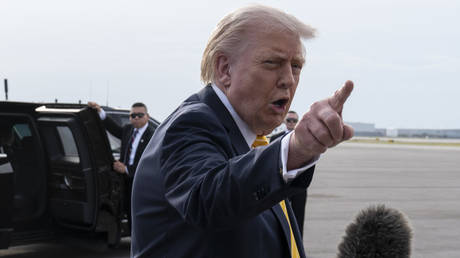
Donald Trump isn't buying what Tehran is selling. Over the weekend, the President shot down a 14-point peace proposal from Iran that aimed to end a war that’s been grinding on since late February. While the proposal looked like a path out of the chaos, Trump made his stance clear before boarding Air Force One. He doesn't think the Iranian regime has "paid a big enough price" yet.
It’s a classic Trump move. He’s betting that more pressure will yield a better deal, even as gas prices spike and the global economy shudders. The core of the disagreement isn't just about a ceasefire; it’s about who blinks first in the Strait of Hormuz.
The 14 point plan that went nowhere
Iran’s proposal, delivered via Pakistani mediators, tried to pull a fast one on the nuclear issue. They wanted to separate the immediate war—Operation Epic Fury—from the long-term dispute over their nuclear stockpile. Their plan suggested a 30-day window to resolve all issues, including a full withdrawal of U.S. forces and an end to the blockade on Iranian ports.
Tehran even threw in a "non-aggression pact" involving Israel and suggested they’d freeze uranium enrichment for 15 years. But there's a catch. They refused to dismantle any nuclear infrastructure. They basically asked the U.S. to walk away and lift all sanctions in exchange for a promise to stay at 3.6% enrichment down the road.
Trump’s response was blunt. He told reporters the campaign is "going great" and he isn't satisfied with the wording. Honestly, it’s not hard to see why. The U.S. is demanding that Iran hand over its 400kg stockpile of highly enriched uranium before the war officially ends. Iran wants the sanctions lifted first. It’s the ultimate stalemate.
Project Freedom and the Strait of Hormuz
While the peace talks are stuck, the situation in the water is moving fast. Trump just announced "Project Freedom." It’s a massive operation involving 15,000 service members and guided-missile destroyers. The goal? To "guide" stranded merchant ships out of the Strait of Hormuz.
The Strait has been a graveyard for global trade lately. About 20% of the world's oil and gas is trapped there because of the fighting and Iranian mines. Iran has already warned that any U.S. "interference" in the Strait is a violation of the current ceasefire. Trump, however, is framing this as a "humanitarian gesture."
He’s basically daring Iran to fire the first shot. If they do, he’s already threatened to "blast the hell out of them." It’s a high-stakes game of chicken. The U.S. military is reportedly ready for a "short and powerful" wave of strikes if the humanitarian escort gets harassed.
What the critics are saying
Not everyone is cheering for this aggressive posture. Senator Jack Reed and other Democrats are sounding the alarm. They argue that the 60-day window for the War Powers Act has already passed. Trump’s team, led by Pete Hegseth, claims the 60-day clock "pauses" during a ceasefire.
Legal scholars think that’s nonsense. But in the current political climate, Republican leadership isn't exactly rushing to stop him. The reality on the ground—or in the water—is that the U.S. is deeper into this conflict than it was two months ago.
Why this deal failed where others might work
The big mistake Iran made was timing. They tried to offer a "peace for sanctions" deal while they still held the Strait of Hormuz hostage. Trump sees the blockade as his biggest lever. He’s not going to give up the naval pressure until he gets a permanent "zero uranium" commitment.
You also have to look at the internal politics in Tehran. Reports suggest the Iranian leadership is fractured. The Revolutionary Guards are talking about an "impossible military operation," while the foreign ministry tries to play the diplomat. Trump smells blood in the water. He knows the Iranian economy is cratering under the combined weight of the blockade and internal protests.
What you should watch next
This isn't going to resolve itself with a polite phone call. If you’re tracking this, keep your eyes on the first few convoys of "Project Freedom." If those ships move through the Strait without a fight, Trump wins this round of the narrative. If Iran hits a destroyer, we’re looking at a full-scale escalation that makes the February strikes look like a warm-up.
For now, the ceasefire holds by a thread. But with peace offers being tossed in the trash and destroyers moving into the Strait, that thread is getting awfully thin.
Check the latest Brent crude prices. If they stay above $120, the domestic pressure on Trump to end this will only grow. If they drop, he has all the time in the world to wait for Tehran to buckle. Keep an eye on the Pakistani mediators; they’re the only ones still talking to both sides.