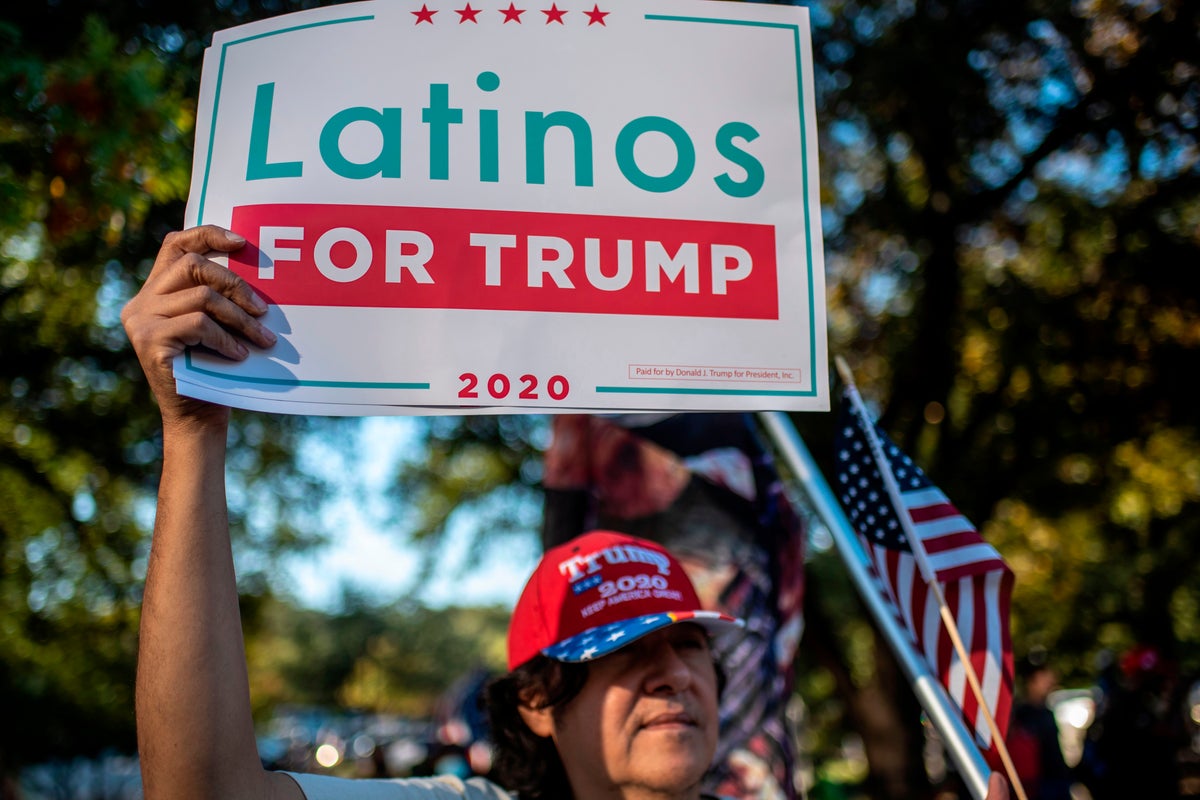
Donald Trump is facing a quiet crisis within the political coalition that returned him to the White House. The diverse, working-class alliance that delivered his 2024 victory is fracturing under the weight of economic reality, but national Democrats shouldn't start celebrating just yet.
A clear disconnect has emerged between voter frustration with the current administration and their willingness to embrace the opposition. Recent data paints a stark picture of a restless electorate. For the first time in his second term, Trump's net approval rating among white working-class voters has dipped into negative territory. His overall numbers on economic management have dropped to a career low of 31 percent, driven by public exhaustion over stubborn inflation and geopolitical anxieties.
Yet, the voters walking away from the president are not racing into the arms of the Democratic Party. Instead, they are drifting into a political no-man's-land. They are disillusioned, disengaged, and deeply skeptical of both major parties. This creates a massive, unpredictable bloc of swing voters who feel entirely politically homeless.
The Cracks in the Working Class Coalition
The political realignments of 2024 were supposed to be permanent. Pundits argued that the working class had fundamentally shifted toward the Republican banner. Look at the numbers from that election, and it's easy to see why people believed it. Trump pulled historic numbers from Hispanic men, chipped away at the Democratic hold on young voters under thirty, and solidified a massive 25-point lead in rural communities.
The picture looks very different today. The irregular and low-propensity voters who surged to the polls to vote for an economic turnaround feel a growing sense of buyer's remorse.
Focus groups conducted by organizations like Syracuse University's Institute for Democracy, Journalism & Citizenship reveal a striking pattern. Voters who backed Trump because they believed his business background would lower their cost of living are scratching their heads. They see a national average gas price sitting stubbornly over four dollars, ongoing manufacturing job losses, and persistent inflation. They don't feel richer. They feel squeezed.
The core issue for the administration is that these working-class voters are highly practical. They lack deep ideological loyalty to the conservative movement. When a voter's primary motivation is "make my groceries cheaper," and those groceries stay expensive, their political allegiance vanishes quickly. The administration's aggressive policy maneuvers and ongoing international tensions haven't delivered the immediate financial relief these families expected, causing support to erode.
Why the Left is Failing to Close the Deal
Logically, a drop in support for a sitting president should mean an automatic win for the opposition. That isn't happening. The Democratic National Committee released scathing rapid-response statements highlighting Trump's underwater approval ratings on the economy and trade. But pointing out a rival's failures isn't the same as offering a compelling alternative.
The internal post-mortems from the last presidential election cycle offer a brutal explanation for this failure. A recent Democratic autopsy report acknowledged that millions of working-class Americans continue to feel completely alienated by the cultural and economic messaging of the left. The party is seen by these voters as hyper-focused on progressive social issues while failing to project strength, unity, or basic economic competence.
When voters drift away from the current administration, they aren't looking for a return to the exact same platform they rejected a short while ago. They are looking for moderation, predictability, and tangible economic relief.
The biggest challenge for the opposition is a total lack of trust. The swing voters who are currently abandoning Trump are the exact same irregular voters who chose to stay home or vote third-party in previous cycles. They are politically elastic. They don't read party platforms, and they don't watch cable news commentary. If they feel ignored by the left and let down by the right, their default reaction isn't to switch sides. Their default reaction is to drop out of the system entirely.
The Reality of the Elastic Voter
To understand how this playing field will shake out, you have to look at how different parts of the electorate actually behave. Political data from Catalist and the Pew Research Center shows that the electorate is divided into distinct behavioral groups.
Frequent voters have deeply entrenched partisan identities. They rarely change their minds, and they turn out for every single election, rain or shine. The entire political debate focuses on the irregular voters. These individuals are much younger, far more racially diverse, and completely detached from institutional politics.
In 2024, these irregular voters swung heavily toward the right. It wasn't because they suddenly became conservative footprint believers. It was a vote against the status quo. Now that the status quo belongs to a second Trump term, that same volatile energy is turning against the White House.
The mistake national strategists make is treating these shifts as permanent ideological conversions. When an independent voter in Arizona or Michigan expresses frustration with current border enforcement chaos or rising interest rates, they aren't signing up for a lifetime partisan membership. They are evaluating their immediate circumstances.
Moving Past the Two Party Stagnation
For anyone trying to navigate this chaotic environment, the old political playbook is completely useless. Relying on traditional partisan tribalism won't work when a massive chunk of the country actively dislikes both options on the table.
True political survival and influence over the next few years require a completely different approach to engaging with the public.
- Ditch the Cultural Culture Wars: Voters who are struggling to pay rent or keep their small businesses open are completely checked out of high-profile cultural debates. Focus heavily on practical, kitchen-table economics.
- Acknowledge Economic Pain Directly: Denying that inflation hurts or telling voters that the economy is actually great according to abstract corporate charts is a recipe for political disaster. Validate the struggle.
- Build Localized Ground Games: Mass media advertising campaigns are yielding lower returns. Real persuasion is happening through sustained, door-to-door community organizing that addresses local infrastructure and regional employment needs.
- Offer Competency Over Ideology: The modern swing voter is exhausted by chaos from all sides. The most valuable political currency right now is basic institutional competence and a calm, predictable approach to governing.
The current political landscape isn't a story of one party winning and the other losing. It's a story of an electorate that feels completely unrepresented by the choices before them. The coalition that shook up American politics is fracturing, but the space it leaves behind remains entirely up for grabs. Winning those voters back requires proving you can actually make their day-to-day lives easier, a standard that neither side is currently meeting.