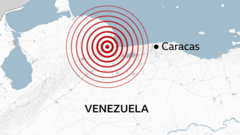
Seismic risk assessment remains fundamentally flawed because public reporting and primitive risk models rely almost exclusively on a single metric: moment magnitude ($M_w$). This systemic oversimplification creates catastrophic blind spots for infrastructure planning, supply chain management, and reinsurance underwriting. True seismic destruction is not a function of energy release at the source; it is an emergent property dictated by a three-dimensional matrix of variables: focal depth, rupture mechanism, lithospheric attenuation, and localized soil dynamics.
Evaluating a region’s vulnerability requires moving past simple geographic mapping to quantify the precise structural decay of seismic waves as they transition from the hypocenter to the built environment.
The Three-Dimensional Matrix of Energy Attenuation
To accurately model how an earthquake impacts surface structures, the analytical framework must isolate the geometric and physical variables that govern energy dissipation. The energy released during a fault rupture undergoes deterministic decay as it travels through the earth's crust.
The Depth-Proximity Inverse Paradox
Focal depth—the distance between the earth's surface and the hypocenter where the rupture originates—dictates the initial geometric spreading of seismic waves. Earthquakes are classified into three distinct operating bands: shallow (0 to 70 kilometers), intermediate (70 to 300 kilometers), and deep (300 to 700 kilometers).
Energy Density at Surface ∝ 1 / (Depth)^2
Shallow earthquakes represent the highest surface-level destruction potential per unit of magnitude. Because the hypocenter sits proximate to civil infrastructure, the body waves (P-waves and S-waves) have minimal spatial distance over which to attenuate. The geometric spreading wavefront expands over a smaller volume, delivering an exceptionally high concentration of kinetic energy to the surface.
Conversely, deep earthquakes, such as those occurring within subducting slabs in the deep mantle, may release massive amounts of energy ($M_w > 7.5$) but present negligible risk to surface structures. The wave energy must traverse hundreds of kilometers of heterogeneous lithosphere and asthenosphere. Viscoelastic damping and extensive geometric scattering attenuate the high-frequency components of the seismic wave train before it reaches the crust.
Surface Wave Generation Mechanics
The depth of the hypocenter also dictates the efficiency of surface wave generation. Rayleigh and Love waves are created by the interaction of body waves with the free surface of the earth.
- Shallow Faulting (0-15 km): Generates high-amplitude surface waves. These waves decay at a lower rate than body waves—attenuating at $1/\sqrt{r}$ where $r$ is distance, compared to $1/r$ for body waves. Surface waves dominate the long-period ground motion that systematically destroys mid- to high-rise structures.
- Deep Faulting (>100 km): Fails to efficiently excite surface waves. The energy arrives at the surface almost exclusively as near-vertical body waves, which exhibit short durations and high frequencies that generally match the resonant frequencies of low-rise masonry rather than large-scale infrastructure.
Lithospheric Architecture and Fault Zone Dynamics
Earthquakes do not occur in structural vacuums. The geographical distribution of seismic events is governed by plate tectonics, but the specific vulnerability of a location depends on the interface mechanics of the local fault systems.
Tectonic Boundary Typologies and Rupture Profiles
The geometric profile of a fault zone determines the maximum credible magnitude and the dominant orientation of ground motion.
| Boundary Type | Dominant Stress State | Fault Geometry | Maximum Magnitude Potential | Primary Ground Motion Vector |
|---|---|---|---|---|
| Convergent (Subduction Zones) | Compression / Thrust | Low-angle Megathrust | Exceptionally High ($M_w$ 8.0–9.5) | Combined Horizontal and Vertical |
| Divergent (Rifts/Ridges) | Tension / Extension | Normal Faulting | Moderate ($M_w$ 5.0–6.5) | Vertical Dominant |
| Transform (Strike-Slip) | Shear | Near-Vertical | High ($M_w$ 7.0–8.0) | Horizontal Dominant |
Megathrust faults along subduction zones feature massive surface areas of locked lithospheric interface. The structural mechanics of a low-angle dipping plane allow thousands of square kilometers of crust to rupture simultaneously. This scale of rupture produces prolonged durations of shaking—often exceeding three to five minutes—which fatiguing structural steel and concrete beyond elastic thresholds.
Strike-slip boundaries operate along near-vertical planes. While their maximum magnitude is physically constrained by the width of the brittle crust (typically the upper 15–20 kilometers), their horizontal displacement matches the vulnerability profile of modern civil engineering, which is highly sensitive to lateral shear forces.
The Velocity Contrast and Rupture Directivity Factor
A critical omission in basic seismic maps is the directivity of the rupture. Fault ruptures do not happen instantaneously; they propagate along the fault plane at a finite speed, usually calculated as 70% to 90% of the local S-wave velocity ($V_s$).
When a fault ruptures unilaterally toward a specific geographic location, an effect known as seismic directivity occurs. The fault rupture travels at a speed close to the wave propagation speed, causing the seismic energy to compress into a single, high-amplitude pulse. This creates a "forward directivity" velocity pulse delivered to any infrastructure positioned along the path of the advancing rupture. The location at the receiving end of this pulse experiences ground accelerations that far exceed standard predictive models based on magnitude alone.
Site Amplification and Subsurface Rheology
The final determinant of structural failure is not the rock mechanics at the fault, but the unconsolidated sedimentary profile beneath the target asset. This is where seismic energy is structurally modified immediately before impacting a foundation.
Soil-Structure Resonance and Shear-Wave Velocity ($V_{s30}$)
Geotechnical engineering quantifies site conditions by measuring the time-averaged shear-wave velocity in the upper 30 meters of the subsurface profile, defined mathematically as:
$$V_{s30} = \frac{30}{\sum_{i=1}^{N} \frac{d_i}{v_i}}$$
Where $d_i$ and $v_i$ represent the thickness and shear-wave velocity of the $i$-th soil layer, respectively.
[Bedrock: High Velocity, Low Amplitude] ──> [Soft Soil: Low Velocity, High Amplitude]
When seismic waves pass from high-velocity bedrock ($V_{s30} > 760 \text{ m/s}$) into low-velocity, unconsolidated alluvial soils or artificial fill ($V_{s30} < 180 \text{ m/s}$), the conservation of energy flux dictates that the wave amplitude must increase dramatically to compensate for the drop in velocity.
This impedance contrast causes severe site amplification. Soft soils act as mechanical amplifiers, changing low-amplitude bedrock motions into violent, long-period surface accelerations. Furthermore, if the fundamental resonant frequency of the soft soil matches the natural frequency of the buildings above it, a resonance loop occurs, driving structural deformations to the point of collapse.
Liquefaction Susceptibility Metrics
Soft, saturated, cohesionless soils present an additional structural hazard: cyclic liquefaction. During sustained cyclic shearing from S-waves and surface waves, the pore water pressure within loose sand or silt layers increases until it equals the overburden pressure.
$$\sigma'_0 = \sigma_0 - u$$
When effective stress ($\sigma'_0$) drops to zero, the soil loses all shear strength and transitions into a liquid state.
Foundations lose bearing capacity instantaneously. Structures experience differential settlement, tilting, and catastrophic lateral spreading failures. Mapping seismic risk without overlaying high-resolution water table data and grain-size distribution metrics produces a fundamentally inaccurate risk profile.
Technical Limitations of Seismological Metrics
Deploying capital or designing engineering specifications based on common seismological scales introduces significant mathematical errors. Risk analysts must understand what these metrics measure and where they fail.
The Saturation of Local and Body-Wave Magnitudes
The Richter local magnitude ($M_L$) and the body-wave magnitude ($m_b$) are mathematically constrained by the instruments used to develop them.
- $M_L$ Saturation: Begins to fail at approximately magnitude 6.5 because it measures the peak amplitude of high-frequency high-gain seismographs. Higher-energy events release their increased energy at longer periods, which $M_L$ cannot capture.
- $m_b$ Saturation: Saturates at roughly magnitude 7.0 because it utilizes short-period P-waves (around 1 second).
Relying on these metrics during a major event underestimates the true energy output of the fault system. The moment magnitude ($M_w$) scale solves this by measuring the scalar seismic moment ($M_0$):
$$M_0 = \mu \cdot A \cdot D$$
Where $\mu$ is the shear modulus of the crustal rock, $A$ is the ruptured fault surface area, and $D$ is the average slip displacement along the fault. The moment magnitude is then calculated directly from this physical metric:
$$M_w = \frac{2}{3} \log_{10}(M_0) - 9.1$$
While $M_w$ prevents mathematical saturation, it remains a source-centric metric. It offers zero data regarding the directional distribution of energy or localized ground motions.
Peak Ground Acceleration versus Spectral Acceleration
For asset hardening and structural design, Peak Ground Acceleration (PGA) is an insufficient metric. PGA measures the absolute maximum acceleration experienced by a single particle on the ground during an earthquake.
A high PGA with a very short duration and high frequency contains very little destructive energy for a 30-story building. Engineers require Spectral Acceleration (SA), which models the maximum acceleration experienced by a idealized single-degree-of-freedom oscillator with a specific natural period and damping ratio.
Using Response Spectra curves allows analysts to evaluate how specific structural designs will behave under the exact frequency distribution of expected seismic waves at that exact geographical coordinate.
Structural Risk Mitigation Framework
To transform these geological and physical realities into actionable strategy, risk managers must deploy a clear framework for auditing and hardening physical assets.
[Step 1: Geotechnical Vs30 Mapping]
              │
              ▼
[Step 2: Spectral Acceleration Modeling]
              │
              ▼
[Step 3: Structural Resonance Tuning]
              │
              ▼
[Step 4: Non-Structural Component Anchoring]
- Execute High-Resolution Geotechnical Profiling: Never rely on regional soil maps. Run site-specific Multichannel Analysis of Surface Waves (MASW) testing to establish the exact $V_{s30}$ profile and identify hidden impedance boundaries beneath critical infrastructure.
- Model Spectral Acceleration Across Asset Portfolios: Shift asset valuation models from PGA to Spectral Acceleration at specific structural periods ($SA_{0.2s}$ for low-rise, $SA_{1.0s}$ for high-rise). This step isolates which buildings are structurally mismatched with the underlying soil profile.
- Decouple Structural Resonance via Base Isolation: For high-value or high-occupancy assets on soft soil, integrate elastomeric or friction pendulum base isolation systems. This mechanically decouples the superstructure from ground motion, shifting the building's natural period away from the destructive high-amplitude periods amplified by the soil.
- Implement Non-Structural Seismic Anchoring: More than 70% of economic losses in modern commercial structures result from non-structural damage, including ruptured fire suppression lines, displaced HVAC systems, and data center server tip-overs. Implement rigid anchoring and flexible piping loops capable of absorbing calculated lateral displacements.
Portfolio exposure must be rebalanced away from deep sedimentary basins located near active strike-slip or thrust faults. Where geographic relocation is impossible, capital expenditure must prioritize foundation stabilization, such as deep jet-grouting or stone column insertion, to artificially drive the local $V_{s30}$ metric out of the liquefaction-susceptible range. Use specific response spectra rather than magnitude maps to calculate financial exposure and set insurance premiums.