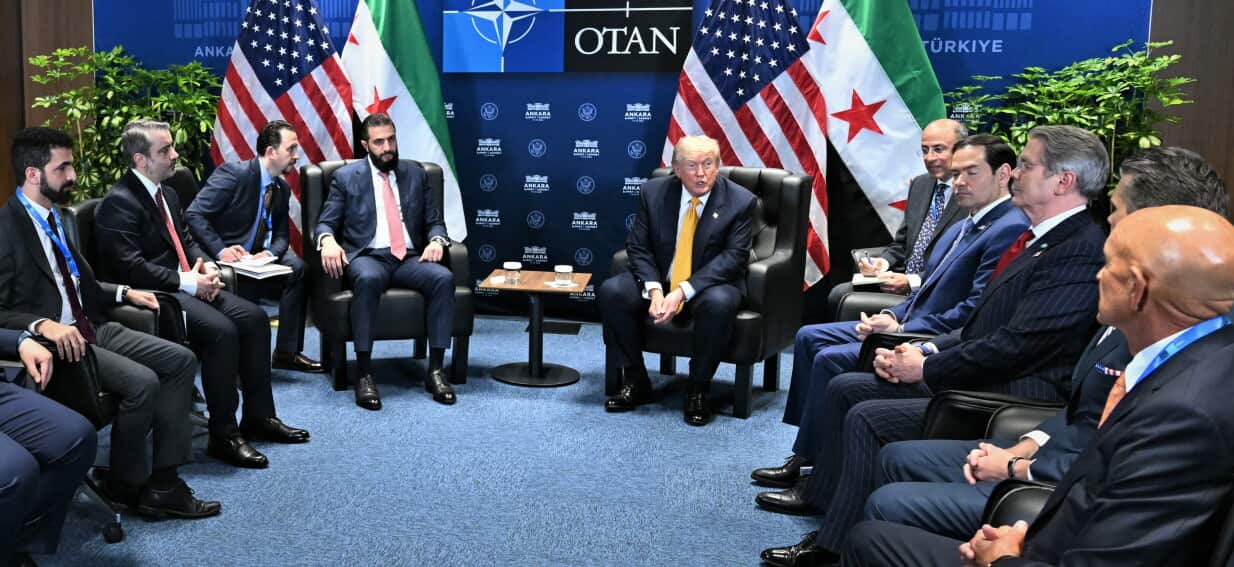
The friction observed during the NATO summit regarding Western policy toward Iran is not an isolated diplomatic disagreement. It represents a fundamental structural decoupling driven by asymmetric risk exposures, conflicting economic realities, and irreconcilable definitions of strategic sovereignty. While the United States operates from a position of relative geographic insulation and energy independence, European states face direct exposure to Middle Eastern instability. This systemic asymmetry explains why European allies are actively increasing their distance from the American policy of maximum pressure, choosing instead to construct independent mechanisms to preserve institutional agreements.
To evaluate this divergence objectively, the situation must be analyzed through the structural realities that dictate state behavior, rather than the rhetoric of summit communiqués. The rift exposes a deeper vulnerability within the transatlantic alliance: the weaponization of dollar-denominated finance against the security priorities of traditional allies.
The Asymmetric Risk Matrix
The variance in policy response between the United States and the European trio of France, Germany, and the United Kingdom—collectively known as the E3—stems from a divergence in core national interests. These interests can be categorized into three distinct risk vectors.
Geographic Proximity and Migration Flux
The United States enjoys the security benefits of geographic isolation from the Middle East. For European nations, the region represents a contiguous neighborhood. Any escalation of kinetic conflict in Iran or the wider Persian Gulf triggers an immediate, predictable flow of forced migration toward the European continent. The domestic political stability of EU member states is highly sensitive to migration shocks, making the avoidance of regional destabilization an existential internal policy requirement for European leaders.
Energy Security and Supply Chain Vulnerabilities
Although the United States has transitioned into a net exporter of hydrocarbon energy, Europe remains structurally dependent on imported oil and natural gas. While Europe does not import significant volumes of crude directly from Iran due to previous sanctions regimes, European economies are highly vulnerable to global commodity price shocks. A disruption in the Strait of Hormuz, through which approximately one-fifth of global petroleum passes, introduces immediate inflationary pressure into the European industrial base. American policy that risks disrupting this transit corridor directly threatens European macroeconomic stability.
The Proliferation Horizon
The European approach to the Joint Comprehensive Plan of Action is rooted in regional non-proliferation mechanics. From the E3 perspective, a flawed verifiable agreement that caps uranium enrichment at 3.67 percent is superior to a collapse of the regulatory framework that could lead to rapid, unmonitored breakout capacity. The European calculation concludes that a nuclear-armed Iran, or a regional war intended to prevent that outcome, poses a direct threat to the European security perimeter, whereas the United States views the threat through a broader, less immediate global power projection lens.
The Mechanics of Extraterritorial Financial Coercion
The core mechanism driving European resistance—and its subsequent failure to fully insulate its domestic industries—is the extraterritorial application of United States primary and secondary sanctions. This structural reality overrides political alignment and forces a decoupling of state policy from corporate execution.
The architecture of secondary sanctions targets non-US citizens and non-US companies for engaging in economic activity with sanctioned Iranian entities. The operational leverage of the United States rests on two pillars:
- Access to the US Dollar Clearing System: Any transaction that touches a US financial institution, clears through a US-based correspondent bank, or utilizes the Fedwire system falls under US jurisdiction. Because the global commodities trade is overwhelmingly denominated in dollars, avoiding this system requires abandoning global market liquidity.
- The Threat of Exclusion: The United States Treasury Department's Office of Foreign Assets Control possesses the authority to cut off non-US banks and corporations from the American financial market if they violate secondary sanctions. For a European multinational or mid-sized financial institution, the choice between the Iranian market and the United States market is economically absolute. The revenue potential of the Iranian economy is a fraction of a percent of their total global exposure.
The direct outcome of this vulnerability was the mass exodus of European corporate entities from Iran following the US withdrawal from the nuclear accord, despite explicit political directives from Brussels and European capitals urging companies to remain. French energy conglomerates, German automotive firms, and British engineering entities uniformly prioritized risk mitigation over state-level foreign policy objectives.
The Failure of Institutional Countermeasures
To combat this erosion of economic sovereignty, European governments attempted to construct defensive financial architecture. The primary mechanism, the Instrument in Support of Trade Exchanges, was designed to facilitate non-dollar, non-SWIFT barter trade with Iran.
The structural logic of this mechanism was flawed from its inception. It functioned as a dual-mirror clearing house where European exporters to Iran were paid by European importers of Iranian goods, eliminating the cross-border movement of funds and avoiding the US financial plumbing. However, the system failed due to two structural bottlenecks:
- The Exclusion of Oil Trades: To avoid triggering immediate US retaliatory sanctions on European central banks, the mechanism was initially restricted to humanitarian goods, medical devices, and agricultural products. Iran's primary source of hard currency—hydrocarbon export—was excluded, removing the core economic incentive for Iranian participation.
- Corporate Risk Aversion: Even with a state-backed clearing house, private European firms refused to utilize the platform. The threat of US secondary sanctions remained applicable to the entities themselves, regardless of the payment channel used. Corporate compliance officers determined that the reputational and financial risks of being blacklisted by Washington outweighed any potential profit from humanitarian trade.
This failure demonstrated that political declarations of strategic autonomy are toothless when confronted with the deep integration of the global financial system under American regulatory hegemony.
Structural Decay of the NATO Framework
The fallout from the NATO summit indicates that the disagreement over Iran policy is degrading the operational cohesion of the broader alliance. NATO relies on the principle of indivisible security, a concept that becomes untenable when the dominant member state utilizes economic warfare against the explicitly stated security interests of its allies.
The weaponization of trade and financial access introduces severe institutional friction. When the United States imposes sanctions that harm the commercial interests of its allies without prior consultation or consensus-building, it damages the underlying trust required for long-term intelligence sharing and joint military planning. The E3 states increasingly view American policy not as a strategy designed to achieve mutual security, but as a unilateral directive that externalizes its negative externalities onto Europe.
The second dimension of this decay is the polarization of multilateral institutions. The United States has repeatedly threatened to invoke the snapback mechanism within United Nations Security Council Resolution 2231 to reinstate global sanctions on Iran. European members of the Security Council have resisted this move, creating a public fracturing of the Western coalition on the global stage. This public division dilutes the coercive credibility of the alliance, signaled to adversarial powers that the Western bloc can be split along economic and regulatory fault lines.
The Transatlantic Realignment
The divergence observed at the NATO summit is not a temporary tactical disagreement that can be resolved through diplomatic engagement. It is a structural shift. Moving forward, European states will likely accelerate efforts to reduce their vulnerability to US extraterritorial jurisdiction. This will manifest in long-term investments in alternative, non-dollar clearing mechanisms, the diversification of global reserves, and the strengthening of European blocking statutes designed to penalize domestic companies that comply with foreign sanctions.
The definitive forecast for the transatlantic relationship regarding Middle Eastern security is one of managed divergence. The United States will continue to deploy its financial hegemony unilaterally to isolate its targets, while European nations will increasingly adopt a posture of strategic hedging. They will maintain formal alliance commitments under the NATO umbrella for territorial defense against eastern threats, while operating independent, frequently contradictory diplomatic tracks in the global south and the Middle East to safeguard their immediate economic and geographic perimeters.