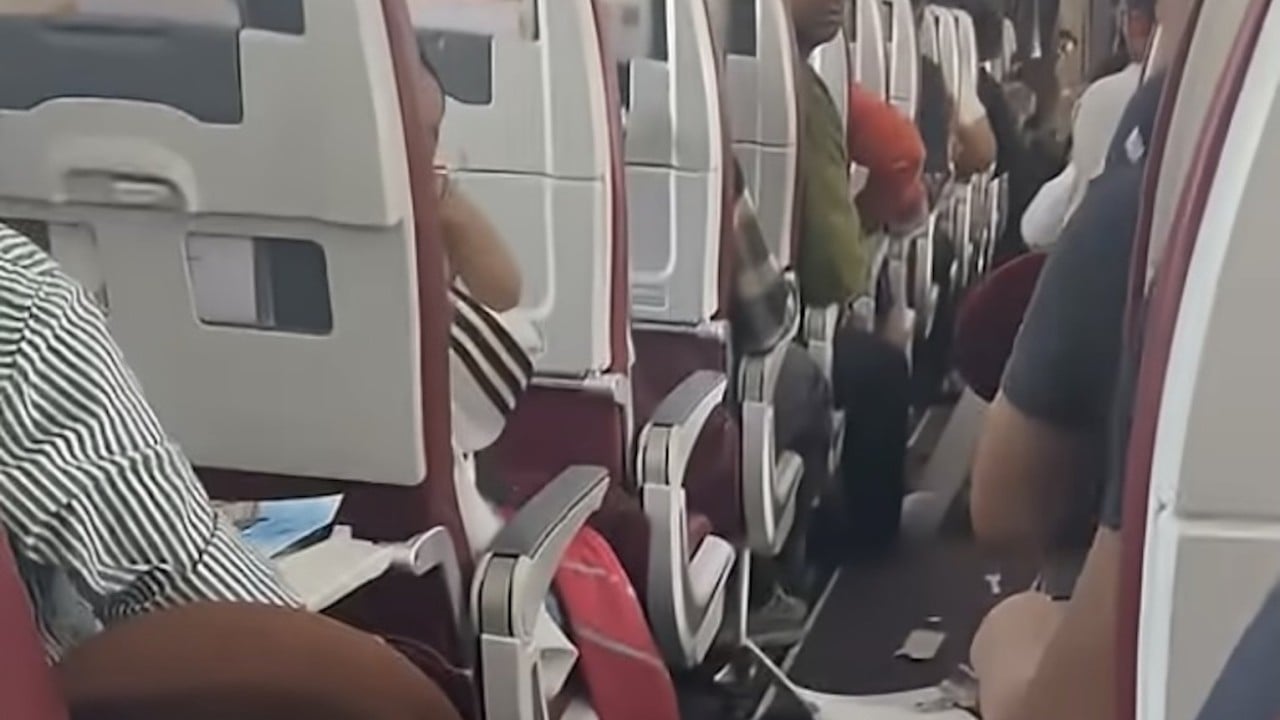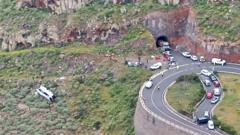
A routine transfer from the airport to a holiday resort in the Canary Islands turned fatal this week when a bus carrying 45 British tourists crashed on a winding stretch of road in Gran Canaria. One woman is dead, and several others remain in critical condition after the vehicle veered off the GC-500 highway between Pasito Blanco and El Pajar. While early reports point toward mechanical failure or driver error, a deeper investigation into the incident reveals a systemic strain on the infrastructure of the Canary Islands, where the sheer volume of post-pandemic tourism is colliding with aging transport networks and a labor crisis in the logistics sector.
The crash occurred in the municipality of San Bartolomé de Tirajana, a region known for its rugged volcanic terrain and steep, narrow coastal passes. Emergency services were on the scene within minutes, but the wreckage told a story of a violent impact that the modern safety features of a commercial coach could not fully mitigate. This was not a isolated freak accident. It is a symptom of a geography that is being asked to do too much.
The Cracks in the Macaronesian Paradise
The Canary Islands are currently grappling with a record-breaking influx of visitors. In 2025, the archipelago saw tourism numbers exceed 16 million, a figure that has pushed the local road networks to their absolute limit. The GC-500, where the accident took place, is a secondary road often used by tour operators to avoid the heavy congestion of the main GC-1 motorway. However, these secondary routes were never engineered to handle the constant rotation of 50-seater coaches.
Road maintenance in volcanic regions is a constant battle against erosion and thermal expansion. The asphalt on these islands endures intense UV radiation and salt air, which degrades the binding polymers faster than in mainland Europe. When you combine degrading road surfaces with the weight of heavy passenger vehicles, the margin for error disappears. Local transport unions have previously raised concerns about the "bottleneck effect" on the southern coast, where tourism development has outpaced the modernization of the transit corridors connecting the airports to the southern dunes.
The Driver Fatigue Factor
Beyond the asphalt, we have to look at the person behind the wheel. The European transport sector is currently facing a deficit of over 400,000 qualified heavy-vehicle drivers. In the Canary Islands, this shortage is magnified by the seasonal nature of the work. Drivers are often pushed to work the maximum allowable hours under EU Tachograph regulations to meet the demands of flight schedules.
While the "split shift" is legal, it is grueling. A driver may start at 4:00 AM for airport arrivals, take a long unpaid break in the middle of the day, and then work late into the evening for departures. Science tells us that circadian rhythms don't care about legal loopholes. Micro-sleeps and reduced reaction times are the silent killers in the tourism industry. Investigative audits into recent accidents in the Mediterranean basin suggest that while vehicles often pass their ITV (Technical Vehicle Inspection), the human element is being redlined.
Safety Standards and the Coach Industry Myth
There is a persistent belief among travelers that a "luxury coach" is a fortress on wheels. In reality, the safety of these vehicles is heavily dependent on the integrity of the "roll cage" and the use of seatbelts by passengers. In many holiday coach accidents, the primary cause of death is not the impact itself, but the ejection of passengers who were not buckled in.
Spanish law requires all passengers in coaches to wear seatbelts if the vehicle is equipped with them. However, enforcement is virtually non-existent once the bus leaves the airport terminal. Tour reps often focus their briefings on hotel check-in times and excursion sales rather than the grim necessity of clicking a belt into place for a 20-minute transfer.
- Vehicle Age: The average age of the Spanish coach fleet has crept upward as companies delayed fleet renewals during the lean years of 2020-2022.
- Active Safety Tech: Many older coaches lacks Automatic Emergency Braking (AEB) or Lane Departure Warning systems that are now standard on newer models.
- Maintenance Logs: Independent analysts have noted a trend where "minor" faults in braking systems are deferred during the peak summer and winter seasons to keep the maximum number of vehicles on the road.
The Economic Pressure of Low Cost Transfers
We have to talk about the money. The tourism model in the Canary Islands is heavily reliant on high-volume, low-margin packages. When a traveler books a "free" or low-cost transfer, that cost is absorbed by a subcontracted local transport company that is bidding for the contract at the lowest possible price point.
When margins are razor-thin, something has to give. It usually starts with the maintenance schedule. Then it moves to the wages, which drives experienced drivers toward more lucrative freight work on the mainland, leaving less experienced operators to navigate the treacherous coastal roads of the islands. This is the hidden trade-off of the modern holiday. We demand lower prices, and the industry responds by stripping back the invisible safety nets that we take for granted.
Geopolitical Impact on Local Logistics
The Canary Islands are not just a holiday destination; they are a logistical outpost. Everything from fuel to spare parts must be shipped in. Recent disruptions in global supply chains have meant that critical components for specialized bus chassis can take weeks or months to arrive. This creates a dangerous incentive for "patchwork" repairs. A mechanic might choose to fix a hydraulic leak with a temporary seal rather than grounding a vehicle for three weeks while waiting for a part from Germany or mainland Spain.
In the San Bartolomé de Tirajana crash, investigators will be looking closely at the skid marks—or lack thereof. A lack of braking evidence often points to a catastrophic failure of the pneumatic systems or a driver who was incapacitated before the veering began.
A Reckoning for Tour Operators
For the major British tour operators, this accident is a public relations nightmare, but it should be a catalyst for operational reform. The "duty of care" extends beyond the hotel lobby. It must include a rigorous, unannounced auditing process of the third-party transport providers they hire.
Currently, many operators rely on "self-certification" from their local partners. This is a paper exercise that proves nothing about the actual state of the vehicles or the fatigue levels of the staff. True accountability would involve telematics data sharing, where the tour operator can see in real-time if a driver is speeding or if a vehicle has been running for too many consecutive hours without a break.
The British government, through the Foreign, Commonwealth & Development Office (FCDO), provides travel advice, but it rarely dives into the specifics of local transport safety. There is a strong argument for a "safety rating" system for international transfer companies, similar to the star ratings used for hotels. Travelers deserve to know if the company carrying their family has a history of maintenance violations or if they are using a fleet that is over a decade old.
The winding roads of Gran Canaria are unforgiving. They require a combination of mechanical perfection and total driver alertness. When the industry prioritizes the schedule over the system, the cost is measured in human lives. The woman who died this week was not just a statistic in a travel brochure; she was a casualty of a tourism machine that is running too hot and too fast for its own infrastructure to handle.
Travelers should start asking harder questions at the booking stage. Don't just ask about the pool or the buffet. Ask about the age of the transfer fleet. Ask if the drivers are given adequate rest between shifts. If the industry won't regulate itself, the consumer must force the change by voting with their wallet. The silence of a coastal road after a crash is a heavy price to pay for a cheap transfer.