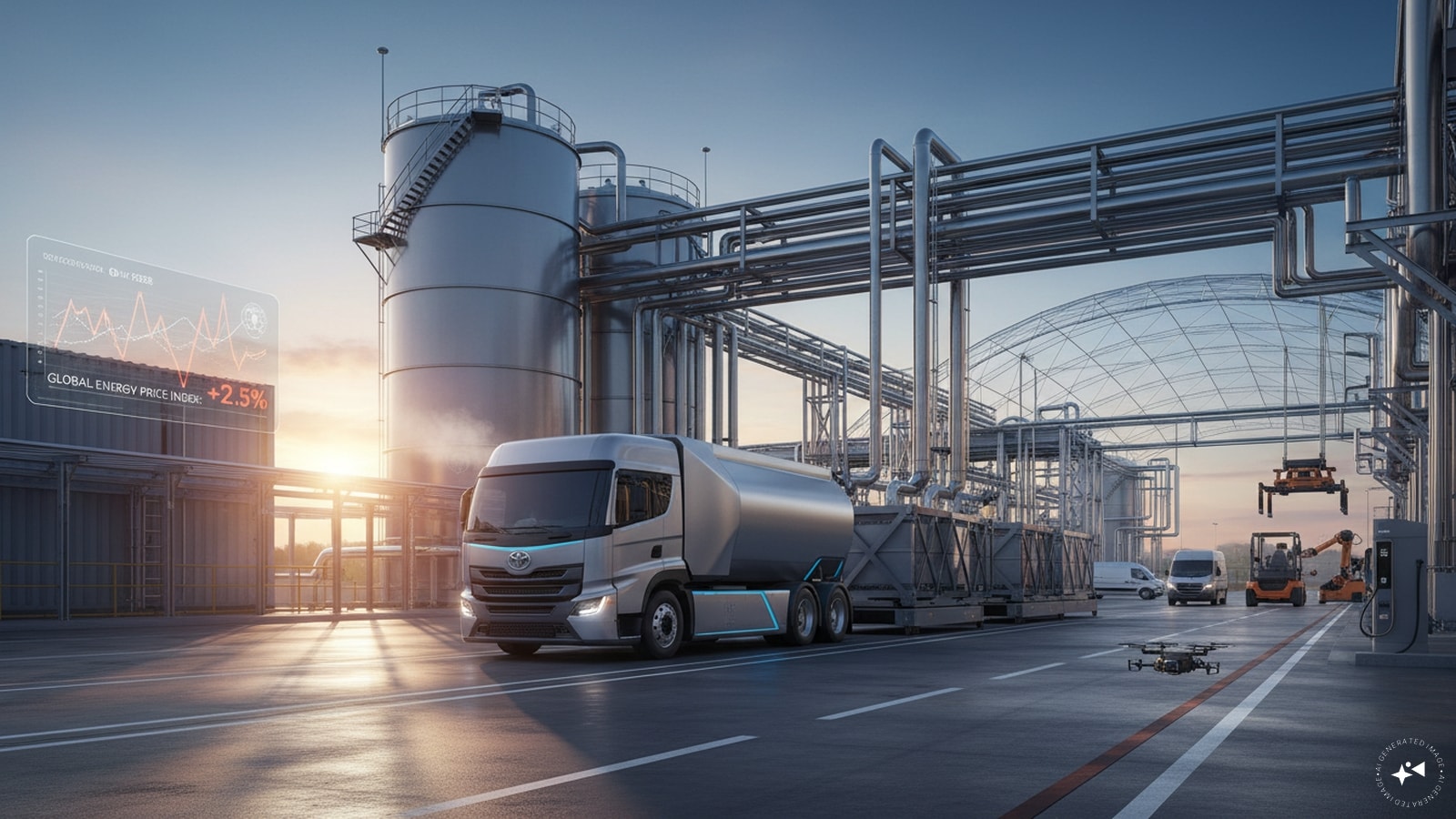
Passenger cars running on hydrogen fuel cells turned out to be a dead end. You can build a brilliant sedan like the Mirai, but if drivers have nowhere to fill it up, the engineering doesn't matter. Toyota spent years fighting that uphill battle while consumer adoption flatlined. Now, escalating global energy strains, volatile fuel prices, and supply chain shocks are forcing a hard pivot.
Instead of chasing consumer car sales, the company is eyeing hydrogen for something much larger: the heavy trucks that ship auto parts and fuel its factory networks. It's a pragmatic retreat from an impossible retail market into controlled industrial loops where hydrogen might actually make economic sense.
The Reality Check Behind Japan's Fuel Supply Anxiety
Global conflicts and shifting oil markets have exposed the fragility of traditional fuel supply chains. When gasoline prices spike and energy imports tighten, manufacturing powerhouses like Japan feel the squeeze immediately. Vice Chairperson Koji Sato recently highlighted that ongoing geopolitical tensions, such as conflicts affecting the Middle East, have driven up conventional fuel costs and strained energy reserves.
For an industrial titan that relies on hyper-efficient just-in-time logistics, volatile energy prices threaten the bottom line. Factories cannot operate smoothly when the transport networks bringing in components face unpredictable fuel costs. This vulnerability explains why leadership is looking past passenger vehicles and focusing squarely on heavy-duty commercial applications.
Why Heavy Trucks Fit Hydrogen Better Than Cars
Batteries dominate discussions about urban delivery vans and passenger cars, but long-haul logistics present a different set of physics. Heavy trucks require massive energy storage. Packing enough lithium-ion batteries into a Class 8 truck adds punishing weight, cuts into payload capacity, and demands hours of charging downtime that commercial fleets simply cannot afford.
Hydrogen offers a compelling alternative for heavy transport because refueling takes minutes rather than hours, and the weight penalty for high-capacity energy storage is far lower than heavy battery packs. By integrating hydrogen fuel cells or hydrogen internal combustion technology into trucks dedicated to regional parts delivery, companies can centralize their fueling infrastructure.
You don't need a nationwide web of public filling stations if your fleet runs on closed-loop routes between specific manufacturing plants and supplier hubs. Trucks return to the same depots daily, making centralized hydrogen storage and refueling economically viable.
Moving Hydrogen Inside the Factory Gates
The shift doesn't stop at the highway boundary. Toyota is exploring how hydrogen can power the internal energy grids of its manufacturing plants. Using hydrogen as a stationary power source or thermal fuel inside factories helps insulate production lines from external grid instability.
Industrial giants across Japan are testing similar hydrogen integration strategies to cut carbon output without redesigning entire production lines. When you burn hydrogen or run it through industrial fuel cells on-site, you bypass the public infrastructure nightmare that crippled hydrogen passenger cars. You produce or ship the fuel directly to where it is consumed.
The Hurdles Standing in the Way
Let's be clear about the challenges. Hydrogen remains expensive to produce, difficult to transport, and inefficient to store compared to direct electrification. The molecules are notoriously tiny, meaning they leak easily and require heavy, specialized high-pressure tanks. Building out a dedicated supply network requires massive capital expenditure.
Toyota's pivot is an acknowledgment that hydrogen failed as a retail consumer product, but it might still survive as an industrial tool. Fleet operators care about total cost of ownership, payload capacity, and refuel times. If centralized logistics routes can amortize the high cost of hydrogen infrastructure, the math starts to work in ways it never did for private hatchback owners.
The era of hoping consumers will adopt hydrogen cars out of environmental goodwill is over. The future of the gas depends entirely on heavy logistics, closed industrial loops, and survival-driven supply chain management. Watch how major manufacturers reallocate their R&D budgets toward commercial depots over the next few years, because that is where the real test of hydrogen's viability will play out.