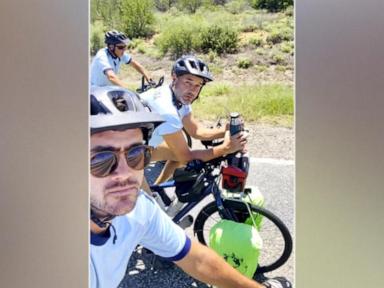
Three soccer fans pedaled 11,000 miles across continents to watch a tournament, and the internet swooned. The media turned it into a masterclass in human endurance and eco-conscious fandom.
They got it completely wrong.
The narrative surrounding mega-distance cycling to sporting events is built on a foundation of flawed logic and surface-level environmental math. We are told to celebrate these journeys as ultimate expressions of devotion and sustainability. In reality, these grueling, multi-month treks are inefficient, carbon-shifting exercises in extreme vanity that actually highlight the structural flaws of modern sports tourism rather than solving them.
Stop applauding the 11,000-mile bike ride. It is time to look at the real data, the physical toll, and the economic reality of what it actually takes to move human bodies across the globe on two wheels.
The Broken Carbon Math of Extreme Cycling
The lazy consensus assumes that because a bicycle does not have an exhaust pipe, its carbon footprint over an 11,000-mile journey is zero. This is a elementary misunderstanding of lifestyle emissions and resource consumption.
When a person cycles loaded down with gear for eight to ten hours a day, their metabolic rate skyrockets. An average cyclist touring under heavy load burns between 4,000 and 6,000 calories per day, depending on terrain and elevation. Over three riders and thousands of miles, that requires a massive amount of fuel.
That fuel is food.
If those calories are sourced from standard global supply chains—processed proteins, imported goods, and high-calorie convenience foods purchased along highways—the upstream carbon footprint is substantial. According to data from the multi-sector environmental analyses of food production, the carbon intensity of high-protein, high-calorie diets can match or exceed the per-passenger emissions of highly optimized mass transit systems when distributed over extreme timelines.
Furthermore, consider the gear lifecycle. A journey of this magnitude burns through multiple sets of tires, chains, cassettes, and specialized synthetic apparel. Most of these components are manufactured using petroleum products and global shipping networks, then discarded along the way.
Then comes the logistical support. Ultra-long-distance cyclists rarely travel in a vacuum. They rely on support vehicles, media teams tracking their progress in combustion-engine SUVs, and emergency flights when logistics fail or visas expire. When you account for the entire ecosystem required to keep three human beings alive and rolling across deserts and mountain ranges for months, the "green" facade evaporates.
The Logistics Mirage and the Privileged Pass
The media loves to frame these journeys as gritty, democratic feats accessible to the everyday fan. That is a fantasy.
An 11,000-mile bike ride requires the most valuable, gatekept commodity in the modern economy: unlimited time. To abandon employment, family obligations, and financial responsibilities for six to twelve months requires immense socioeconomic privilege. This is not grassroots fandom; it is an elite sabbatical masquerading as a pilgrimage.
Imagine a scenario where thousands of fans attempted to emulate this trend. The global transport infrastructure would collapse under the weight of thousands of cyclists clogging freight highways, creating massive traffic inefficiencies that spike the idle emissions of commercial trucking networks. Mass transit exists because it is the most space-efficient, energy-efficient method of moving populations. Replacing mass transit with individual human-powered vehicles over intercontinental distances is a step backward in infrastructure logic.
I have spent years analyzing sports logistics and fan behavior patterns. The fans who truly move the needle on sustainability are not the ones buying custom touring rigs and securing corporate sponsorships for a cross-continental stunt. The real impact comes from the millions of local match-goers utilizing municipal electric buses, train networks, and localized carpooling. But a commuter taking the subway to a stadium does not generate viral clicks.
The Physical Toll and the Performance Fallacy
The human body is an incredibly adaptive machine, but it is not designed for continuous, high-intensity endurance labor under varying global climates without severe depreciation.
Sports medicine data consistently shows that chronic, long-duration athletic strain without professional-grade recovery protocols leads to severe immune system suppression, muscle wasting, and joint degeneration. When fans arrive at their destination after months on the road, they are often in a state of clinical exhaustion and systemic inflammation.
They are not in a position to celebrate; they are in a position to recuperate. The irony is stark: the journey to see an elite athletic competition renders the spectator physically broken.
The Solution the Sports Industry Ignores
If we want to address the massive carbon footprint of global sports tourism, we must stop valorizing individual stunts and demand systemic restructuring from governing bodies.
The current model relies on a centralized mega-event framework that forces millions of people to converge on a single geographic point from every corner of the earth. It is an outdated 20th-century blueprint.
Instead of cheering for three people who rode bikes across a continent, the industry needs to implement aggressive structural changes:
- Regionalized Tournament Groups: Restructure tournament group stages to minimize team and fan travel, keeping early rounds confined to tightly linked geographic clusters with pre-existing high-speed rail access.
- Mandatory Combined Ticketing: Integrate match tickets directly with local and regional public transit passes, making mass transit the friction-free choice for every single attendee.
- Decentralized Fan Hubs: Invest heavily in high-fidelity, localized broadcast hubs that replicate the stadium atmosphere in major cities worldwide, reducing the necessity of intercontinental travel entirely.
The downside to this contrarian approach is obvious: it reduces the raw, chaotic romance of the global tournament. It prioritizes cold efficiency over the cinematic narrative of the wandering fan. It forces us to admit that our individual travel choices, no matter how arduous or well-intentioned, cannot fix a broken systemic framework.
Stop looking at 11,000-mile bike rides as the future of fan travel. It is a spectacular, irrelevant distraction from the real work of sustainable logistics. Turn off the social media trackers, look past the viral headlines, and demand transport systems that actually scale.