Museum directors are panicking. They look at footfall data, panic some more, and then call a design agency. The agency states that the heritage brand is "dusty." They claim younger audiences want something sleek, minimal, and entirely detached from the actual history of the site.
This is exactly how heritage sites die.
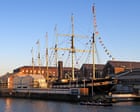
The recent decision by the trust managing Isambard Kingdom Brunel’s SS Great Britain in Bristol to strip back its historic naming conventions for a "cooler," streamlined identity is a classic case of corporate insecurity. They want to appeal to Gen Z. They want to be Instagram-friendly. They want to fit into the modern urban aesthetic.
They are wrong.
Chasing youth culture by erasing historical friction is a losing strategy. It alienates the core audience that keeps the lights on, while failing to attract the fickle demographic it desperately courts.
The Myth of the Modern Heritage Consumer
The prevailing consensus in tourist boardrooms is that history is too heavy. The logic goes like this: if you remove the clunky historical names and the dense academic phrasing, you lower the barrier to entry. You make the site accessible.
This assumes younger audiences are stupid.
It assumes they cannot handle the weight of Victorian engineering without a pastel color palette and a minimalist logo. The data shows the exact opposite. When people travel or visit historic landmarks, they are looking for radical authenticity. They want the rust. They want the coal smoke. They want the specific, uncompromising vision of a 19th-century genius, not a sanitized corporate interpretation.
I have spent fifteen years advising cultural institutions and commercial brands on positioning. I have watched organizations torch millions of dollars on sleek identity overhauls that yield nothing but a temporary spike in press releases and a permanent drop in member retention. When you strip the specific historic flavor from an asset, you commoditize it. You turn a singular engineering marvel into just another afternoon activity option, competing directly with cinema trips and bowling alleys. You cannot win that fight.
Why De-Branding is a Corporate Disease
Look at the luxury sector. Over the last decade, high-fashion houses abandoned their unique, historic serif typography for identical, geometric sans-serif logos. It was called "blandification." It made every brand look like a tech startup. Now, the smart ones are sprinting backward, realizing they threw out decades of built-in equity for a fleeting design trend.
The SS Great Britain site is making the same mistake, just a few years too late.
The Identity Erosion Checklist
When a historic site undergoes a "cool" rebrand, it almost always follows this predictable, destructive pattern:
- The Erasure of Specificity: Swapping out distinct historical markers for generic geographic descriptions.
- The Palette Purge: Replacing deep, period-accurate tones with bright, algorithm-friendly pastels or flat monochromes.
- The Narrative Flattening: Shifting the focus from complex, conflicting human history to abstract concepts like "inspiration" or "creativity."
What is left? A brand that means everything to no one. Isambard Kingdom Brunel did not build the world's first iron-hulled, propeller-driven transatlantic passenger liner to be "accessible." He built it to be an absolute monster of industrial dominance. The branding should reflect that raw arrogance, not soften it.
Dismantling the "People Also Ask" Delusion
If you look at what people actually ask when researching heritage travel, the disconnect becomes glaring.
Does a modern rebrand increase museum attendance?
Only in the short term, and usually because of increased ad spend accompanying the launch, not the design itself. Long-term retention drops when the physical experience fails to match the slick, hyper-modern digital promise.
How do you make history interesting to younger generations?
You do not make it modern. You make it visceral. Gen Z does not care about a clean logo; they care about radical transparency, human stories, and tactile experiences. They want to feel the scale of the iron, not look at a flat vector graphic on a phone screen.
The premise that history needs a facelift is fundamentally flawed. The problem is never the history. The problem is the presentation.
The High Cost of Erasing the Friction
Let's address the counter-argument. Defenders of these rebrands argue that without change, these institutions will starve as older donors pass away. They claim that a radical shift is required to survive in a digital-first economy.
There is a grain of truth there. Survival requires adaptation. But adaptation does not mean assimilation.
The downside of our contrarian approach—keeping the branding dense, historical, and aggressive—is that it requires more effort to communicate. It means you cannot rely on lazy design shorthand to do the work for you. You have to write better copy. You have to build better exhibits. You have to train your staff to be storytellers, not ticket-scanners.
It is much harder to sell a complex historical narrative than it is to sell a clean aesthetic. But the payoff is absolute loyalty.
Imagine a scenario where the management team doubled down on the Victorian grime instead. Imagine an identity built around raw iron, rivets, and the sheer madness of Brunel’s scale. A brand that feels heavy, industrial, and slightly dangerous. That stands out in a sea of soft, minimalist tourist traps. That creates a distinct category.
Instead, they chose the safety of the contemporary consensus. They chose to look like every other cultural hub in Western Europe.
Stop trying to fix heritage brands by stripping away their heritage. Lean into the friction. Double down on the weird, specific, uncompromising details that make the site exist in the first place. History is not a vibe. It is an anchor. Turn the ship around before you drift entirely into obscurity.