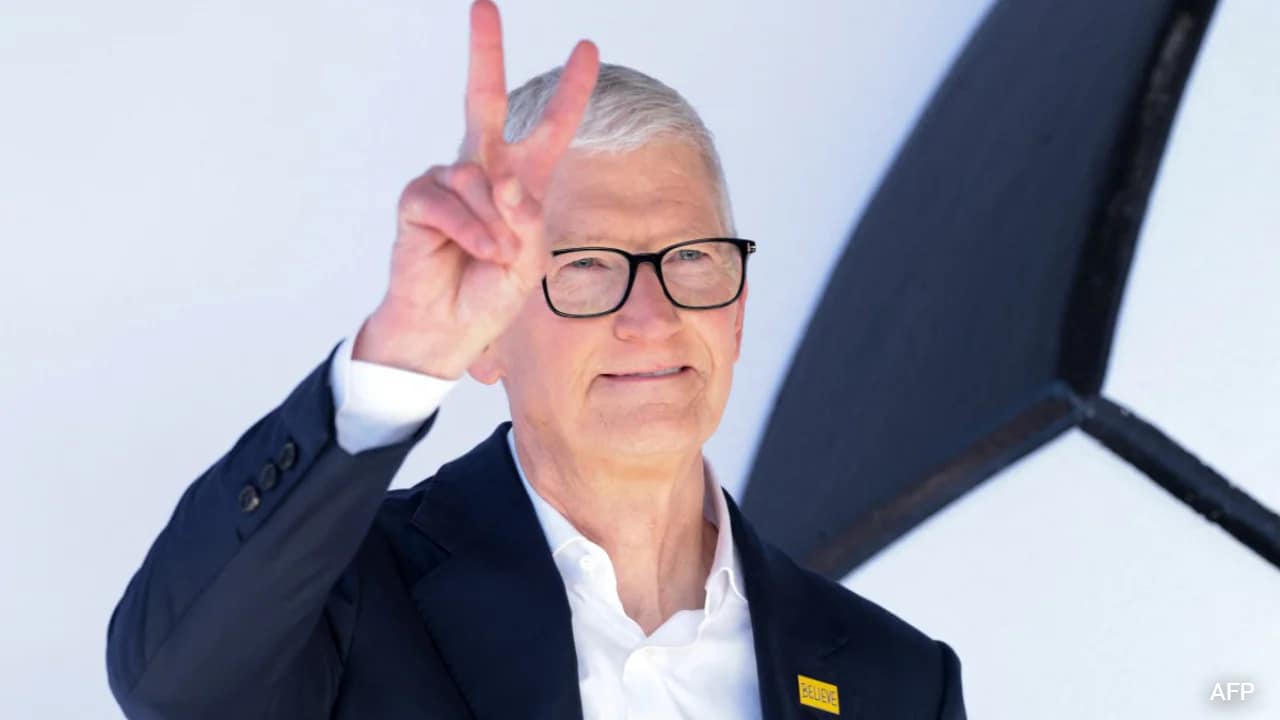
The headlines are writing themselves. Tim Cook steps down, and the tech commentariat treats his departure like the removal of a wet blanket. They call it the end of an era of administrative gray, a chance for Cupertino to rediscover its wild, rebellious youth. They argue that bean-counters killed the poetry, that supply-chain optimization choked out the insane risks of the Steve Jobs era.
It is a lazy, comforting fairy tale. And it is completely wrong.
I have spent two decades watching companies mistake operational genius for creative stagnation. I have seen executives throw away trillion-dollar machinery because they got bored of winning. The consensus says Cook turned Apple into a logistics firm that occasionally sells phones. The reality is far more terrifying for the competition: Cook built the most efficient wealth-extraction engine in human history, and replacing him with a visionary product guy is the fastest way to break it.
The Myth of the Creative Savior
Let us clear up the core misconception right now. People believe that Apple's current plateau in hardware breakthroughs stems from a lack of imagination at the top. They point to the Vision Pro as an expensive science experiment or the lack of a foldable phone as corporate cowardice.
This argument misunderstands what Apple actually is today. Apple is not a garage startup anymore. It is a sovereign economic zone with a market capitalization that dwarfs entire G7 nations.
When you manage a multi-trillion-dollar balance sheet, creativity is not about sketching cool shapes on a napkin. Creativity is about engineering a supply chain that can swallow geopolitical shocks, component shortages, and global inflation without blinking an eye. Cook did not suppress Apple's soul; he protected its body from the chaotic realities of manufacturing hardware at a scale humanity has never attempted before.
Look at the numbers. When Cook took the helm in 2011, Apple's annual revenue sat around 108 billion dollars. By the time his final fiscal years rolled around, that figure had multiplied several times over, pushing past 380 billion dollars. Profit margins remained absurdly resilient. Competitors spent the last decade bleeding cash trying to chase hardware trends while Apple quietly printed billions through services, wearables, and an ecosystem lock-in so tight it borders on gravitational pull.
If you bring in a pure-bred product visionary to run this machine, you are handing the steering wheel of a freight train to a stunt driver.
The Downside of Disruption
My contrarian take comes with a heavy caveat, and I am the first to admit its terrifying downside.
By prioritizing risk mitigation, operational perfection, and shareholder return, Apple under Cook became predictably iterative. The yearly iPhone upgrade cycle started to feel like buying a slightly better pair of socks. The software grew bloated, services became a tollbooth for developers, and the company took zero existential risks on unproven form factors.
If you want a company that throws spaghetti at the wall to see what sticks, look at Google or Meta. They launch experimental hardware and software projects every Tuesday and kill them by Friday. That chaos creates breakthrough moments, but it also burns billions of dollars and erodes consumer trust.
Cook chose consistency over chaos. He decided that pleasing Wall Street and keeping delivery times down to the minute mattered more than shocking the tech press twice a year. That is boring. It is also why Apple survived while countless rivals burned out trying to catch lightning in a bottle twice.
What the Commentators Get Wrong About the Future
When analysts write their glowing retrospective memos about Cook’s tenure, they universally claim that his successor needs to "bring back the magic."
They are asking the wrong question. The question is not whether the next CEO can design a cooler gadget. The question is whether they can survive the impending collision between hardware manufacturing, privacy regulation, and artificial intelligence monetization without destroying the cash cow.
Apple did not miss the generative AI wave because they were asleep at the wheel. They missed it because their privacy-first architecture makes harvesting user data for large language models nearly impossible without violating their own core brand promise. That is a structural handicap, not an oversight.
Imagine a scenario where a new CEO decides to blow up Cook's operational model to chase aggressive AI expansion, outsourcing manufacturing carelessly or compromising on vertical integration to rush features to market. Within eighteen quarters, margins compress, supply chains fracture under geopolitical tension, and the stock price takes a historic bath. The market will not reward them for being bold; it will punish them for breaking the clock.
The Uncomfortable Truth About Execution
We romanticize the creator and despise the custodian. We want the guy in the black turtleneck pacing the stage, ignoring the spreadsheet for the sake of art.
History shows that creators build empires, but custodians save them from collapse. Jobs gave Apple its DNA, but Cook gave it a pulse that could outlast him.
The next leader at Apple does not need to be a mad scientist. They need to be an iron-fisted operator who understands that when you are the biggest fish in the global ocean, making waves only invites the regulators and sinks your own ships.
Stop wishing for the return of the chaotic garage days. You cannot run a three-trillion-dollar empire out of a garage. And if someone tries, get ready to short the stock.