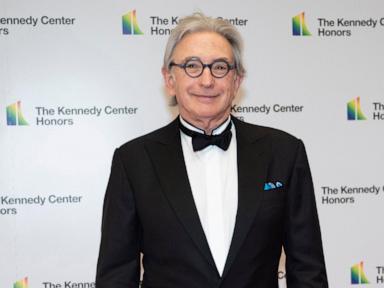
Michael Tilson Thomas (MTT) did not merely conduct orchestras; he re-engineered the logic of the American symphonic institution to prevent its obsolescence in a post-literate digital age. His death at 81 marks the end of a specific operational era—one defined by the transition from the rigid, Eurocentric "Maestro" model to a decentralized, educational, and technologically integrated cultural system. To understand his impact is to analyze the three structural pillars he used to revitalize the San Francisco Symphony and the New World Symphony: radical repertoire expansion, pedagogical industrialization, and the democratization of the podium via multimedia.
The San Francisco Protocol: Repertoire as Market Differentiation
Under the standard mid-century orchestral model, programming followed a predictable bell curve, heavily weighted toward the 18th and 19th-century Austro-Germanic canon. MTT’s 25-year tenure in San Francisco (1995–2020) replaced this stagnation with a deliberate strategy of cultural localism and American modernism. He recognized that for an orchestra to survive in a high-tech hub, it had to function as a laboratory rather than a museum. You might also find this similar story insightful: Dolly Parton The Business Genius Behind The Sweetheart Myth.
This shift was executed through several key mechanisms:
- The Maverick Archetype: By championing "American Mavericks" like Charles Ives, Henry Cowell, and Lou Harrison, MTT created a unique value proposition for the SF Symphony. He stopped competing with Berlin or Vienna on their own historical terms and instead established a proprietary aesthetic brand that mirrored the innovative ethos of Silicon Valley.
- Risk Hedging via Thematic Festivals: Rather than burying a single contemporary piece in a program of standards, MTT grouped dissonant or "difficult" works into immersive festivals. This moved the audience from a state of passive listening to one of intellectual participation, increasing ticket holder retention for non-traditional programming.
- The Mahler Cycle as Technical Benchmark: MTT used the complete works of Gustav Mahler as a high-performance stress test for the orchestra. The resulting recording project on the SFS Media label was an exercise in vertical integration. By owning the production and distribution, the orchestra bypassed traditional label gatekeepers and captured the full margin of their intellectual property.
The New World Symphony: A Prototype for Pedagogical Industrialization
In 1987, MTT co-founded the New World Symphony (NWS) in Miami Beach. This was not a standard performance ensemble but a "laboratory orchestra" designed to solve a specific labor market failure: the gap between conservatory graduation and professional orchestral placement. The NWS functioned as a finishing school that addressed the psychological and technical deficits of young players. As extensively documented in detailed articles by GQ, the implications are widespread.
The NWS model utilized a rigorous three-year fellowship cycle that focused on:
- Professionalization Metrics: Fellows were not just taught to play; they were taught the mechanics of the audition, the physics of ensemble balance, and the business of community engagement.
- Architectural Integration: The Frank Gehry-designed New World Center served as a physical manifestation of MTT’s philosophy. The "Wallcast"—a high-definition outdoor projection system—removed the physical and financial barriers to entry, treating the concert hall as a broadcast hub rather than a restricted enclosure.
- Cross-Disciplinary Literacy: MTT mandated that musicians understand the historical and social context of their repertoire. This reduced the "technician bias" common in classical music, where players achieve high mechanical proficiency but lack the communicative depth required to sustain modern audience interest.
Multimedia Distribution and the Logic of Keeping Score
The decline of classical music’s cultural market share is largely a failure of translation. MTT addressed this through "Keeping Score," a massive multimedia project that broke down the "black box" of the conductor’s score. This was a strategic move to lower the barrier to entry without diluting the complexity of the art form.
The project succeeded by identifying the cognitive bottlenecks in music appreciation. Most listeners struggle with large-scale structures (sonata form, development sections). "Keeping Score" used visual mapping and historical narrative to provide the audience with a mental scaffolding. This transformed the conductor from an enigmatic figure of authority into a transparent educator. This transparency built trust with a younger, more skeptical demographic that devalues unearned elitism.
The Economics of Artistic Longevity
MTT’s career was a study in managing the physical and cognitive decline associated with aging in a high-intensity profession. His diagnosis of glioblastoma in 2021 forced a shift from institutional leadership to a "distilled" performance phase. During this period, his conducting became less about athletic exertion and more about the management of acoustic space and tension.
The transition from Music Director to Music Director Laureate is a critical institutional maneuver. It allows for a transfer of brand equity while introducing new leadership, ensuring that the "MTT Era" does not result in a vacuum but serves as a foundation for the next iteration of the ensemble. The San Francisco Symphony’s current identity—agile, tech-forward, and diverse—is the direct output of this long-term succession planning.
The Structural Legacy of the MTT Model
The survival of the American orchestra depends on the adoption of the MTT framework. The classical music industry currently faces a demographic cliff and an attention-economy crisis. The traditional model—relying on a handful of mega-donors and a static repertoire—is mathematically unsustainable.
The MTT model offers a viable alternative through:
- The decentralization of the "Masterwork": Shifting focus from the score as a holy text to the performance as a communal, multi-sensory event.
- The integration of the artist and the educator: Requiring every performer to act as a brand ambassador and a teacher.
- The utilization of proprietary media: Building a digital archive that provides recurring value long after the live performance has ended.
The primary constraint on this model is the conservative nature of orchestral boards and the slow pace of change in labor unions. MTT’s success was largely due to his ability to navigate these political waters through sheer charisma and documented financial success. Future leaders will need to formalize these strategies into a repeatable playbook that does not rely solely on a single personality.
The strategic imperative for any cultural institution now is to analyze the San Francisco transition. The shift from a repertoire-driven model to an experience-driven model is the only path to maintaining relevance. This requires a complete re-evaluation of the "Classical" label, moving away from a genre definition and toward a performance standard that values innovation over preservation.
Orchestras must now decide if they will remain relic-holders or if they will adopt the MTT role of the "Maverick"—consistently challenging the expectations of their audience to ensure that the symphonic form remains a living, breathing component of the global intellectual infrastructure. The cost of inaction is a slow descent into cultural irrelevance, while the MTT framework provides a proven roadmap for institutional resilience and growth.