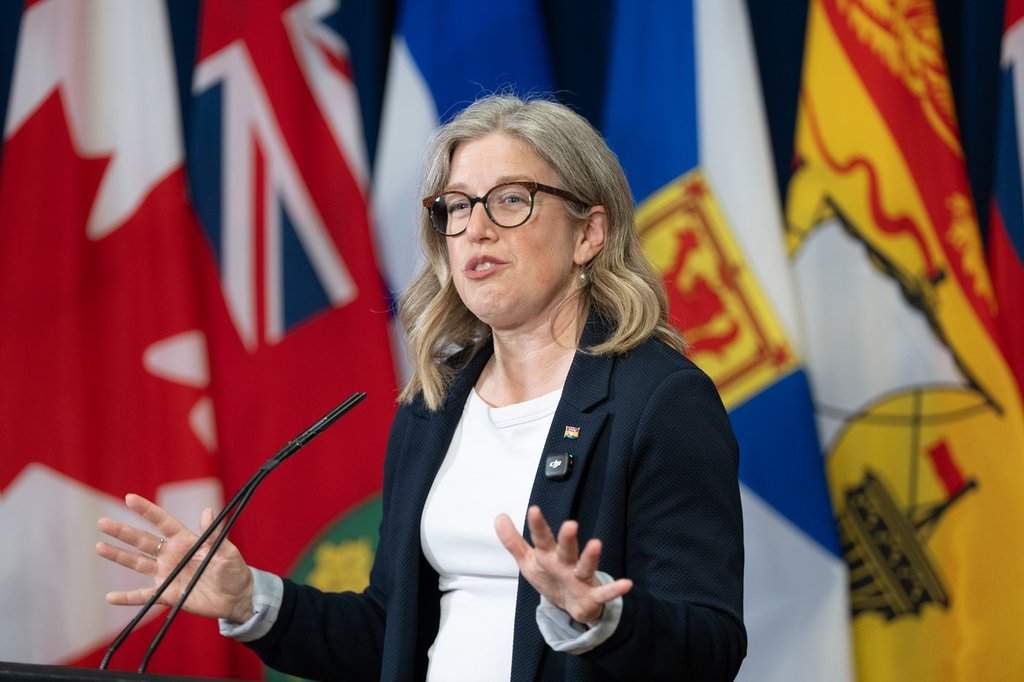
Cold wind off the Saint John River hits the stone steps of the Legislative Assembly in Fredericton before the sun even clears the bare maples. Inside, brass chandeliers hang heavy over green carpet, velvet drapes hush the street noise, and formal words get read aloud in a cadence that has barely changed since Confederation.
Out on the street, nobody cares about ceremonial cadence. You might also find this connected story useful: Why Counting Displaced People in Yemen Misses the Real Crisis.
People care about whether their mother gets a family doctor before another winter slips by. They care whether forty dollars buys enough ground beef, oats, and winter boots to make it to payday without putting heat on a credit card. They care whether a young welder or nurse or sawmill worker can build a life in New Brunswick without packing a U-Haul toward Alberta or Ontario.
A throne speech sounds grand on paper. Often, it reads like a weather report written from inside a glass tower. As highlighted in recent articles by TIME, the results are widespread.
I have sat in enough waiting rooms, checked enough grocery receipts on the hood of a cold car, and watched enough neighbors trade long hours for shrinking paychecks to know how wide the gap can grow between a speech in the legislature and the weight on someone's chest at midnight. Policy is easy to polish when you are speaking from a podium. Life is messy when a furnace sputters in November and the clinic line already stretches past the door.
To make sense of why health care, affordability, and the economy keep colliding in New Brunswick, it helps to strip away the velvet and follow three ordinary threads. None of these people are real; they are hypothetical composite characters built from real patterns across Miramichi, Moncton, Saint John, and the Acadian peninsula, so you can see how abstract budget lines turn into real mornings.
When Waiting Rooms Become the Only Forecast
Start with Claire, a hypothetical retired school librarian living outside Bathurst.
Claire has lived in New Brunswick her whole life. She knows the tides, the logging roads, the smell of woodsmoke in October, and the quiet politeness of small towns where everyone nods at the post office. She also knows the exact sound of a bad hip when frost sets into the floorboards.
For months, Claire's pain has been a slow, grinding tax on every hour. Going up three porch steps takes two breaths and a hand on the rail. Driving to a specialist means early alarms, highway slush, and hours spent sitting under fluorescent tubes while her knee throbs.
When a government puts health care at the top of a throne speech, what is it really promising? Usually, a list of intentions: faster access to primary care, shorter surgical wait times, better retention of nurses and doctors, stronger mental health and seniors' support.
Here is the catch, and I admit it is one of the hardest parts of public life to judge honestly: announcements do not heal cartilage, and press releases do not staff an emergency department on a Tuesday night.
Health care in Atlantic Canada has long faced a cruel arithmetic. An aging population needs more care just as recruitment and retention grow fiercer across the entire country. Burnout pushes seasoned clinicians out of shifts, while rural clinics struggle to keep steady coverage. When people cannot find a family doctor or a timely appointment, they end up in emergency rooms for problems that should have been caught months earlier. That clogs the sharpest end of the system and leaves everyone feeling abandoned.
Think of a public health system like an old wooden boat bailing out choppy water. You can row harder in the bow, or patch a plank in the stern, yet if too much water comes over the gunwale at once, everyone stays soaked. Fixing primary care means keeping people from drowning in the first place—through team-based clinics, clearer navigation for patients, better support for nurses and physicians, and realistic care options closer to home.
It is easy to feel cynical when you hear the same promises recycled across election cycles. Skepticism is earned. Still, when health care sits front and center in a throne speech, it acts as a measuring stick. Voters do not need poetry about "strengthening our system." They need to know whether a person without a family doctor gets a clearer path forward next year than they had this year.
The Quiet Math of a Full Cart
Now turn to Marcus and Nadia, a hypothetical young couple renting a duplex in Moncton with a four-year-old and a baby on the way.
Both of them work. Marcus runs deliveries and warehouse shifts; Nadia works part-time at a daycare so childcare costs do not swallow her entire paycheck. On paper, they are doing what every civic guide tells young families to do: show up, work hard, stay out of trouble, build a future.
In practice, every trip to the grocery store feels like a small ambush.
Affordability is not a single number on a spreadsheet. It is standing in aisle four wondering why cereal costs more than it did last spring while your hourly wage moved by pennies. It is power bills climbing with winter demand. It is rent eating up half a month's income before you buy a single carton of milk.
If affordability feels like a slow leak in a tire rather than a blowout, that is because it compounds quietly. You do not go broke from one bag of groceries. You lose ground week by week—skipping fresh fruit when prices spike, delaying car maintenance until a small rattle becomes a four-hundred-dollar repair, putting off dentist visits because cash is tight.
Governments love to talk about affordability through broad reliefs, rebates, or tax adjustments. Those moves can help take the sting out of a rough month, especially for families stretching every dollar. Yet a rebate checks out fast if housing costs keep climbing, electricity bills stay steep, or everyday essentials outpace household income.
What makes affordability real is relief that lasts past a single bill cycle. Lowering everyday friction—whether through housing supply, energy efficiency, child and family supports, or targeted help for people carrying the heaviest load—changes how a household breathes.
Breathing room matters. When money is tight, every surprise feels like a crisis. Give a working family a little margin, and suddenly a flat tire is an annoyance, not a disaster.
Jobs That Hold Root Instead of Blowing Away
Follow the thread one step further to Devon, a hypothetical twenty-four-year-old electrician from near Fredericton.
Devon likes New Brunswick. He likes the quiet lakes, the short drives out of town, and knowing his neighbors by name. Two of his friends from high school already packed up and moved west because the pay looked bigger and the opportunities felt louder.
Devon wants to stay. He just wonders if staying means settling for less.
An economy is not an abstract graph in a finance minister's binder. It is whether young tradespeople, tech workers, manufacturers, farmers, fishers, and small-business owners see a reason to plant roots here rather than treat home like a launching pad.
Historically, Atlantic provinces have wrestled with a boom-and-bust tension: relying heavily on seasonal or resource-sensitive industries while watching talent drift toward bigger urban magnets. Building a steadier economy takes more than wishing for growth. It takes skilled trades and modern industries, reliable infrastructure, smart energy transition, local procurement, and policies that reward people who build things, care for people, and run businesses year-round.
There is real uncertainty here, too. Global supply chains shift without warning. Interest rates and trade pressures ripple into local shops and builders. Nobody—not economists, not premiers, not voters—controls every wind hitting the coast.
Still, a government shapes the harbor. It decides whether small businesses drown in red tape or get practical support to expand. It decides whether training programs match real jobs on the ground. It decides whether a young worker sees a ladder in front of them or a locked gate.
Why These Three Priorities Are Really One Story
Step back and look at Claire, Marcus and Nadia, and Devon side by side.
Health care.
Affordability.
The economy.
A throne speech often lists them like separate chapters in a binder. In real life, they are braided so tightly you cannot pull one without tugging the others.
If health care falters, sick workers miss shifts, family members take unpaid time off to drive relatives to appointments, and seniors lose independence sooner. A strained health system drags down the economy and drains family budgets.
If affordability breaks down, families carry chronic stress that harms physical and mental health, while high living costs push young workers and skilled professionals out of the province—shrinking the very workforce needed to keep clinics staffed and businesses growing.
If the economy stalls, public revenues tighten, making it harder to fund hospitals, schools, and community supports without squeezing households even harder.
Think of it as a three-legged stool. Cut one leg short, and the whole thing wobbles. Make one leg strong while ignoring the other two, and you still cannot sit comfortably.
That is why voters listen to a throne speech with a mix of hope and sharp-eyed scrutiny. People know governments cannot wave a wand and fix decades of structural strain overnight. At the same time, citizens have every right to ask whether the priorities named in the chamber match the urgencies sitting at the kitchen table.
Not slogans. Not theater. Results you can feel in a shorter wait, a slightly lighter grocery bill, and a steadier paycheck.
What Separates Real Change From Good Words
Whenever a throne speech lays out big promises on health care, affordability, and economic growth, three practical questions cut right through the noise.
First, who actually feels the benefit in the near term, and how? A plan that only pays off five years from now does little for someone rationing medication or waiting on diagnostic imaging this winter.
Second, how is it funded and sustained? Big announcements without steady operational backing often stall out once the headlines fade. Real reform requires showing up every quarter, fixing bottlenecks, and keeping frontline workers from burning out.
Third, does it treat people like partners or statistics? A senior in a rural town, a single parent working two jobs, a small-town diner owner, and a newly graduated nurse all experience policy differently. Good governance listens to how rules work on the ground, not just how they look in a briefing note.
There is no neat bow to tie around these challenges. Public life is full of trade-offs, competing demands, and limits on what any single government can do alone. Being honest about that is not weakness; it is credibility. When leaders level with people about what is hard, what takes time, and where the focus truly lies, trust has room to grow.
When night falls over New Brunswick and porch lights flicker on from Grand Manan to Edmundston, the throne speech is already fading into news clips. Behind closed doors, parents are checking bank balances, older adults are stretching stiff joints before bed, and young workers are wondering what the next five years will hold.
Promises live in the chamber.
Proof lives at the kitchen table.