Midnight.
The blue light of a living room monitor hums against the drywall, illuminating dust motes suspended in the stale air of a Tuesday night, while millions of thumbs hover over plastic triggers waiting for a digital sun to rise over Leonida.
We do not wait thirteen years for a piece of software. We wait thirteen years for a mirror. When a single entertainment release stretches across three console generations, outliving marriages, economic recessions, and the entirety of a teenager’s transition into mortgage-paying adulthood, the arrival of Grand Theft Auto VI ceases to be a product launch. It becomes a census of who we have become since September 2013.
Consider Marcus, a composite of every thirty-two-year-old who stood in a strip-mall line outside a midnight release thirteen years ago with twenty dollars in crumpled bills and a backpack full of energy drinks. Back then, Marcus had zero responsibilities and infinite hours to drive a stolen virtual coupe off Mount Chiliad just to watch the physics engine ragdoll his avatar into a pine tree. Today, Marcus is an HVAC technician in suburban Ohio with a toddler sleeping down the hall, a bad lower back, and a calendar blocked out in fifteen-minute increments. Yet at 11:58 PM on release night, Marcus is sitting on the edge of his sofa, palms sweating against a controller, feeling an ache in his chest that has nothing to do with nostalgia and everything to do with time.
Why does a satirical crime simulator command the gravitational pull of a moon landing? Because Rockstar Games did not merely build a bigger map; they built a shared cultural language that spanned over two hundred million copies of its predecessor. When fans boot up GTA VI and step into the neon-soaked humidity of Vice City alongside Lucia Caminos and Jason Duval, the initial reaction flooding forums, livestreams, and group chats is rarely an analytical breakdown of frame rates or ray-traced reflections. It is a collective, bewildered gasp at the sheer weight of the wait finally ending.
The Architecture of Impossible Expectations
To understand the tidal wave of player reactions greeting GTA VI, you have to look at the suffocating economics of modern blockbuster entertainment. Over the last decade, the video game industry fell into a trap of perpetual monetization, turning once-beloved franchises into hollowed-out storefronts disguised as live services. Players grew cynical. They learned to expect broken launches, day-one patches larger than the base game, and aggressive microtransactions tucked behind every digital menu.
Against that backdrop of industry exhaustion, Rockstar operated like an eccentric recluse locking the doors of a cathedral for over a decade.
The silence bred myth. Every leaked frame of development footage, every patent filing for dynamic character locomotion, every frame-by-frame dissection of the official trailers turned the internet into a forensic laboratory. Fans were not just asking whether GTA VI would be fun; they were demanding that it justify the entire medium's evolution since the PlayStation 3 era. Think of the studio's production pipeline less like an assembly line and more like watching an obsessed watchmaker carve every microscopic gear out of solid brass while the rest of the world switches to disposable digital wristbands.
When the gates finally opened and players flooded the streets of Leonida, that unbearable tension snapped into two distinct, colliding waves of reaction.
First came the sensory shock. Players accustomed to sterile, copy-pasted open worlds found themselves stopping their vehicles at red lights simply to watch the ecosystems breathe. The density of Vice City—from the sun-bleached Art Deco facades of Ocean Beach to the murky, gator-infested stretches of the Grassrivers—operates on a logic of accumulated micro-details. Sweat beads on skin in the subtropical heat. Mud cakes onto wheel wells and dries in the sun. Non-playable characters do not merely walk in predetermined loops; they film street fights on smartphones, argue over fender benders, and react to the player's presence with an uncanny social awareness that makes earlier open-world titles feel like cardboard stage sets.
Two Voices in a Borrowed Car
Yet technical wizardry alone never explains why millions of people weep over end credits or argue passionately at three in the morning about fictional criminals. The heartbeat of the fan reaction centers on the shift in human storytelling at the core of the campaign.
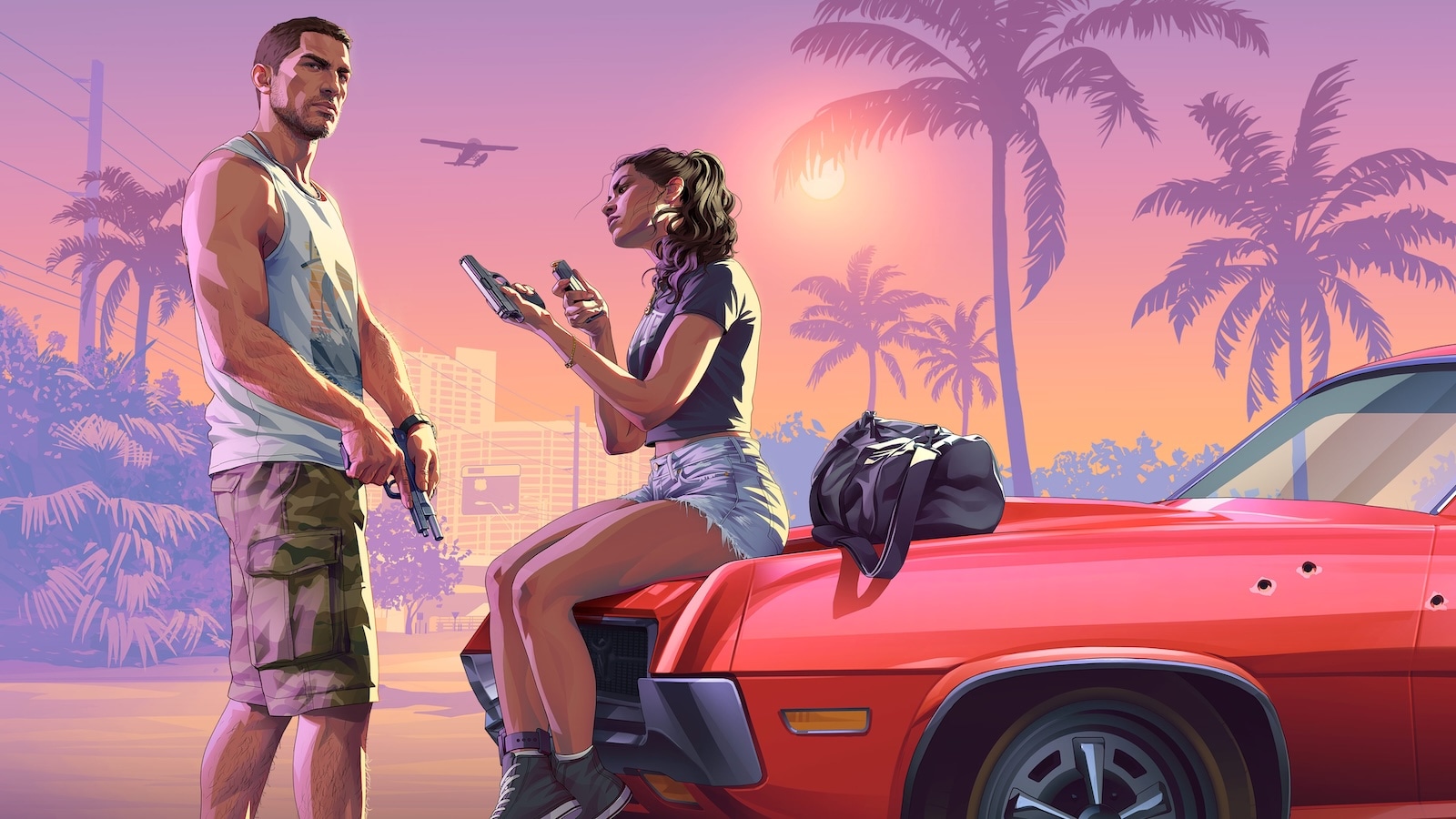
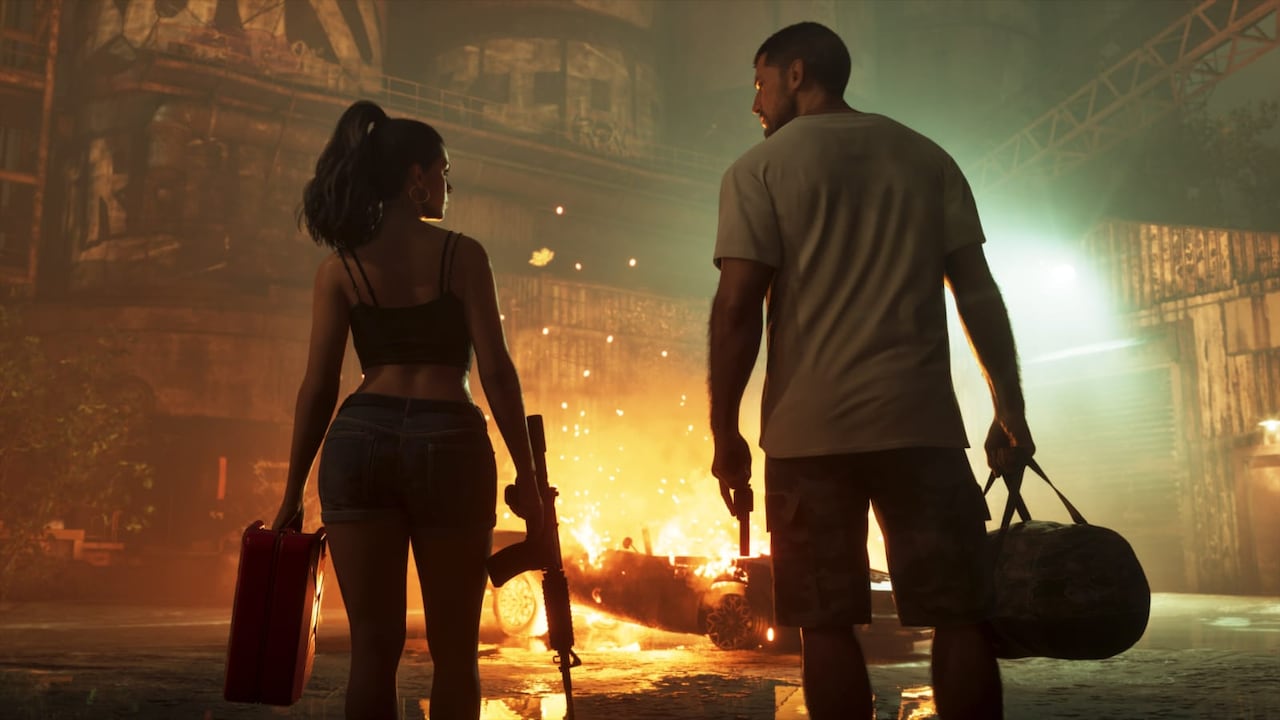
For decades, the Grand Theft Auto franchise relied on a very specific brand of cynical, hyper-masculine bravado—men screaming at the American Dream while burning it down for cash. Introducing Lucia Caminos as the series' first modern female protagonist alongside Jason Duval altered the emotional chemistry of the entire experience.
Imagine a hypothetical couple sitting together on a worn sectional couch in Austin, passing a single controller back and forth through the opening chapters. Elena, who usually ignores crime games because their protagonists feel like cartoon sociopaths, watches Lucia step out of the Leonida penitentiary gates. There is no bombastic speech, no invincible swagger. There is only the quiet, claustrophobic calculation of a woman trying to claw her way out of a system rigged to keep her down, tethered to a partner whose loyalty is both her greatest lifeline and her sharpest vulnerability.
Fans reacting to the narrative across Reddit threads and late-night Discord calls have repeatedly pointed to this dynamic as the defining triumph of the game. Instead of three disconnected antiheroes bouncing off one another like pinballs, Lucia and Jason operate like a closed electrical circuit. Their Bonnie-and-Clyde partnership introduces a genuine, fragile intimacy into a world famous for nihilism. When you rob a corner store or plan a high-stakes score in GTA VI, the stakes feel personal because trust itself becomes a gameplay mechanic. One wrong decision, one moment of greed over loyalty, threatens not just a mission rating, but the survival of the only person in the state who knows your real name.
Players who expected a shallow parody of modern social media influencers found something far sharper waiting beneath the satire. Yes, the absurdities of viral fame, Florida-man headlines, and algorithmic vanity are mercilessly skewered across the in-game airwaves and phone feeds. But the satire serves as background noise to a remarkably grounded story about desperation, class friction, and the terrifying cost of wanting a better life when every legal door is bolted shut.
The Friction Between Realism and Chaos
Not every reaction has been uncritical euphoria, and pretending otherwise ignores the most fascinating tension in gaming today. Whenever a studio pushes realism toward the absolute edge of current hardware, it inevitably collides with the anarchic joy that made the franchise famous in the first place.
Listen closely to the debates echoing among longtime veterans of the series. Some players, weaned on the arcade absurdity of San Andreas or the chaotic sandbox of GTA V, initially bristled at the deliberate weight of GTA VI. You cannot carry an entire military arsenal hidden inside a tailored suit anymore. Weapons have physical presence; cars have distinct suspension weight and traction limits; police responses escalate through tactical containment rather than mindless waves of kamikaze squad cars.
For a subset of the audience, this meticulous realism feels like friction. If you just want to log on for twenty minutes after a brutal shift at work and launch a rocket at a helicopter, having to account for trunk storage, witness sightlines, and realistic vehicle handling can feel like rules intruding on a playground.
I remember feeling that exact hesitation during my own first three hours in Leonida. Pulling off a simple getaway felt messy, panicked, and strangely heavy—nothing like the effortless power fantasy I remembered from my twenties. My getaway car spun out on wet asphalt, a bystander recorded my license plate before I could speed away, and the resulting manhunt forced me to abandon the vehicle in a drainage canal and wade through waist-deep water while helicopters swept searchlights over the reeds.
Then the realization hit. That friction was the entire point.
By stripping away the weightless god-mode convenience of older games, Rockstar restored consequence to crime. Suddenly, stealing a car carries the genuine pulse-pounding anxiety of an actual theft. Escaping the law requires improvisation, spatial awareness, and nerve rather than simply outrunning a flashing star rating on a minimap. The fans who initially complained about the slower, heavier pacing are the very same players posting breathless clips forty-eight hours later about a botched convenience store holdup that spiraled into a twenty-minute, improvised thriller across three counties.
What the Numbers Refuse to Measure
Financial analysts love to reduce cultural earthquakes into spreadsheets. They point to development budgets whispered to exceed a billion dollars, first-week revenue projections dwarfing the opening weekends of every Marvel film combined, and hardware sales spikes as millions finally upgrade their living room consoles to handle the computational load of Leonida.
Those numbers are real, and they are staggering. They confirm that GTA VI is the largest commercial launch in the history of entertainment.
Yet spreadsheets cannot measure the quiet miracle happening in living rooms from Tokyo to São Paulo to London. For a brief, shimmering window of time, a fractured internet stopped arguing about politics, algorithms, and outrage cycles to share a single, massive digital space. Strangers in online lobbies are organizing impromptu car meets along the Vice City causeway. Amateur photographers are spending hours framing sunsets over the Keys, treating virtual lighting engines with the reverence of landscape painters. Old friends who drifted apart after college are putting on headsets for the first time in years, laughing until their voices crack as they drive a stolen airboat straight into the lobby of a luxury hotel.
We live in an era of disposable culture, where movies vanish from memory by Monday morning and songs are engineered to survive fifteen seconds on a vertical video feed. Against that tide of planned obsolescence, GTA VI stands as an audacious monument to craft, patience, and human obsession. Thousands of artists, coders, writers, and sound designers poured years of their finite lives into making sure the neon signs buzzed at the exact right frequency and the ocean waves broke with realistic foam against the shoreline.
Whether you call it a masterpiece or simply the culmination of an era, the verdict written across the faces of millions of exhausted, wide-eyed players is unmistakable.
Dawn breaks over the virtual Atlantic, painting the high-rises of Vice City in shades of bruised violet and gold, while three million controllers vibrate in unison to the rhythm of a city that refuses to sleep.