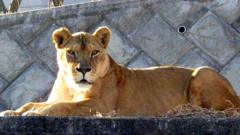
Three captive lions died at a Japanese municipal facility during a period of record-breaking ambient temperatures, exposing deep systemic vulnerabilities in how urban menageries manage extreme climate shocks. This tragic loss highlights a broader structural crisis facing enclosed wildlife parks across the nation as summer maximums shatter historical weather records.
Concrete enclosures bake under relentless ultraviolet radiation. Artificial ventilation systems struggle against ambient heat islands. Operating procedures designed for temperate decades fail completely under contemporary meteorological realities.
Animals do not possess the luxury of air-conditioned indoor retreats or the behavioral adaptations needed to escape urban concrete radiating trapped energy long after sunset. When local temperature indices cross critical thresholds, standard animal husbandry practices routinely break down. The public sees an afternoon spectacle behind glass; the reality backstage is an escalating struggle against thermal stress, operational complacency, and infrastructure engineered for a climate that no longer exists.
The Architectural Trap of Mid-Century Menageries
Most municipal facilities operating across the country trace their design lineage back to the post-war rebuilding era. At that time, architectural priorities centered on public visibility, crowd control, and structural durability against seismic activity. Thermal management was largely an afterthought.
Enclosures rely heavily on uninsulated concrete walls, exposed rockwork, and direct-sun viewing areas. Concrete acts as a massive thermal battery. It absorbs solar radiation throughout peak daylight hours and radiates that heat steadily during the night. Large carnivores and exotic species are consequently trapped in a continuous convective oven.
When outdoor air temperatures hover near forty degrees Celsius, the internal microclimate inside these exhibits rises significantly higher due to micro-urban heat island effects. Pavement surrounds the perimeters. Asphalt parking lots radiate additional heat inward.
Operators often rely on traditional shade sails or small misting lines to combat the strain. These measures are fundamentally inadequate against high ambient humidity and prolonged heat waves. Misting systems can temporarily lower local air temperatures, but they also elevate relative humidity. High humidity prevents effective evaporative cooling through panting or sweating in mammals, compounding the internal physiological burden on the animal rather than relieving it.
Physiological Collapse Under Thermal Load
Understanding why captive apex predators succumb so rapidly to high temperatures requires looking closely at mammalian thermoregulation. Lions and similar large cats have very limited sweat gland distribution, relying primarily on respiratory evaporation through panting to dissipate excess internal metabolic heat.
When ambient air is both hot and humid, the efficiency of respiratory cooling drops to near zero. Core body temperatures begin to creep upward. This initiates a dangerous cascade known as heat stroke or thermal exhaustion.
As core temperature climbs past critical biological limits, cellular proteins begin to denature. Blood flow shifts toward the skin to promote cooling, depriving vital internal organs of necessary perfusion. The gastrointestinal lining becomes compromised, allowing endotoxins to leak into the bloodstream. Systemic inflammatory response syndrome follows swiftly, leading to multi-organ failure, neurological dysfunction, and cardiac arrest.
In a natural habitat, a wild pride responds to extreme heat by seeking deep subterranean dens, dense forest canopies, or water sources where they can remain inactive during peak daylight hours. A captive lion confined to a concrete-floored enclosure lacks these behavioral options. They cannot wander away from the sun-baked stones. They cannot dig down into cooler sub-soils. They are prisoners of their physical boundaries, dependent entirely on human intervention to alter their immediate environment.
The Bureaucratic Inertia of Municipal Facilities
Public zoos in many developed nations operate under rigid municipal budgets and bureaucratic oversight. This creates a dangerous lag time between identifying emerging climate threats and securing funding for necessary structural overhauls.
Upgrading a major animal enclosure requires extensive environmental impact reviews, budgetary approvals through local city assemblies, and complex engineering hurdles. Modifying a large carnivore exhibit to include underground geo-thermal cooling loops, advanced air-conditioned indoor night-holding facilities, or shaded subterranean dens requires millions of yen. Municipal administrators frequently view these capital expenditures as discretionary enhancements rather than emergency life-safety requirements.
Staff on the ground often recognize the danger long before administrators take action. Keepers witness animals showing classic signs of acute heat stress, including excessive drooling, lethargy, loss of appetite, and disorientation. Yet, standard operating protocols often require formal incident reporting chains that delay immediate emergency cooling measures.
By the time administrative clearance is granted to relocate animals into air-conditioned holding areas—which are themselves often undersized and poorly ventilated—pathophysiological damage may already be irreversible.
Operational Failures and the Myth of Acclimatization
A persistent misconception among traditional zoo administrators is that animals gradually acclimatize to regional weather patterns over the course of a summer season. While minor physiological adaptations do occur, they are utterly overwhelmed by persistent, multi-week heat domes characterized by stagnant atmospheric conditions and tropical nights where temperatures refuse to drop below thirty degrees.
Nighttime cooling is the critical variable in surviving extreme summer weather. When night temperatures remain high, the animal's body never gets a chance to discharge accumulated thermal energy. The physiological deficit compounds day after day. A lion that survives Monday's heat wave in an exhausted state enters Tuesday's peak already compromised. By Wednesday, a routine afternoon temperature spike pushes them past the tipping point.
Furthermore, feeding schedules inside municipal facilities often fail to account for metabolic suppression during hot weather. Feeding heavy meals of meat during peak daylight hours forces the animal's body to process high amounts of protein, an internal metabolic process known as specific dynamic action that generates substantial internal body heat. While keepers often adjust feeding times to early morning or late evening, institutional routines can be slow to adapt across an entire collection.
Rethinking Enclosure Engineering for a Hotter Century
Preventing future fatalities requires a fundamental rejection of legacy zoo architecture. Facilities must transition away from aesthetic display models that prioritize unshaded public viewing over animal welfare.
Modern climate-resilient animal husbandry demands several non-negotiable structural shifts:
- Subterranean and Insulated Refuges: Enclosures must incorporate deep, mechanically cooled indoor dens where animals can voluntarily retreat away from surface ambient heat.
- Advanced Microclimate Control: Water features must be integrated with active chillers rather than relying on stagnant pools that become warm bacterial breeding grounds.
- Green Infrastructure: Concrete must be systematically replaced with deep-soil planting beds, native grasses, and mature tree canopies that lower ambient ground temperatures through natural evapotranspiration.
- Automated Environmental Monitoring: Real-time telemetry sensors must be installed at animal height across every exhibit, triggering mandatory emergency protocols automatically when heat-humidity indices cross safety thresholds.
The death of three lions in a municipal zoo is not an isolated weather anomaly. It is a loud warning siren regarding the habitability of urban confinement structures in an era of accelerating climate disruption. If municipal institutions fail to invest heavily in climate-proofing their collections, these tragedies will repeat with greater frequency, turning public education centers into monuments of institutional neglect.