A multi-ton steel barrier at the foot of a holy mountain isn't just a political statement. For thousands of Catholics living on the United States-Mexico border, it feels like a direct assault on their faith.
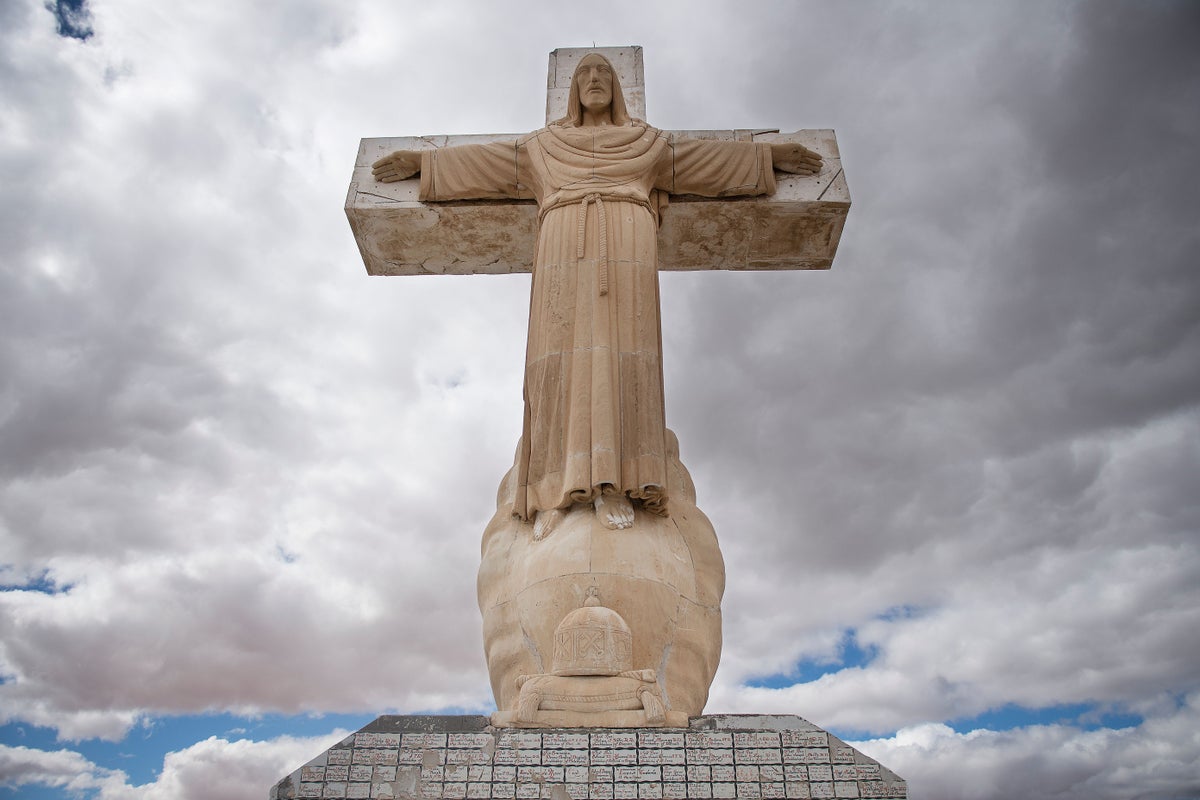
The Department of Homeland Security wants to seize 14 acres of church-owned property through eminent domain. Eminent domain allows the government to take private property for public use if they pay for it. The targeted land sits at the base of Mount Cristo Rey, a 720-foot peak outside El Paso, Texas, that straddles the border between Sunland Park, New Mexico, and Ciudad Juárez, Mexico. At the summit sits an iconic 29-foot limestone statue of Jesus Christ.
The Roman Catholic Diocese of Las Cruces, New Mexico, owns the land and refuses to surrender a single inch without a legal fight. Lawyers for the diocese filed a massive opposition in federal court. They argue the land grab violates the First Amendment and the Religious Freedom Restoration Act. The federal government offered $183,071 for the acreage. The church says you can't put a price tag on a sacred shrine.
The Collision of Sacred Space and Border Security
This isn't an abstract legal debate. It's a physical collision. Mount Cristo Rey is an active pilgrimage site that has drawn the faithful since 1940. Every autumn, up to 40,000 people make the grueling trek up the two-mile trail to celebrate the feast of Christ the King. Some walk barefoot. A few climb the entire way on their knees.
The Department of Homeland Security claims the wall won't change that. They argue the construction stays on the lower slopes, thousands of feet away from the actual statue. According to border officials, everyone visiting the shrine enters from the American side anyway. They view the mountain as a high-traffic gaps in the El Paso sector fence, a vulnerability that human smugglers exploit. They want the land to install 30-foot-high steel bollards, security lights, roads, and surveillance cameras.
The church views the geometry differently. For them, a holy site isn't just the summit; it's the entire mountain, including the path you take to get there. Contractors already started blasting the southern slope of the mountain with explosives to prepare the rocky terrain for heavy machinery. The diocese states that running a massive wall through the property permanently alters its religious sanctity. It transforms a historic place where faith transcends borders into a permanent monument of human division.
The Hypocrisy Claim Sparking a Holy War
The legal defense team representing the diocese isn't pulling punches. They directly attacked the Trump administration's immigration policy in court documents. The church called the southern border wall a physical manifestation of the government's hostile attitude toward migrants. They added a blunt theological critique, stating that nothing could be less Catholic.
That rhetoric has irritated proponents of the wall. Border security advocates note that Catholic social teaching explicitly recognizes the right of sovereign nations to secure their borders. They argue that local progressive activists are weaponizing a historic shrine to fight a larger political battle against immigration enforcement.
Local groups like the Mount Cristo Rey Restoration Committee find themselves caught in the middle. Some volunteers who spend decades maintaining the statue want the area secured. The remote mountain paths can be genuinely dangerous due to illicit crossings and cartel activity. Some locals believe a fence at the bottom could actually protect the monument from vandalism and criminal activity.
What Happens Next in Federal Court
The legal reality is stacked heavily against the church. Federal courts rarely block eminent domain actions when national security or border defense is invoked. A federal judge already cleared the path for the government to deposit the cash required to take immediate possession of the acreage.
If the government secures title to the land through these expedited condemnation procedures, the diocese loses its chance to present its full religious freedom defenses at trial. The landscape will change permanently before a jury ever hears the arguments.
The diocese's legal team, backed by constitutional experts from Georgetown University's Institute for Constitutional Advocacy and Protection, is attempting to slow down the process. They want an immediate stay to block construction crews from fracturing the mountain further. For the community surrounding Sunland Park and El Paso, the battle isn't about property value. It's about whether national security interests can completely override a century of local religious devotion.
You can learn more about the initial property condemnation and the local reaction to the government's eminent domain lawsuit by watching this local KTSM news report on the Mount Cristo Rey land dispute, which outlines the exact boundaries of the 14-acre parcel the federal government is trying to seize.