The latest attempt to pull the Middle East back from the brink of total war is dying in the hallways of the Iranian Parliament. While diplomats in Muscat and Islamabad exchange drafts for a renewed nuclear ceasefire, a fractured but furious coalition of Iranian ultra-hardliners has successfully paralyzed the Pezeshkian administration’s ability to compromise. This is no longer a standard debate over enrichment percentages. It is an internal mutiny.
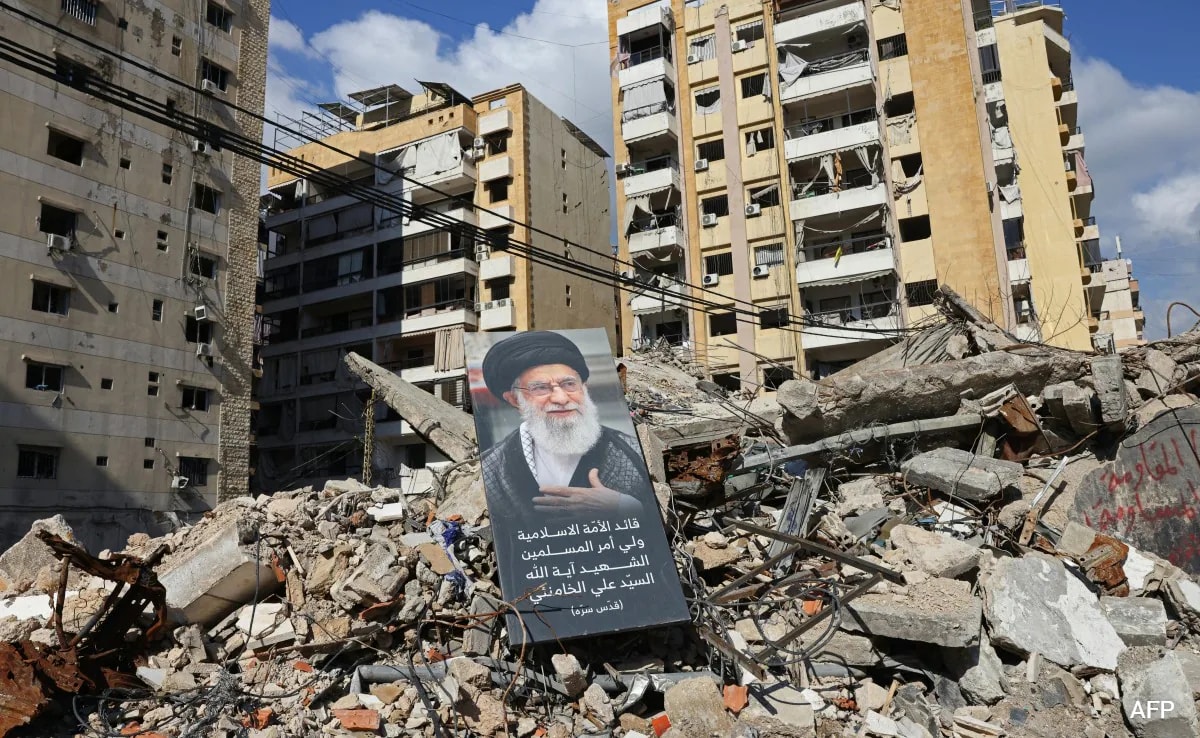
By May 2026, the stakes have shifted from theoretical to existential. The joint U.S.-Israeli strikes in February—which reportedly claimed the life of Supreme Leader Ali Khamenei—created a power vacuum that has effectively ended the era of "strategic patience." In the wreckage of the old regime, the hardline camp has split into two warring factions: those willing to trade the nuclear program for survival, and the "Purifiers" led by Saeed Jalili, who view any deal with the Trump administration as a terminal betrayal.
The Architect of Obstruction
Saeed Jalili, a former nuclear negotiator and a man whose ideological rigidity is legendary in the diplomatic circuit, has become the face of this resistance. He isn't just shouting from the sidelines. His supporters within the National Security Council and the parliament (Majlis) have systematically blocked the current negotiating team from finalizing a response to the latest U.S. proposal.
The rift is remarkably public. In late April, 27 members of the Majlis refused to sign a letter of support for the negotiating team. This wasn't a minor procedural hiccup; it was a shot across the bow of Foreign Minister Abbas Araghchi. The dissenters argue that the U.S. demand for "zero enrichment" and a total withdrawal from the Strait of Hormuz is not a negotiation, but a surrender document.
A Government Without an Arbiter
The most dangerous factor in the 2026 crisis is the absence of a decisive central arbiter. Historically, the Supreme Leader would have the final word, forcing disparate factions to fall in line once a decision was reached. Without Khamenei’s shadow looming over the process, the infighting has moved into the state media.
Raja News, a mouthpiece for the ultra-hardliners, has been openly attacking the Revolutionary Guards-linked Tasnim News Agency. This clash between the ideological purists and the pragmatic military wing is unprecedented. The IRGC, traditionally the bedrock of the hardline stance, is now caught in a paradox: they need the sanctions relief to fund their regional operations, but they cannot appear to be "soft" in the face of U.S. military pressure.
The "Purifiers" are leveraging this hesitation. They have labeled any talk of diluting the 60% enriched uranium stockpile—which currently sits at roughly 460 kilograms—as a "crime against the martyrs." They know that as long as they can maintain the deadlock, the clock runs out for the Pezeshkian government.
The Siege Economy and the Street
The hardliners are not operating in a vacuum. The Iranian economy is in a state of collapse, with the Strait of Hormuz blockade trapping over 1,500 ships and strangling the country's own export capabilities. Hyperinflation is no longer a threat; it is the daily reality.
However, the ultra-hardliners have weaponized this misery. Their narrative is simple: the strikes happened because Iran was too weak, not because it was too defiant. They point to the February attacks as proof that Washington will strike regardless of whether talks are ongoing. This "logic of the besieged" is highly effective among the remaining loyalist base of the Basij and the ideological core of the military.
They are also using the massive anti-government protests that began in late 2025 as a cudgel. By framing the protesters as "Western agents," the hardliners argue that any concession to the U.S. is a concession to the "rioters" on the street. It is a cynical but effective way to tie the hands of the reformers.
The Nuclear Breakout vs. The Big Glow
The technical reality on the ground has made the hardliners' position even more volatile. International observers estimate that Iran now has enough highly enriched uranium for at least 11 nuclear devices. This is the "nuclear hedge" that the Jalili camp refuses to give up. They believe that once the first test is conducted, Iran moves into the "North Korea category"—untouchable and permanent.
The U.S. response, articulated by President Trump, has been equally blunt. The threat of a "big glow" coming out of Iranian nuclear sites if a deal is not signed "fast" has provided the hardliners with the perfect propaganda tool. They use these threats to justify the Chinese-made long-range surveillance radars they have recently deployed, further integrating Iran into an anti-Western security bloc.
The Islamabad Deadlock
The failure of the April talks in Islamabad was a direct result of this internal Iranian friction. Araghchi arrived with a proposal to suspend enrichment for several years in exchange for immediate sanctions lifting. Back in Tehran, the hardliners immediately leaked the details to discredit him, claiming he was selling out the country's "inalienable rights."
The U.S. delegation, which includes Steve Witkoff and Jared Kushner, has remained skeptical. They see the infighting in Tehran not as a genuine political struggle, but as a "good cop, bad cop" routine designed to buy time. This miscalculation is perhaps the most dangerous element of the current standoff. Washington assumes the Iranian government is a monolith, while the reality is a crumbling house of cards where no one has the authority to sign a binding contract.
The Path to Escalation
The hardliners have already begun the next phase of their mobilization. They are pushing for the expulsion of the few remaining IAEA inspectors and a formal withdrawal from the Nuclear Non-Proliferation Treaty (NPT). This would be the final "red line" for the U.S. and Israel, likely triggering the very "total war" that the diplomats are trying to avoid.
The Pezeshkian administration is currently trapped between a U.S. administration that demands total dismantlement and an internal opposition that views the nuclear program as the only thing standing between the regime and its total destruction. In this environment, "moderation" is viewed as a terminal weakness.
The ultra-hardliners are not just winning the debate; they are rewriting the rules of Iranian survival. They have calculated that a broken, sanctioned, but nuclear-armed Iran is preferable to a prosperous, integrated, but vulnerable one. Until the power struggle in Tehran produces a clear victor, any signature on a piece of paper in Muscat or Islamabad is effectively worthless. The "Tehran Mutiny" has ensured that the path to peace is now blocked by the very people tasked with defending the state.
Negotiations are no longer about uranium. They are about who actually owns the keys to the Islamic Republic. As the ceasefire expires and the U.S. carrier groups move back into position, the answer to that question will likely be delivered not in a conference room, but through the roar of a second wave of strikes.



