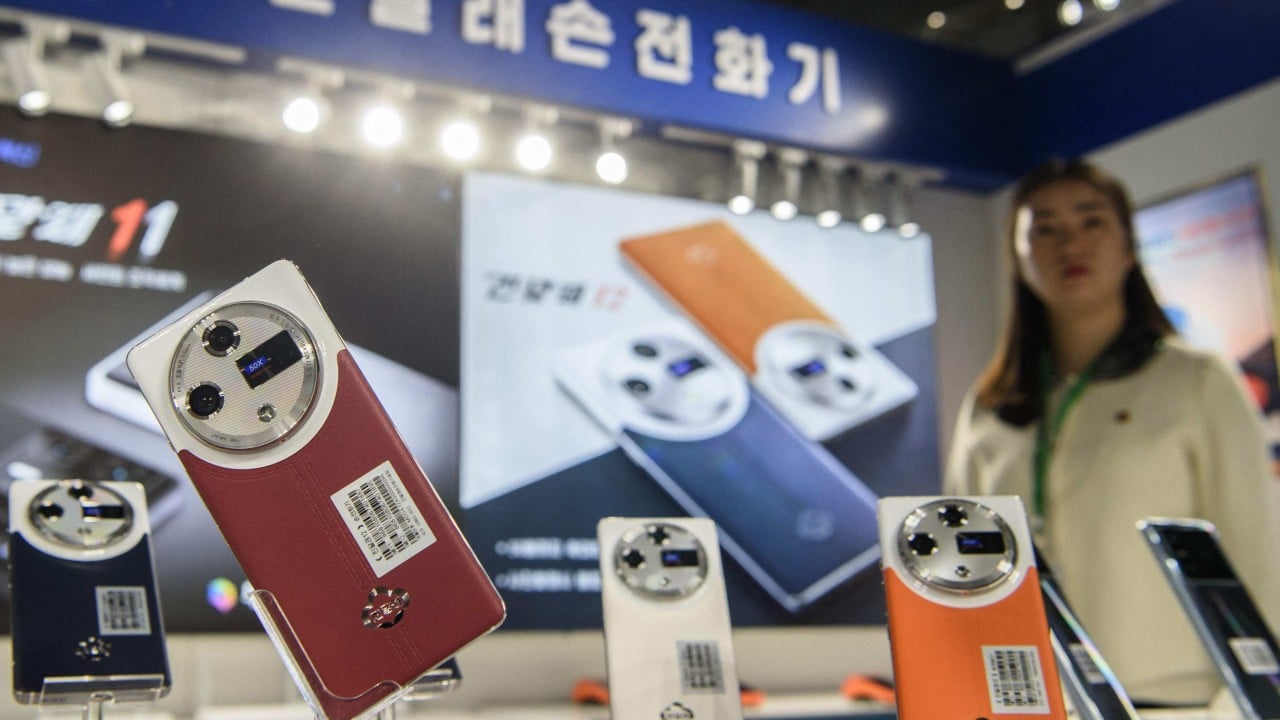
The emergence of the Samtaesong 8 smartphone represents a strategic shift in North Korean domestic policy, transitioning from simple hardware procurement to a sophisticated model of technological autarky designed to facilitate total information control. While external observers often focus on the aesthetic mimicry of global flagship devices, the true significance lies in the internal architecture: a closed-loop operating system engineered to permit zero-day surveillance and absolute content filtering. This device is not merely a consumer product; it is a portable endpoint of the state’s intranet, designed to sanitize digital interactions while providing the illusion of modern connectivity.
The Triad of Digital Enclosure
To understand the Samtaesong 8, one must analyze the three structural pillars that define its existence: supply chain obfuscation, localized OS skinning, and the mandatory signature verification system. Unlike international smartphones that rely on open-source contributions or global app stores, this device operates within a hermetically sealed environment.
Hardware Provenance and Rebranding: The physical chassis and components are almost certainly sourced from Chinese Original Equipment Manufacturers (OEMs). By importing white-label hardware, the Pyongyang-based Mirae Technology Company bypasses the R&D costs associated with semiconductor fabrication and industrial design. The "Samtaesong" branding—meaning "three grand stars"—is a veneer of domestic innovation applied to existing low-to-mid-tier Chinese technical specifications.
OS Hardening and Surveillance Hooks: The software layer is a heavily modified fork of Android. In this environment, the "open" nature of Android is inverted. The North Korean government utilizes the kernel to implement background processes that are inaccessible to the user. These include the "Trace Viewer" and "Red Star" remnants, which capture random screenshots of the user’s activity and store them in a directory that cannot be deleted or modified. These images serve as a psychological deterrent; the user knows the device is recording, even if the data is only audited intermittently.
Cryptographic White-listing: The most effective tool of the Samtaesong 8 is the mandatory digital signature system. Every file—whether a JPEG, a PDF, or an APK—must bear a state-issued cryptographic signature to open. If a user attempts to load "illegal" media or an unauthorized application via Bluetooth or SD card, the operating system identifies the lack of a government certificate and refuses to execute the file. This creates a functional "walled garden" that is impenetrable to outside information.
The Economic Logic of State-Sanctioned Consumerism
The introduction of "sleek and colorful" devices like the Samtaesong 8 follows a calculated economic rationale. The state must balance the citizenry's desire for modern status symbols with the regime's requirement for ideological purity. By providing a domestic alternative that looks like a Samsung or Huawei device, the state captures the internal market and prevents the demand for smuggled foreign phones.
This creates a self-funding surveillance state. The high retail price of these smartphones—often exceeding the annual salary of an average worker—functions as a voluntary tax. The revenue generated from Samtaesong sales supports the infrastructure of the Kwangmyong (the national intranet), ensuring that the very tools used for communication are funded by the monitored subjects.
Strategic Bottlenecks in the Samtaesong Ecosystem
Despite the polished exterior, the Samtaesong 8 faces several critical bottlenecks that limit its utility as a true technological leap.
- Connectivity Constraints: The device is effectively a "brick" regarding the global internet. It is hardwired to connect only to domestic base stations that route traffic through the state’s internal servers. This prevents the use of VPNs or proxy servers, as the underlying network protocol lacks the gateway to the World Wide Web.
- Storage and Memory Management: Because the OS is constantly running heavy background surveillance scripts and taking screenshots, system resources are perpetually taxed. Users often experience significant lag and storage bloat, as the "surveillance cache" occupies a permanent portion of the internal flash memory.
- Component Degradation: Lacking a domestic supply of high-grade lithium-ion batteries and OLED screens, the longevity of these devices is poor. Without official repair channels for imported parts, the Samtaesong 8 has a compressed lifecycle, forcing users into a cycle of frequent, expensive upgrades that further enrich the state.
The Mechanism of Content Sterilization
The Samtaesong 8 does not just block information; it actively replaces it. The device comes pre-loaded with state-approved applications, ranging from agricultural manuals to ideologically vetted games. This is a move from passive censorship to active "algorithmic conditioning."
The browser is locked to a handful of state portals. There is no concept of a "search engine" that crawls the web; instead, there is a directory of approved destinations. When a user interacts with the device, they are operating within a simulation of the digital world where the only available data points are those that reinforce the state's narrative.
Operational Risk for the User
For the North Korean citizen, the Samtaesong 8 represents a high-risk, high-reward proposition. It offers the convenience of digital photography, localized mapping, and text communication, but it carries a "digital fingerprint" that can be used against the owner in a judicial context.
The "Watermarking" feature is a primary example of this risk. Every file created on a Samtaesong 8 is tagged with a unique identifier linked to the hardware’s serial number. If a photo taken on a device is found on another person's phone or is smuggled out of the country, the authorities can trace the file back to the original device owner with absolute certainty. This creates a "chain of custody" for every byte of data generated within the country.
Technical Specifications vs. Practical Utility
While the marketing materials emphasize high-resolution cameras and "colorful" displays, the technical utility is purposefully throttled.
- Processor: Likely an octa-core MediaTek or older Snapdragon variant. Sufficient for basic tasks but incapable of running high-end encrypted messaging apps (even if they could be installed).
- RAM: Usually 4GB to 6GB, though a significant portion is reserved for the kernel-level monitoring tools.
- Display: LCD or low-grade AMOLED, designed to mimic the vibrance of global leaders while using cheaper, high-fail-rate panels.
The hardware is a distraction. The "sleek" design is a psychological tool intended to normalize the presence of a tracking device in the pocket of every citizen. It signals that the state is not just a provider of security and food, but also a provider of "modernity."
Quantifying the Information Gap
The Samtaesong 8 effectively widens the "data divide" between the North Korean elite and the general population. While the elite may have access to unmonitored devices and the global internet, the Samtaesong 8 is the standardized tool for the masses. This creates a tiered information society where the majority of the population perceives the Samtaesong ecosystem as the totality of "high tech."
The absence of third-party encryption (such as Signal or WhatsApp protocols) means that all peer-to-peer communication is transparent to the Ministry of State Security. The SMS and voice calls are monitored by automated keyword triggers. This is a level of vertical integration that western tech companies, despite their data-harvesting practices, cannot achieve due to legal and structural barriers.
The Strategic Shift to End-Point Control
The Samtaesong 8 marks the end of the era of "information leakage" via radio broadcasts and smuggled physical media. By transitioning the population to digital devices that they want to carry, the state has moved the frontline of censorship from the border to the individual's pocket.
The strategic play here is clear: the state has realized that total prohibition of technology is unsustainable in a globalized world. Instead, they have opted for "controlled adoption." By manufacturing and distributing their own hardware, they dictate the terms of the digital age within their borders. The Samtaesong 8 is the ultimate Trojan horse—a symbol of progress that functions as an unbreakable shackle.
Future iterations of the Samtaesong line will likely integrate biometric data—fingerprints and facial recognition—not for the user's convenience, but to tie the digital record to the biological person. This will finalize the transition from a surveillance state that watches from the outside to one that monitors from the device upward, ensuring that every digital interaction is authenticated, recorded, and, if necessary, used as evidence of ideological non-compliance.