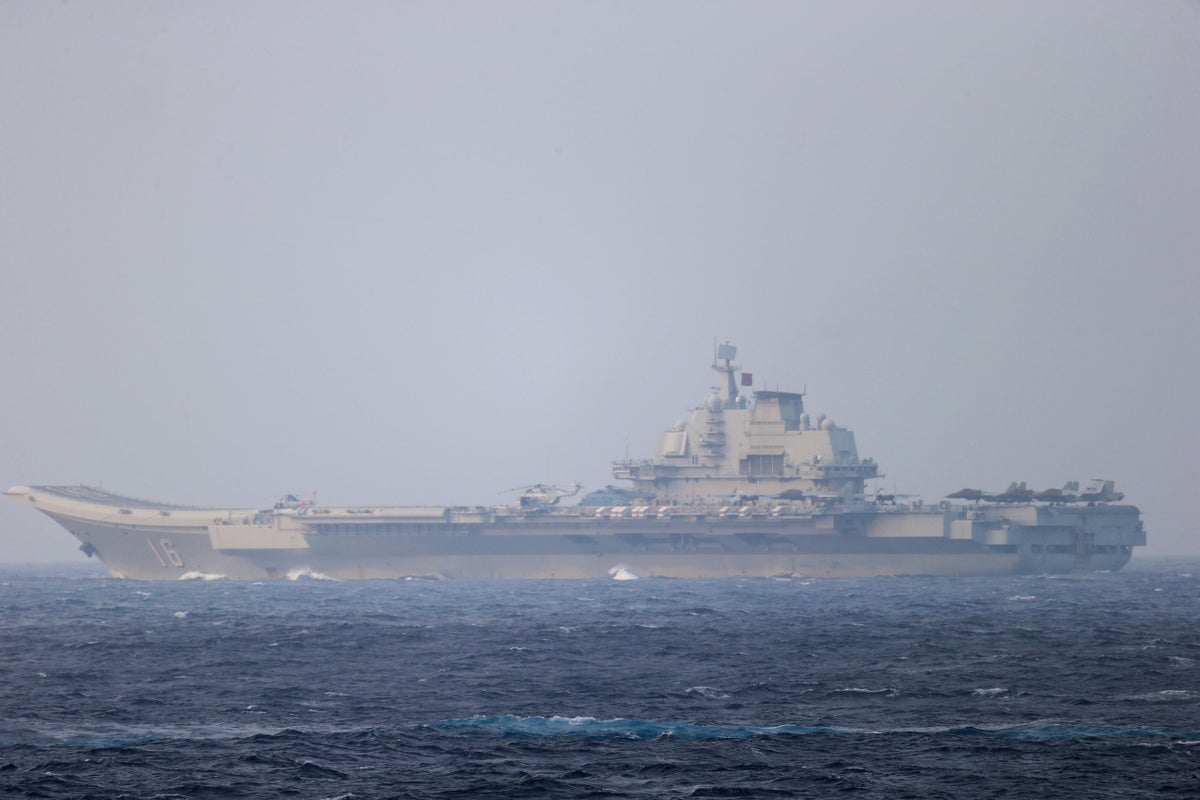
The media treats every Chinese transit of the Taiwan Strait like a countdown to Armageddon. It’s a tired script. A gray hull slides through a 110-mile-wide body of water, Taipei "monitors" the situation, and Washington issues a sternly worded press release about "peace and stability."
This isn't news. It’s maritime theater.
If you’re reading the standard reports, you’re being fed a diet of artificial adrenaline. The narrative suggests that these transits are escalating toward an inevitable clash. In reality, the frequency of these movements is a sign of a settled, albeit tense, bureaucratic routine. We are watching two superpowers engage in a high-stakes rehearsal where neither side actually wants to open the curtain.
The Sovereignty Trap
Mainstream reporting focuses on the "violation" of space. But let’s get the geography right. The Taiwan Strait is an international waterway. Under the United Nations Convention on the Law of the Sea (UNCLOS), ships of all nations enjoy the right of transit. When a People's Liberation Army Navy (PLAN) vessel sails through, it isn't "invading." It is exercising the same rights the U.S. Navy claims when the USS Ralph Johnson makes the same trip.
The "lazy consensus" assumes that China is testing boundaries. I’ve spent enough time analyzing naval deployments to tell you that China isn’t testing the boundary—they are normalizing it. They aren't asking for permission; they are making the presence of their fleet so mundane that eventually, the world stops looking.
The real danger isn't the ship you see on the news. It’s the logistical infrastructure being built on the mainland while you’re distracted by a lone destroyer.
The Myth of the "Armed Watch"
News outlets love the phrase "armed forces watch on." It creates an image of soldiers with their fingers on triggers, sweating under the sun.
It’s nonsense.
Modern naval warfare doesn't happen at binocular range. If a conflict breaks out in the Strait, the first shots won't be fired by a deck gun. They will be fired by land-based hypersonic missiles and long-range rockets located hundreds of miles away.
Watching a ship pass through the Strait is like watching a car drive past your house. You can stand on the porch and glare all you want, but you aren't "defending" anything. The Taiwanese military knows this. Their "monitoring" is largely a public relations exercise designed to reassure a nervous domestic population that the government is doing something.
Logistics Beats Posturing
I’ve tracked maritime movements long enough to know that a single warship is a distraction. If you want to know when things are actually getting serious, stop looking at the Strait and start looking at the civilian ferry terminals in Fujian.
The PLAN’s real strength in a cross-strait scenario isn't its destroyers; it’s its ability to commandeer thousands of Roll-on/Roll-off (RO-RO) civilian vessels. When you see massive exercises involving civilian cargo ships practicing beach landings, that’s a signal. A destroyer in the Strait is just a Tuesday.
The Cost of Constant Alertness
There is a massive, unspoken downside to the way Taiwan responds to these transits: Strategic Fatigue.
Every time the PLA sends a ship or a plane across the median line, Taiwan scrambles assets. This costs millions. It wears down airframes. It exhausts crews. It’s a war of attrition played out in the accounting books.
- Fuel Consumption: High-performance engines don't like constant, short-notice scrambles.
- Maintenance Cycles: For every hour spent "monitoring" a Chinese transit, three hours are spent in the hangar.
- Human Capital: You can’t keep pilots and sailors at 100% readiness forever.
China knows this. They are using the "threat" of a transit to hollow out Taiwan’s defense budget without firing a single bullet. They are winning the "peace" by forcing the opposition to spend itself into exhaustion.
Why the U.S. Needs the Drama
The "China Threat" is the best marketing tool the U.S. defense industry has ever had.
Without the specter of a Chinese warship in the Strait, it becomes much harder to justify the $800 billion-plus defense budget. The Pentagon needs these headlines to secure funding for the next generation of Virginia-class submarines and B-21 bombers.
I’ve seen the internal memos. The goal isn't just to stop China; it’s to ensure that the Pacific remains a "contested environment" forever. A peaceful, settled Taiwan Strait is bad for business.
The Technology Gap Nobody Mentions
Let’s talk about the actual hardware. Most "status quo" analysts treat Chinese ships like cheap knockoffs of Western tech. That’s a dangerous delusion.
The Type 055 Renhai-class cruiser is, by many metrics, superior to the U.S. Ticonderoga-class. It has more Vertical Launch System (VLS) cells and more advanced integrated mast technology. When these ships sail through the Strait, they aren't just posturing; they are conducting live-environment sensor testing. They are mapping the electronic signature of every Taiwanese and American radar that turns on to watch them.
By "monitoring" the Chinese ships, the West is actually giving them exactly what they want: data.
People Also Ask (and get wrong)
Q: Is China about to invade?
A: No. An invasion requires a massive buildup of supplies, blood banks, and troop movements that would be visible from space months in advance. A single ship in the Strait is the opposite of an invasion signature.
Q: Why doesn't the U.S. stop them?
A: Because there is nothing to stop. It’s international water. Stopping them would be a violation of the very "rules-based order" the U.S. claims to protect.
Q: Does Taiwan have the upper hand?
A: Geographically, yes. Militarily, the gap is widening in China’s favor every day. Taiwan’s best defense isn't a bigger navy; it’s making itself too expensive to digest.
Stop Watching the Horizon
If you’re waiting for a "Red Dawn" moment in the Taiwan Strait, you’re going to be waiting a long time. The conflict is already happening, but it’s not happening in the water.
It’s happening in the semiconductor supply chains. It’s happening in the cyber attacks on Taiwanese infrastructure that happen 5 million times a day. It’s happening in the undersea cable networks that keep the island connected to the world.
A warship in the Strait is a 19th-century solution to a 21st-century problem. It’s a shiny object designed to keep you looking the wrong way.
The next time you see a headline about a Chinese ship "defying" the world by sailing through a 100-mile-wide gap, ignore it. Look at the satellite imagery of the dry docks in Shanghai. Look at the stockpiles of rare earth minerals. Look at the debt cycles of the nations surrounding the South China Sea.
The ship is a shadow. The real war is the one you aren't allowed to see.
Quit falling for the theater. The Strait isn't a battlefield; it’s a distraction. Focus on the logistics, or don't focus at all.