Taipei sits in a perpetual geopolitical holding pattern, yet the domestic theater never stops manufacturing fresh pressure points. The latest flashpoint revolves around the South China Sea claims, where the opposition Kuomintang party has seized upon official hesitation to accuse the ruling Democratic Progressive Party of quietly abandoning decades of sovereign baseline declarations.
At the center of this storm lies Taiping Island, also known as Itu Aba, the largest natural feature in the Spratly archipelago. Controlled by Taiwan since 1956, this tiny speck of land functions as a lonely outpost of strategic leverage, administrative capability, and diplomatic vulnerability. When opposition lawmakers demand that executive leadership sail to the island to hoist flags and restate historic boundaries, they are not merely debating maritime law. They are weaponizing geography for domestic political survival, leveraging external anxieties to score points against an administration already navigating treacherous cross-strait currents.
Understanding why this accusation resonates requires looking past the diplomatic boilerplate and examining the rigid mechanics of regional power projection. The broader geopolitical architecture leaves very little room for smaller actors to maneuver when superpowers lock horns over international waterways.
The Strategic Weight of Taiping Island
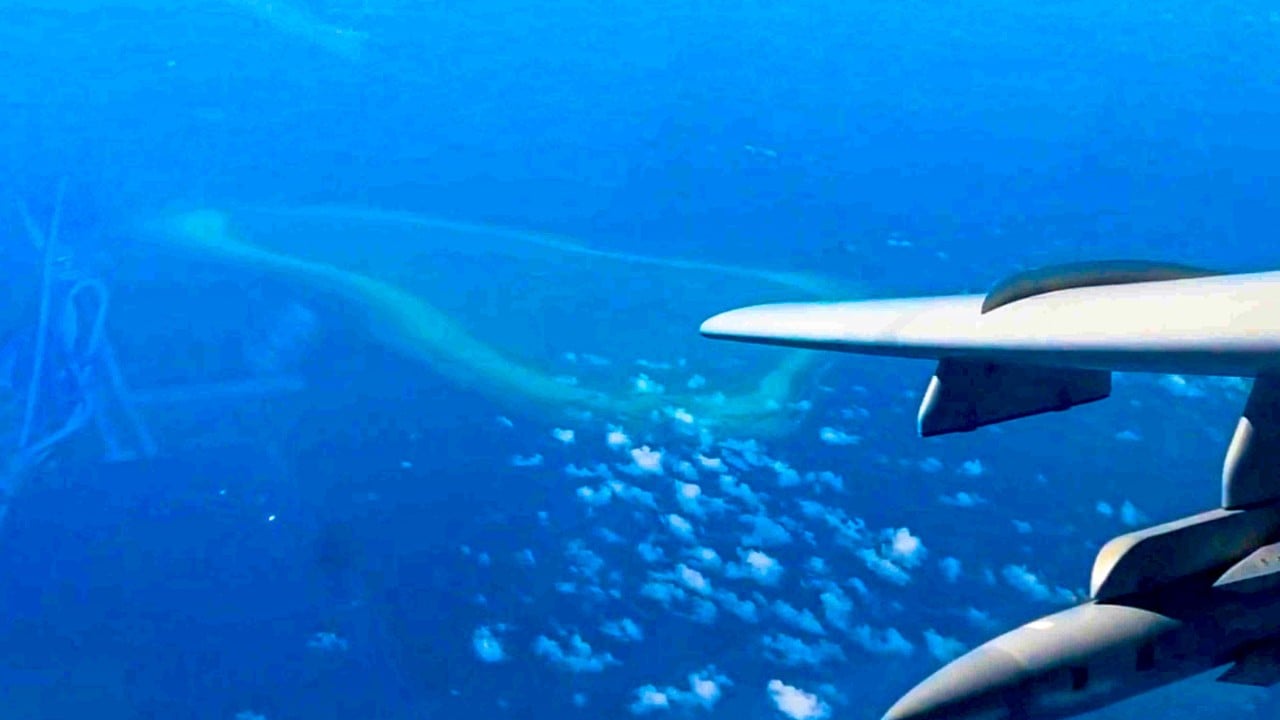
Geography is unforgiving. Taiping Island sits roughly 1,600 kilometers south of Kaohsiung, isolated in a vast expanse of blue water patrolled with increasing aggression by Beijing and monitored closely by Washington.
For decades, the government in Taipei maintained a consistent posture regarding its historical maritime boundaries, historically rooted in the U-shaped line inherited from the post-World War II era. Over time, international pressure, the 2016 Permanent Court of Arbitration ruling on the South China Sea, and the shifting calculus of regional security forced a quiet recalibration. The ruling party realized that aggressively pressing maximalist territorial claims alongside Beijing invited severe diplomatic isolation, especially when Western partners view those very claims as destabilizing.
Yet, domestic critics refuse to let the issue rest. To the Kuomintang, any softening of rhetoric or reluctance to stage high-profile leadership visits to Taiping Island represents an intolerable erosion of national dignity. They frame administrative pragmatism as cowardice.
The friction reveals a deeper structural dilemma. How does a self-governing entity with disputed international status maintain strategic assets in a contested maritime zone without provoking a crisis it cannot win?
The Cost of Symbolic Diplomacy
Demands for presidential visits to remote outposts sound decisive on a talk show, but operational realities tell a starkly different story.
When a head of state travels to a militarized reef or an isolated atoll in a conflict zone, the logistical footprint is massive. Coast guard vessels must mobilize. Air defense systems go on high alert. The risk of an accidental escalation with Chinese naval patrols multiplies exponentially.
Governments must weigh the domestic political benefit of a ten-minute photo opportunity against the catastrophic downside of a tactical miscalculation. The current administration has consistently chosen operational stability over theatrical posturing. Critics label this approach an abdication of duty. Analysts with experience in regional defense tracking recognize it as basic risk management.
+-------------------------------------------------------+
|                 The Strategic Tradeoff                |
+-------------------------------------------------------+
|  Domestic Demand  --->  High-Visibility Stunts        |
|                         (Symbolic National Pride)     |
|                                                       |
|  Operational Risk --->  Naval Stand-offs, Escalation  |
|                         (Real-World Security Threat)  |
+-------------------------------------------------------+
Washington and the Shadow of Ambiguity
The United States watches these domestic skirmishes with a mixture of quiet anxiety and strategic detachment. Washington prefers that Taipei keep its head down regarding the South China Sea, avoiding any rhetorical alignment with Beijing's expansive nine-dash line arguments while simultaneously maintaining enough capacity to deter aggression.
When opposition politicians push the government to double down on contested sovereignty claims, they inadvertently complicate Washington's legal narrative. The United States bases much of its freedom of navigation operations on upholding the United Nations Convention on the Law of the Sea. If Taipei insists on historical maritime rights that clash with modern international legal frameworks, it creates friction within the informal security partnership that underpins Taiwan's ultimate defense.
This creates an agonizing tightrope walk for national security planners in Taipei. Align too closely with Western legal interpretations, and the domestic opposition screams about selling out historical heritage. Defend the legacy maps with aggressive rhetoric, and the international partners who supply defensive weaponry begin to question the strategic maturity of the island's leadership.
The Domestic Political Calculus
Why would a major political party press a claim that carries such high diplomatic risk? The answer lies in the shifting demographics of local voter sentiment and the relentless grind of electoral competition.
The opposition party has struggled to find a cohesive foreign policy narrative that resonates with a younger electorate increasingly skeptical of unification arguments yet wary of outright conflict. By focusing on sovereignty over distant islands, the party attempts to position itself as the true guardian of national heritage. It is a nostalgic play designed to energize traditional constituencies while painting the ruling administration as weak-kneed administrators who bend too easily to foreign pressure.
This strategy relies on abstraction. Most voters will never visit Taiping Island. They will never watch a supply ship dodge coast guard cutters in the Spratlys. Because the theater of conflict is invisible to the average citizen, political actors can paint the stakes in bold, uncompromising colors.
The Limits of Historical Precedent
Clinging to mid-century cartography in the twenty-first century is a losing game. The legal instruments used to justify historical claims face intense skepticism from international courts and rival capitals alike.
When the opposition demands that the government uphold these legacy positions without reservation, they ignore the reality of changing enforcement mechanisms. Modern maritime surveillance relies on satellite constellations, persistent drone patrols, and heavy missile corvettes. A symbolic flag on a concrete pier does not deter a multi-role frigate equipped with anti-ship cruise missiles.
True security in the South China Sea requires hard capabilities, secure supply lines, and quiet intelligence cooperation, not loud declarations issued from air-conditioned press rooms in Taipei.
The Reality of Regional Enforcement
Operating supply lines to Taiping Island is an exercise in vulnerability. The C-130 transport aircraft flights are infrequent. Naval replenishment ships must navigate waters dominated by vastly superior naval forces.
If a crisis erupts, holding a fortified coral reef hundreds of miles from the mainland becomes an engineering and logistical nightmare rather than an asset. Military planners know this. They understand that every resource dedicated to holding an isolated outpost in the south is a resource pulled away from the primary defense of the main island chain.
Yet, public debate rarely touches on logistics. The focus remains locked on symbols. The opposition wants the narrative of strength, regardless of the military impracticality. The government wants the reality of survival, regardless of the political cost.
The friction between political theater and strategic necessity defines modern statecraft in Taipei. As long as domestic factions find utility in weaponizing maritime geography, the ghost of historical claims will continue to haunt every administration, forcing leaders to choose between the applause of the local press and the quiet disapproval of global allies.
The waters around the Spratly archipelago remain calm on the surface, masking an undertow of competing ambitions that neither political posturing nor diplomatic silence can fully resolve.