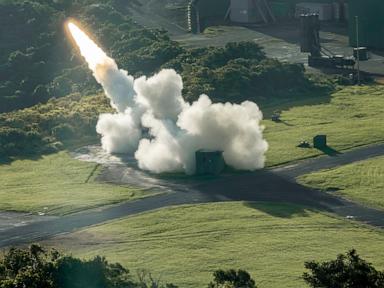
The roar of artillery in Pingtung County usually signals standard seasonal posturing. This time, the noise profile changed. Above the southern coast of Taiwan, a swarm of domestic and foreign-sourced loitering munitions hummed through the salt air, diving toward simulated landing zones alongside HIMARS rockets and heavy armor. It marked the first time the Republic of China Armed Forces formally integrated multiple classes of attack drones into a joint live-fire combat exercise.
The timing was not accidental. Thousands of miles away and a week before a scheduled summit between Donald Trump and Xi Jinping, Taipei decided to show its hand. The message was unmistakable. Taiwan is no longer waiting for permission to modernize its deterrence architecture. It is building an iron wall of cheap, attritable lethality right on the front lines of the twenty-first century's most volatile geopolitical fault line.
For decades, Taiwan relied on exquisite hardware. Main battle tanks, heavy destroyers, and high-end fighter jets formed the backbone of defensive planning. That era is dead. When facing an adversary with the industrial depth and missile inventory of the People's Liberation Army, heavy conventional platforms function as expensive targets.
Military analysts have watched the transformation with cautious eyes. The shift toward asymmetric warfare, long championed by strategic theorists under the rubric of the Overall Defense Concept, finally moved from theoretical white papers into the dirt and dust of a live-fire range. Attack drones change the math of amphibious invasion. They disperse force, lower the cost per kill, and strip away the defender's reliance on fixed infrastructure that can be pulverized by an initial missile barrage.
Yet, holding a drill is vastly different from surviving a campaign. The real story behind the Pingtung exercises lies away from the cameras, buried in the hard realities of modern combat engineering and supply chain vulnerability.
Modern conflict runs on silicon and signal security. When Taiwan deployed its attack drones in formation, it exposed a critical operational vulnerability that every planner in Taipei and Washington understands too well. Electronic warfare is the graveyard of cheap UAVs. In the skies over Eastern Europe, radio-frequency jamming and GPS spoofing render entire fleets of small unmanned aircraft useless within minutes of launch.
Taiwan's newly showcased drones must operate in an electromagnetic soup saturated by mainland jamming stations stationed across the strait. If navigation links drop or video feeds cut out mid-flight, a precision loitering munition turns into an expensive, blind paperweight. Integrating autonomous terminal guidance systems is no longer a luxury feature. It is an absolute survival requirement for any drone operating under heavy electronic suppression.
The industrial challenge runs parallel to the technical one. Building a dozen demonstration units for a high-profile military exercise satisfies domestic political audiences and international observers. Producing forty thousand units per month to absorb the attrition rates of a prolonged conflict is an entirely different operational mountain to climb.
Taiwanese defense contractors face a severe bottleneck in secure component sourcing. Heavy reliance on commercial microchips, batteries, and optical sensors creates severe supply chain exposure. If a supply cutoff occurs during a blockade, production lines freeze before the first wave of replenishment can even be bolted together. The island's manufacturing prowess in semiconductors is legendary, but making high-end logic chips for consumer electronics does not automatically translate into mass-producing ruggedized military-grade flight controllers and secure datalinks under wartime conditions.
While the drones stole the headlines, their deployment occurred against the backdrop of an impending diplomatic collision. The upcoming summit between Washington and Beijing casts a long, cold shadow over the democratic island. Taipei watches every American administration with a mixture of profound reliance and acute anxiety. Strategic ambiguity has frayed at the edges, replaced by transactional diplomacy where security guarantees are weighed against trade balances and geopolitical grand bargains.
By staging these drone drills right before the summit, Taiwan's military leadership sought to preempt any backroom compromises. The logic is brutal and straightforward. If Taipei can demonstrate that it is hardening its own defenses through innovative, cost-effective asymmetric capabilities, it becomes a much harder asset to bargain away in a bilateral superpower summit. Self-reliance is the ultimate diplomatic leverage. When you hold the keys to a heavily contested, high-attrition battlefield, great powers must factor your resilience into their calculus.
The tactical implications of the Pingtung exercise ripple far beyond immediate deterrence. Consider the geography. Taiwan's western coast features mudflats, tidal zones, and densely packed urban corridors that merge directly into the shoreline. Traditional armor struggles to maneuver in such constrained terrain.
Small tactical attack drones, however, thrive in verticality and clutter. They can clear ridgelines, hunt armored personnel carriers hiding in industrial parks, and descend upon landing craft before troops even wet their boots in the surf. This capability transforms every civilian rooftop, highway overpass, and tree line into a potential launch platform. Defense is no longer centralized in sprawling garrisons. It is decentralized down to small, mobile squads equipped with backpack-portable loitering munitions.
Training the force to use these systems represents a massive cultural shift for a conscript military. Traditional militaries love hierarchy, rigid standard operating procedures, and top-down command structures. Drone warfare demands the opposite. It requires decentralized initiative, rapid adaptation to jamming environments, and operators who think more like video game designers than nineteenth-century infantrymen.
Junior officers in Pingtung were forced to improvise tactical deployments on the fly, coordinating drone feeds with artillery strikes in real time. This agility cannot be manufactured overnight through standard classroom instruction. It requires years of continuous, grueling field experimentation where failures are analyzed ruthlessly before real blood is spilled.
Critics argue that even a massive fleet of small attack drones cannot stop a superpower's combined arms amphibious assault on its own. They are right. Drones do not win wars by themselves. They do not hold territory, secure ports, or project long-range political stability.
What they do exceptionally well is bleed an invading force dry. They impose an unacceptable cost on every mile of open water crossed and every beachhead attempted. When combined with mobile coastal defense missiles, smart minefields, and dispersed infantry units, attack drones create a layered defensive labyrinth. An invading force is forced to spend millions of dollars in advanced interceptors to shoot down cheap, mass-produced aerial threats. The economics of defense finally tilt back in favor of the defender.
The smoke from the Pingtung range cleared hours after the cameras stopped rolling, but the strategic shockwaves continue to propagate through foreign ministries from Washington to Tokyo. The era of comfortable defense assumptions has officially expired.
As the summit in the United States approaches and global powers maneuver for advantage, Taiwan has made its tactical direction clear. The future of sovereignty in the strait will not be decided by multi-billion-dollar prestige projects that sit vulnerable in concrete hangars. It will be decided by thousands of buzzing, disposable sentinels waiting quietly in the brush for the signal to strike.