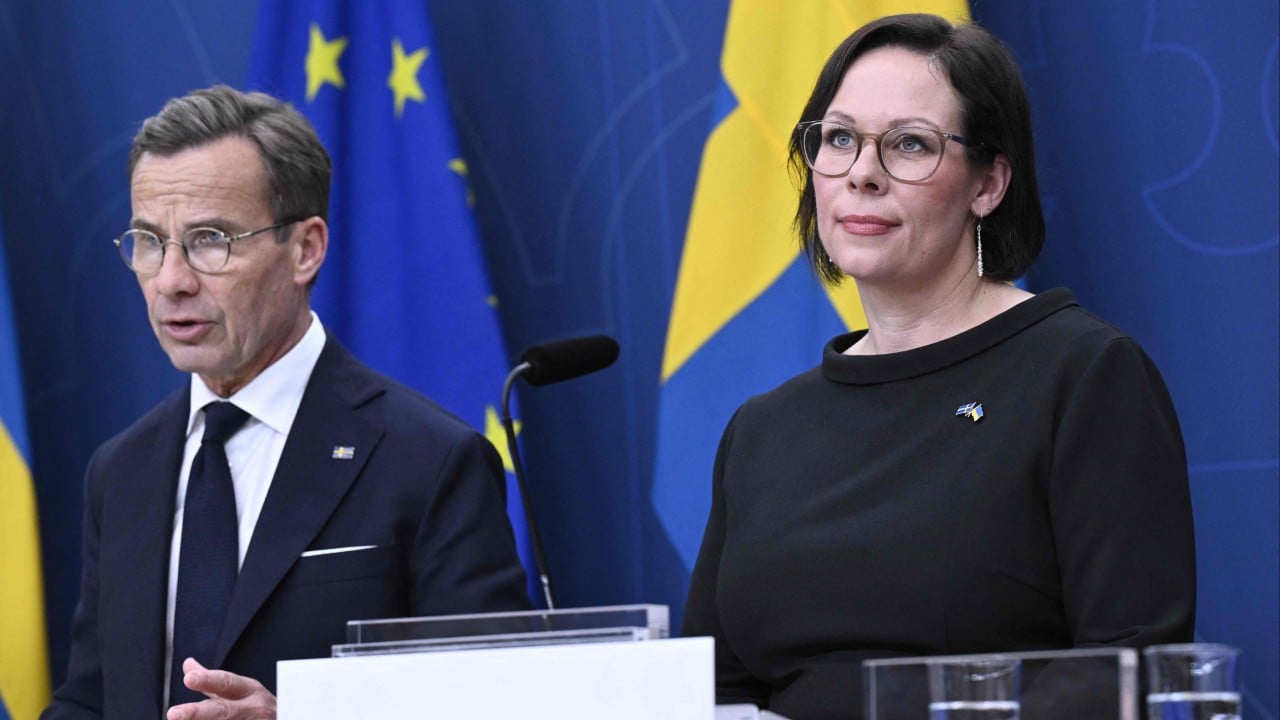
Sweden didn't just "reset" its security strategy when it launched the Myndigheten för psykologiskt försvar (MPF). It built a monument to its own anxiety. While mainstream media fawns over the Swedish "Psychological Defense Agency" as a brilliant frontline defense against Russian influence and the chaos of the Ukraine war, they are missing the glaring structural flaw. You cannot legislate "truth" into existence in a fractured digital age, and you certainly cannot defend a population’s mind using the same bureaucratic machinery that people already distrust.
The consensus says this is a necessary move to protect democracy. The reality? It is an expensive experiment in state-sponsored paternalism that will likely backfire, creating a "forbidden fruit" effect for the very disinformation it seeks to bury.
The Myth of the Neutral Gatekeeper
The fundamental error in Sweden’s logic is the assumption of neutrality. To "defend" a psychological landscape, the state must first define what constitutes a "threat." In a vacuum, sure, Russian bot farms spreading lies about NATO are an easy target. But the line between "foreign interference" and "domestic dissent" is a razor-thin wire that government agencies are notoriously bad at walking.
When a government agency decides which narratives are "resilient" and which are "malign," it stops being a defender and starts being an editor. I have spent years watching institutions try to "fact-check" their way out of a credibility crisis. It never works. Why? Because the moment you label an idea as "state-vetted truth," you give every conspiracy theorist in the basement a shiny new badge of honor to wear. You aren't defeating the lie; you are subsidizing its credibility among the skeptical.
Bureaucracy vs. The Speed of Memetics
The MPF operates at the speed of a committee. Disinformation operates at the speed of light. By the time a government analyst has identified a trend, drafted a report, and cleared it through three levels of management, the narrative has already mutated four times.
In information warfare, the OODA loop (Observe, Orient, Decide, Act) is the only metric that matters. Russia and China understand this. Their operations are decentralized, chaotic, and low-cost. Sweden is fighting a swarm of hornets with a very expensive, very slow sledgehammer.
Let’s look at the numbers. The agency's budget is millions of kronor. That money goes into office space, pensions, and "educational campaigns" that most Swedes will ignore or mock. If you want to actually harden a population against disinformation, you don't build an agency; you fix the education system to prioritize formal logic and source criticism. But that takes twenty years. An agency takes twenty minutes to announce and looks great in a press release.
Total Defense or Total Panic?
Sweden’s "Total Defense" concept—where every citizen is part of the security apparatus—is a romantic throwback to the Cold War. It worked when there were three TV channels and one national newspaper. In 2026, it is a pipe dream.
The MPF wants to "strengthen the population's resilience." This is technocrat-speak for "teaching people to believe the right things." But resilience isn't something a government can give you. Resilience comes from a high-trust society. Sweden’s trust levels, while high compared to the US, are fraying.
When the state intervenes to tell people how to think, it signals that the state fears what they might think. That is not a position of strength; it is a position of deep-seated insecurity. We are seeing a "security reset" that is actually a "panic button."
The Backfire Effect: How MPF Helps the Kremlin
Imagine a scenario where the MPF flags a specific narrative as "foreign-driven disinformation." In a high-trust era, people would ignore the narrative. In the era of the "anti-establishment" zeitgeist, that flag becomes a signal to look closer.
By centralizing the defense of truth, Sweden has created a single point of failure. If the MPF gets it wrong just once—if they flag something as fake that later turns out to be true or even just nuanced—their entire mission is dead. The Kremlin doesn't need to win the argument; they just need to prove the "official" source is fallible. Sweden just handed them the target.
What Real Defense Looks Like
If we were serious about "psychological defense," we would stop focusing on the content and start focusing on the conduit.
- Algorithmic Accountability: The problem isn't the lie; it's the engine that pushes the lie into your face 1,000 times a day. Sweden should be hammering the platforms, not the people.
- Radical Transparency: Instead of a shadowy agency, the government should be declassifying intelligence at record speeds. Show the work. Don't tell us it's a lie; show us the server it came from.
- Decentralized Literacy: Move the "defense" into the hands of local communities. A government pamphlet on "how to spot fake news" is trash. A community-led workshop on how to verify video metadata is a weapon.
The Cost of Security Theater
The Swedish "reset" is a classic example of "Doing Something" because the alternative—admitting that we have lost control over the information flow—is too terrifying for politicians to acknowledge.
We are building digital fortresses out of sand. The MPF will produce beautiful PDFs, host "thought leadership" summits, and publish annual reports showing "increased awareness." Meanwhile, the actual fractures in Swedish society will continue to deepen, exploited by anyone with a VPN and a basic understanding of human psychology.
Stop looking to Stockholm to tell you what is real. The moment you need an agency to define reality for you, you’ve already lost the war.
Build your own filters. Question the "official" debunkers as much as the "alternative" truth-tellers. The only real psychological defense is a healthy dose of cynicism toward anyone—government included—who claims they are protecting your mind for your own good.


