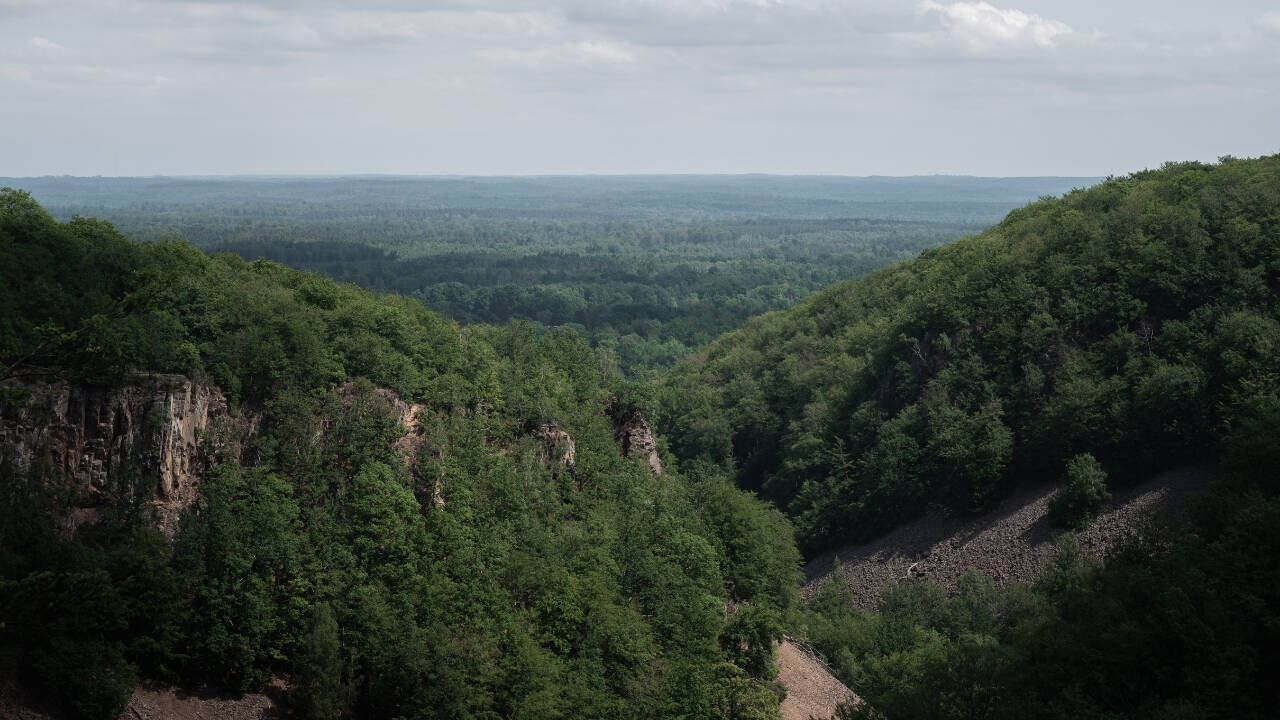
Every eco-tourist brochure, Nordic travel blog, and green-washed municipal PR packet tells the exact same comforting bedtime story about Söderåsen. They want you to believe that this massive ridge in southern Sweden went from a brutalized, stripped-bare plateau to a magnificent cathedral of ancient-looking deciduous trees purely because humans woke up one day, grew a collective conscience, threw their arms around the oaks, and let nature heal.
It is a clean, cinematic narrative. It is also fundamentally dishonest.
I have spent decades watching how conservation myths get manufactured. Governments love a neat before-and-after photograph. They point to Söderåsen National Park and shout about ecological restoration, painting a picture of passive, harmonious rewilding where forestry yielded to fairy-tale beech woods.
The lazy consensus says Söderåsen is a shining monument to what happens when we stop meddling and let Mother Earth take the wheel.
The truth is much darker, far more calculating, and entirely driven by economics, administrative convenience, and industrial-scale land-use shifts that had nothing to do with hugging trees.
The Myth of the Accidental Wilderness
Let us look at the baseline. Söderåsen was indeed deforested. By the nineteenth century, the plateau looked less like a romantic forest and more like an industrial fuel depot. Charcoal burners, hungry ironworks, relentless grazing livestock, and timber harvesters had stripped the hills down to bare granite and scrubby brush.
The standard telling implies that the current canopy of towering beech trees is a direct resurrection of that ancient primeval forest.
That is botanically illiterate.
The trees you walk beneath today on the Söderåsen ridge are not some pristine ghost of the Stone Age. They are the deliberate, managed, second-growth descendants of a commercial wood economy that shifted its focus elsewhere. When coal and imported timber replaced local charcoal, the pressure on the ridge eased. The forest did not return because of a bureaucratic decree or a park boundary marker; it returned because the local extractive industries found cheaper calories and better margins down in the valleys and across the Baltic.
When the Swedish government finally slapped national park status on the area in 2001, they did not rescue an endangered wilderness from the chainsaw. They locked down an already mature, secondary-growth timber farm and slapped a velvet rope around it.
The Administrative Sleight of Hand
Let us address the mechanics of modern conservation politics. Designating a national park in a densely populated European region is rarely an act of pure charity. It is a zoning exercise.
When bureaucrats talk about protecting a biodiversity hotspot, they are usually managing land values, tourist funnels, and rural depopulation. Southern Sweden has long struggled with keeping rural economies afloat once traditional agrarian employment evaporates. If you cannot farm it efficiently and you cannot log it profitably, what do you do with a massive, hilly ridge that blocks infrastructure?
You brand it.
You turn it into a national park, drive the foot traffic into designated parking lots, build visitor centers, and sell overpriced cinnamon buns to hikers from Copenhagen and Malmö.
This is where the standard tourism narrative completely collapses under its own weight. The ecosystem inside Söderåsen is treated as a static museum exhibit rather than a dynamic, breathing environment. True ecological health requires disturbance, fire, and shifting boundaries. Instead, what Söderåsen got was a rigid management plan designed to keep the forest looking picturesque for weekend visitors who want their nature served sanitized and easy to digest.
Imagine a scenario where the Swedish Environmental Protection Agency actually allowed natural wildfires to sweep through the ridge, or permitted aggressive, large-scale structural thinning to mimic historic grazing pressures. The tourists would riot. The local municipalities would panic. So instead, the park managers engage in hyper-controlled, cosmetic conservation that preserves a specific snapshot in time—a snapshot that satisfies human aesthetic preferences rather than biological reality.
The Ecological Reality Check
Let us look at the flora and fauna that environmentalists love to weaponize in their fundraising campaigns. Söderåsen is routinely praised for its rich insect life, rare fungi, and nesting birds of prey.
Ask any forest ecologist who isn't on a government payroll what is actually happening beneath those grand beech trees, and you will hear a different story.
A monoculture of mature beech—even a native one—is an ecological desert compared to a mixed-age, structurally diverse forest with high deadwood retention and varied canopy gaps. Because the area was clear-cut and heavily grazed for centuries, the soil profile took a severe beating. The rapid, unmanaged return of dense beech canopies actually choked out the understory diversity in many sections. The light cannot get through.
The biodiversity you celebrate when you hike the Copper Hat viewpoint is concentrated in tiny, fragile micro-habitats, heavily propped up by interventionist management. Left entirely to its own devices without human intervention buffers, a recovering plateau of this size goes through violent ecological oscillations that public relations departments cannot spin into a weekend getaway package.
The Uncomfortable Upside of Hypocrisy
Here is where my contrarian stance demands intellectual honesty. I am tearing down the mythology of Söderåsen not because national parks are evil, but because comforting lies prevent us from solving real environmental crises.
When we pretend that Söderåsen is a magical success story of passive rewilding, we create a dangerous template. We start believing that we can industrialize and strip-mine a region, walk away for a century, and assume nature will automatically reset to factory settings.
Nature does not reset. It adapts to whatever scars we leave behind. The forest on that ridge is a hybrid artifact—half human-engineered recovery, half industrial coincidence.
Does it provide a great place to walk on a Sunday afternoon? Absolutely. Is it a crucial lung for Skåne? Sure. But let us stop pretending it is an untamed sanctuary of ancient earth. It is a carefully curated green theme park built on the bones of a nineteenth-century industrial wasteland.
If you want to experience real nature, stop looking at the places where governments have put up welcome signs, built gravel walkways, and installed composting toilets. Go look at the overgrown ditches, the contested private woodlots, and the messy, unmanaged peripheries where nobody is selling tickets. That is where the actual work of the earth is happening, far away from the gift shop.