The administrative modification of signage and digital archives governing the former site of the Confederate Memorial at Arlington National Cemetery represents a calculated shift in state-sanctioned historical interpretation. By systematically excising textual references that characterize the 1914 bronze monument as a purveyor of a mythologized antebellum narrative, the current administration has operationalized an explicit counter-strategy against institutional consensus. Understanding this maneuver requires examining how physical space, bureaucratic language, and political ideology intersect within federal properties.
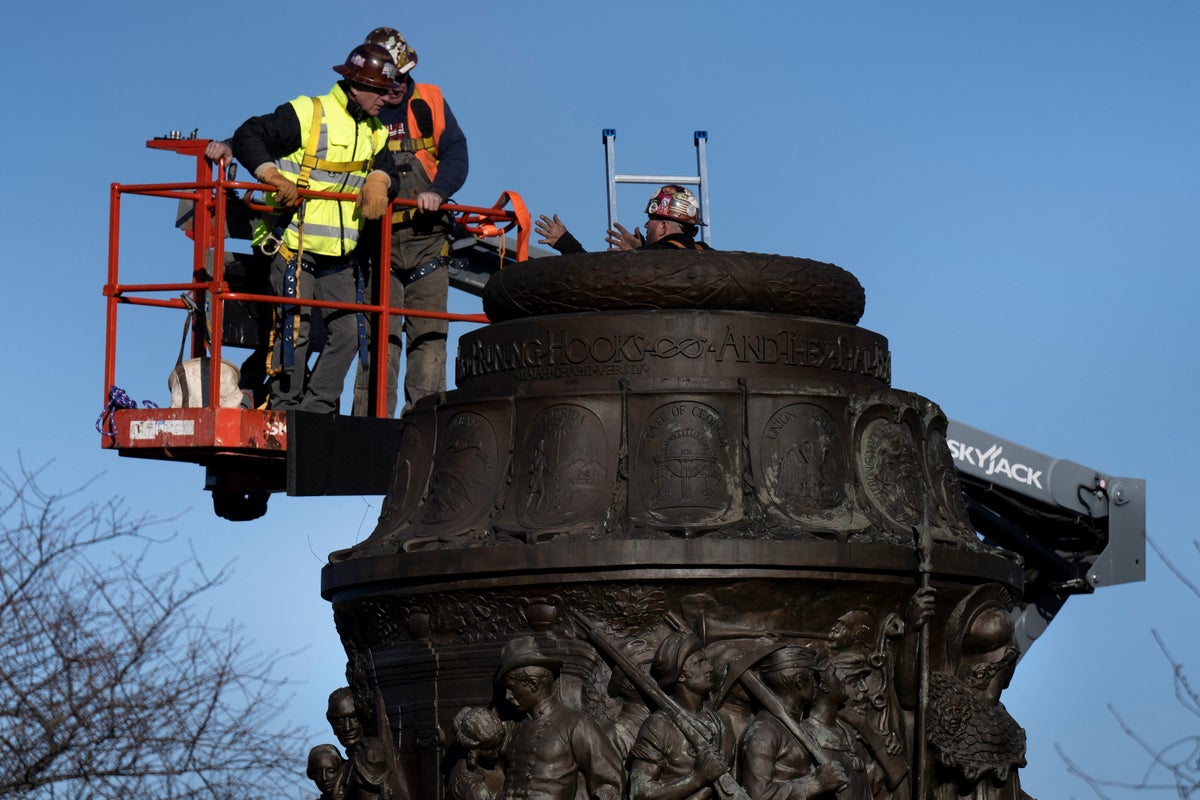
The bronze sculpture, designed by Moses Ezekiel and unveiled during the Wilson administration, featured explicit iconography designed to promote reconciliation between North and South at the direct expense of historical veracity regarding chattel slavery. Central to the critique of the monument was its inclusion of the "faithful slave" trope, depicting an enslaved man following his master to war and an enslaved woman caring for a white infant. When congressional mandates compelled the removal of the monument in late 2023 under statutory directions from the Naming Commission, the resulting interpretive markers explicitly contextualized these carvings as revisionist instruments of the Lost Cause ideology.
The recent administrative intervention dismantled this interpretive framing. The updated physical marker at Section 16 and the corresponding web text replace analytical descriptions of sanitized slavery with functional statements regarding the expected 2027 redisplay of the conserved sculpture. This transformation operates through three distinct mechanisms of institutional communication.
The first mechanism is linguistic sanitization. References labeling the memorial's vision as nostalgic and mythologized have been systematically deleted from federal databases. In their place, bureaucratic neutrality is weaponized to strip away moral evaluation, reducing a contested ideological artifact to a mere logistics and conservation project.
The second mechanism is narrative inversion. Proponents of the monument's return, including defense leadership, frame the physical object and its restored context not as a tribute to racial subjugation, but as a preservation of American history against perceived erasure. This inversion re-centers the state as the defender of heritage rather than the arbiter of historical accountability.
The third mechanism is spatial rehabilitation. Leaving the granite foundation intact during the 2023 extraction preserved the geographic anchor of the dispute. The planned reinstallation of the bronze elements in 2027 transforms that geographic anchor back into an active site of ideological contestation, reversing the intended closure of the congressional Naming Commission directive.
Federal property management thus functions as an ongoing barometer of executive authority. When administrative control shifts, the interpretive infrastructure surrounding public monuments undergoes immediate calibration to align with the prevailing political coalition's theory of national identity.
Monitor the Department of Defense execution timeline for the Section 16 conservation project, tracking whether the 2027 reinstallation proceeds under modified interpretive guidelines that permanently institutionalize this administrative revision.