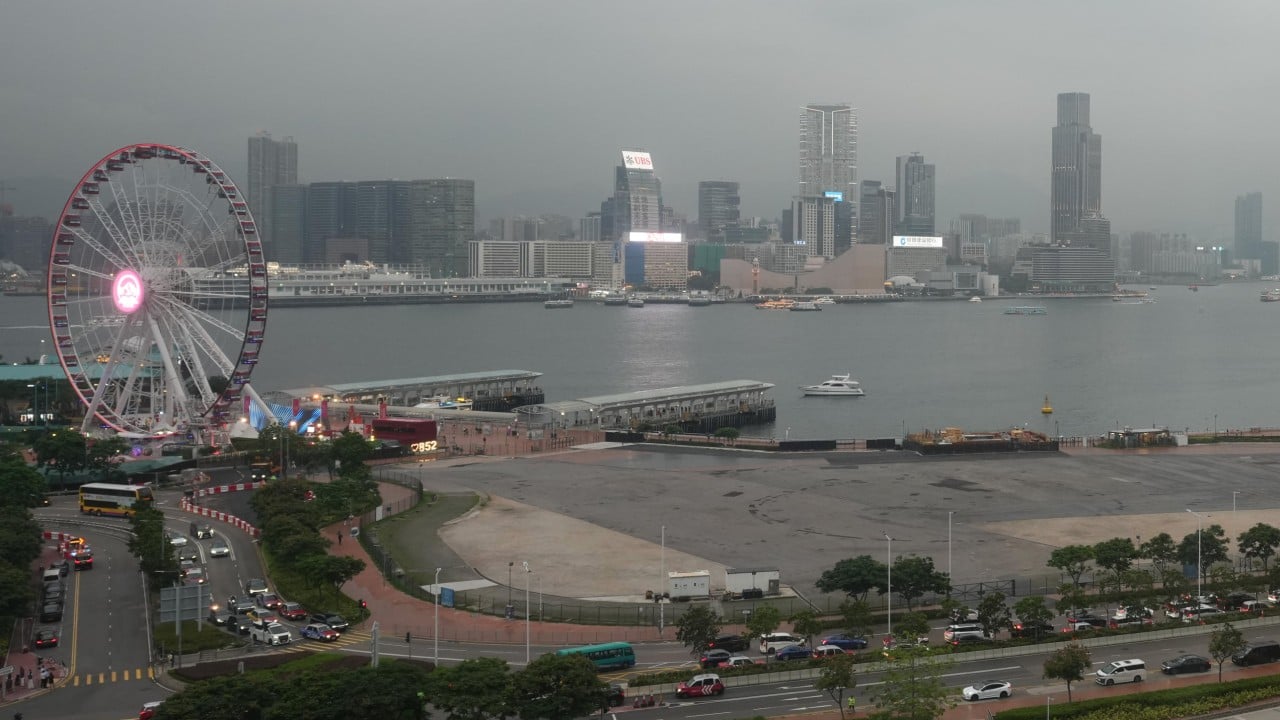
The successful bid by Henderson Land Development for the Site 3 project at Hong Kong’s Central Harbourfront represents a fundamental shift in the city’s urban core connectivity. This is not merely a real estate transaction; it is a critical intervention in the pedestrian flow and commercial density of the Central Business District (CBD). The project must solve a specific structural bottleneck: the historical disconnect between the high-density financial core and the underutilized waterfront. By integrating a multi-level pedestrian network and 1.6 million square feet of mixed-use space, the development serves as a circulatory pump, drawing foot traffic from the inland Grade A office towers toward the harbour.
The Tri-Level Connectivity Framework
The project’s primary value proposition rests on three distinct layers of movement that override the current fragmented infrastructure.
- Subterranean Integration: The extension of the underground network from Central MTR station provides a weather-protected conduit. This mitigates the "first-mile/last-mile" friction that currently discourages workers from transiting to the waterfront during high-humidity or high-precipitation months.
- The At-Grade Public Realm: By allocating nearly 300,000 square feet to public open space, the development addresses the scarcity of "third spaces" in Central. This level functions as a social heat sink, absorbing the high-velocity movement of the business district and converting it into dwell time.
- The Elevated Horizon: A continuous landscaped deck creates a bridge over the existing road infrastructure (notably Lung Wo Road and Man Yiu Street). This removes the physical and psychological barrier of vehicular traffic, allowing for uninterrupted north-south migration.
Economic Value Creation via Permeability
The "access" mentioned in preliminary reports is quantifiable through the lens of urban permeability. In retail and commercial real estate, revenue is a function of capture rates—the percentage of passersby who enter a space. Currently, the Central Harbourfront has a low capture rate due to its isolation.
The Henderson bid utilizes a "Social Base" design philosophy. By placing the commercial massing toward the rear and lowering the profile toward the water, the architectural logic forces a visual and physical draw. This creates a gradient of value. The inland portion captures high-rent premium tenants seeking proximity to the existing financial hub, while the waterfront portion focuses on experiential retail and tourism, sectors that thrive on high-volume pedestrian circulation.
This creates a self-reinforcing loop. Improved access increases footfall; increased footfall justifies higher retail rents; higher retail rents fund the maintenance of the public amenities that attracted the footfall initially.
Mitigation of the CBD Mono-Culture
Central has historically suffered from a "mono-culture" where activity peaks during market hours and craters on weekends. The Site 3 development aims to disrupt this cycle.
- Diversification of Occupancy: By introducing significant retail and cultural components alongside office space, the site extends its operational window.
- The Tourism Multiplier: The inclusion of an observation deck and direct links to the Star Ferry terminal ensures that the site captures non-resident spending power.
- Micro-Climate Engineering: The use of green roofs and wind corridors addresses the urban heat island effect common in high-density Hong Kong. This is a technical necessity for ensuring that "access" translates to "usage." A waterfront that is too hot to navigate is a failed asset, regardless of its beauty.
Strategic Risks and Operational Constraints
The scale of this development introduces significant systemic risks. The primary concern is the potential for "cannibalization." As Site 3 comes online, it adds massive supply to an already saturated Grade A office market. If the project merely shifts tenants from existing IFC or Landmark towers rather than attracting new capital to the city, the net benefit to the Hong Kong economy is neutralized.
A second constraint is the management of public-private boundaries. The maintenance of the public open space is the responsibility of the developer, yet the space must remain accessible to all demographics. Friction between commercial security protocols and public freedom of movement can lead to "sterile" environments that discourage the very vibrancy the bid promises.
Execution Requirements for Long-Term Viability
To ensure the Site 3 development achieves its potential as a catalyst for Central’s expansion, the following operational logic must be applied:
- Dynamic Programming: The 300,000 square feet of public space cannot remain static. It requires a calendar of events that aligns with the global financial cycle (e.g., Art Basel fringes, Fintech Week) to maintain its status as a global landmark.
- Seamless Digital Overlay: Connectivity is no longer just physical. The site must integrate 5G infrastructure and smart-city sensors to manage crowd flow and energy consumption in real-time.
- Pedestrian Prioritization: The success of the link to the ferry piers depends on the removal of "friction points"—narrow escalators, confusing signage, or indirect paths. The geometry of the walkways must favor the shortest distance between the CBD core and the water.
The Henderson bid is a bet on the continued dominance of Central. It assumes that physical density and face-to-face interaction remain the primary drivers of financial services, despite the rise of decentralized work. If this assumption holds, Site 3 will not just be a building; it will be the new center of gravity for the city's waterfront, effectively moving the "front door" of Hong Kong several hundred meters closer to the sea. The final strategic move for stakeholders is to monitor the completion of the pedestrian deck; its opening will be the leading indicator for the revaluation of all surrounding real estate assets in the Central North district.