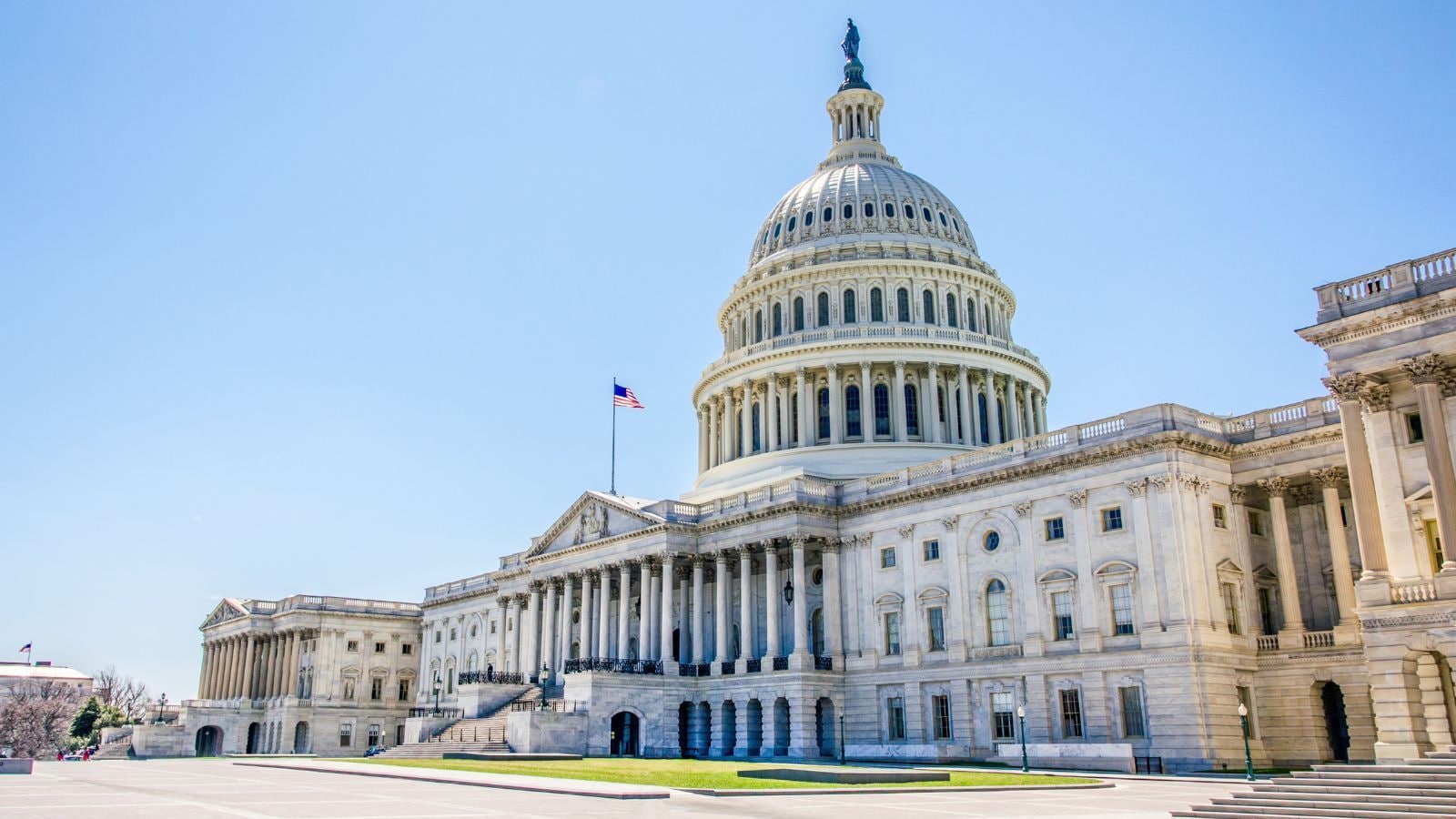
Bipartisan consensus in Washington on countering Chinese influence insulates the core architecture of the India-US strategic partnership from partisan swings, yet a Democratic-controlled Congress introduces acute procedural friction across trade, human rights oversight, and technology transfer. Analysts frequently misread this dynamic as a binary choice between full alignment and diplomatic rupture. In reality, bilateral relations operate on a two-tier system: structural convergence at the geopolitical level paired with transactional volatility at the legislative level. Understanding how a Democratic majority alters the mechanics of this relationship requires separating executive branch defense priorities from congressional oversight levers.
The Structural Insulators of Bilateral Continuity
To understand why a shift in congressional control does not trigger a policy reversal, one must examine the underlying geopolitical variables driving Washington's Indo-Pacific strategy. Regardless of party affiliation, US foreign policy apparatus views New Delhi as an indispensable counterweight to Beijing in the maritime and technological domains. This alignment is locked in by three institutional mechanisms that operate largely independent of partisan turnover in the House of Representatives or the Senate.
The first mechanism is the Foundational Defense Architecture. Over the past two decades, Washington and New Delhi have ratified four foundational defense agreements: the General Security of Military Information Agreement (GSOMIA), the Logistics Exchange Memorandum of Agreement (LEMOA), the Communications Compatibility and Security Agreement (COMCASA), and the Basic Exchange and Cooperation Agreement (BECA). Once ratified, these treaties create operational interdependencies between the Pentagon and the Indian Ministry of Defence. Reversing them requires active legislative repeal or executive withdrawal, neither of which aligns with the strategic calculus of Democratic foreign policy leadership. The operational integration of intelligence sharing, encrypted communications, and geospatial data establishes a high floor for bilateral cooperation.
The second mechanism is the Supply Chain Decoupling Imperative. Democratic economic policy emphasizes domestic manufacturing revitalization and "friend-shoring"—rerouting critical supply chains away from geopolitical rivals toward trusted partners. India represents the only economy with the demographic scale and industrial capacity capable of absorbing manufacturing outflows from China over a multi-decade horizon. Initiatives such as the US-India Initiative on Critical and Emerging Technology (iCET) bridge the gap between national security and industrial policy. Because Democratic lawmakers prioritize semiconductor resilience, clean energy supply chains, and pharmaceutical security, obstructing the technological transfer required to build India's industrial base directly undermines their own domestic economic objectives.
The third mechanism is the Institutionalization of the Quadrilateral Security Dialogue. The Quad—comprising the United States, India, Japan, and Australia—has evolved from an ad-hoc maritime security grouping into a permanent diplomatic fixture. Democratic administrations and congressional leaders historically favor multilateral coalitions over unilateral action. Consequently, a Democratic Congress views the Quad not as an optional diplomatic forum, but as a primary vehicle for distributing security burdens in the Indo-Pacific. Weakening ties with New Delhi would effectively dismantle the centerpiece of Democratic multilateral strategy in Asia.
The Three Vectors of Congressional Friction
While strategic fundamentals prevent a policy reversal, a Democratic Congress changes the operating environment for bilateral diplomacy. Unlike Republican majorities, which tend to subordinate normative concerns to hard security and commercial interests, Democratic caucuses contain influential progressive wings and institutionalists who utilize committee oversight to enforce compliance on governance, labor, and environmental standards. This introduces friction across three primary vectors.
1. Normative Oversight and Legislative Conditionality
The most immediate shift under a Democratic majority occurs within the House Foreign Affairs Committee and the Senate Foreign Relations Committee. Democratic lawmakers face sustained pressure from civil society organizations, diaspora advocacy groups, and progressive constituents to scrutinize India's domestic governance, press freedom, and minority rights.
In practice, this rarely results in binding sanctions against a major strategic partner, as the executive branch routinely deploys national security waivers to protect defense cooperation. Instead, friction manifests through legislative conditionality and reputational pressure. Congressional committees hold public hearings, commission reports from the US Commission on International Religious Freedom (USCIRF), and attach reporting requirements to the annual National Defense Authorization Act (NDAA). These maneuvers force the State Department to expend political capital defending the partnership on Capitol Hill and create diplomatic friction in New Delhi, where Indian policymakers view such oversight as an infringement on domestic sovereignty.
2. The Protectionist Paradox in Trade Policy
A common misconception is that Democratic control automatically facilitates smoother trade negotiations. The reality is more complex. While Democrats reject the sweeping, unilateral tariff threats favored by economic nationalists, their trade doctrine is heavily conditioned by domestic labor unions and environmental advocacy groups.
Under a Democratic Congress, any bilateral trade framework or tariff reduction scheme must clear high regulatory hurdles regarding labor rights, intellectual property enforcement, and carbon emissions. India's historical reluctance to accept binding labor and environmental clauses in trade agreements creates a structural impasse. Furthermore, Democratic lawmakers frequently target India's tariff barriers in sectors such as agriculture, medical devices, and information technology hardware, while simultaneously scrutinizing Indian pharmaceutical patent laws. The result is not a trade war, but a state of managed stagnation where market access disputes remain unresolved, forcing both nations to rely on narrow, non-binding sectoral dialogues rather than comprehensive free trade agreements.
3. Technology Transfer and Export Control Bottlenecks
The ambition to co-produce advanced defense systems—such as jet engines, armored vehicles, and unmanned aerial platforms—collides directly with the US export control regime. Transferring sensitive military technology requires navigating the International Traffic in Arms Regulations (ITAR) and obtaining congressional notifications for major arms sales under the Arms Export Control Act.
Democratic lawmakers, particularly those focused on non-proliferation and end-use monitoring, enforce strict compliance protocols before approving technology transfers. Two specific variables trigger congressional holds or delays:
- Legacy Defense Ties with Moscow: India's continued reliance on Russian-origin military hardware—most notably the S-400 air defense system—creates persistent friction regarding the Countering America's Adversaries Through Sanctions Act (CAATSA). While the executive branch has historically granted waivers to avoid alienating New Delhi, a Democratic Congress scrutinizes any perceived expansion of Indo-Russian defense or energy trade, using delays in US export licensing as an informal check on Indian strategic autonomy.
- End-Use Verification Protocols: Transferring intellectual property for co-production requires stringent guarantees against unauthorized proliferation. Democratic committee chairs demand rigorous oversight of how US-origin dual-use technologies are safeguarded within Indian state-owned defense enterprises, slowing down the timeline from political announcement to industrial execution.
The Mechanics of Strategic Autonomy vs. Alliance Expectations
The core tension in India-US relations does not stem from partisan shifts in Washington, but from a fundamental divergence in strategic doctrine. Washington operates within an alliance framework designed to build integrated coalitions against specific adversaries. New Delhi operates under a doctrine of strategic autonomy—a multipolar hedging strategy aimed at maximizing diplomatic and economic options without entering binding military alliances.
When Democrats control Congress, this doctrinal clash becomes more visible because Democratic foreign policy places a premium on ideological alignment and collective action. For example, during international crises—such as the war in Ukraine or conflicts in the Middle East—Democratic lawmakers expect democratic partners to align with US-led diplomatic resolutions and sanctions regimes. India's refusal to join Western sanctions against Russia, combined with its continued purchases of discounted Russian crude oil, generates acute frustration on Capitol Hill.
Analysts who view this through the lens of traditional Cold War alliances interpret India's hedging as unreliability. A more accurate operational assessment recognizes that India's refusal to align automatically is the exact feature that makes it a credible regional power. If New Delhi were perceived as a subordinate ally of Washington, its diplomatic influence across the Global South and within multilateral institutions like BRICS would evaporate, reducing its utility to the United States as a regional stabilizer. A Democratic Congress must constantly calibrate how hard it can push New Delhi on global governance issues before triggering a nationalist backlash that drives India toward deeper hedging with Moscow or Beijing.
Navigating the Legislative Bottleneck: Operational Realities
To execute policy effectively under a Democratic Congress, diplomats and corporate strategists operating within the US-India corridor cannot rely solely on executive-to-executive summits. High-level declarations between the White House and the Prime Minister's Office routinely stall when they hit the procedural realities of Capitol Hill. Navigating this environment requires targeting specific operational bottlenecks.
First, Decoupling Defense from Trade Negotiations is essential. Attempting to bundle market access concessions with defense technology transfers guarantees legislative gridlock, as trade bills trigger jurisdiction across multiple committees—including House Ways and Means and Senate Finance—where domestic protectionist pressures are highest. Successful initiatives isolate defense and critical technology cooperation within the armed services and foreign affairs committees, where the geopolitical consensus on countering China overrides commercial disputes.
Second, Sub-National and Private Sector Anchoring insulates bilateral projects from federal legislative delays. Because federal trade agreements face steep odds in a Democratic Congress, capital flows and technology partnerships increasingly rely on state-level investment incentives and direct corporate joint ventures. When US semiconductor firms or clean energy manufacturers establish research and development centers in Bengaluru or Hyderabad, they create domestic economic constituencies within specific congressional districts. A Democratic representative is significantly less likely to block export licenses or support punitive trade measures if doing so directly harms major employers within their own state.
Third, Proactive Narrative Management on Governance is required to neutralize progressive opposition before it hardens into legislative action. Historically, Indian diplomacy relied on executive branch officials to shield the relationship from congressional criticism. Under a Democratic majority, this reactive posture fails. Effective engagement requires continuous, transparent dialogue with mid-level congressional staffers, think tanks, and policy analysts who draft committee resolutions. Addressing concerns regarding digital governance, data localization, and regulatory transparency early in the legislative cycle prevents these issues from being weaponized during unrelated defense or visa debates.
Limitations of the Bipartisan Buffer
Relying on the "China factor" as a permanent guarantee of US-India alignment carries significant analytical risk. While countering Beijing currently overrides almost all other foreign policy considerations in Washington, this consensus is not immune to external shocks.
The primary vulnerability is a tactical détente between Washington and Beijing. If a Democratic administration and Congress prioritize stabilizing relations with China to manage domestic inflation, coordinate on climate change, or prevent military escalation in the Taiwan Strait, the urgency of accommodating India's strategic autonomy diminishes. In a scenario where US-China tensions temporarily cool, congressional patience for Indian trade protectionism, high tariffs, and Russian defense ties would erode rapidly.
A secondary vulnerability lies in immigration and skilled labor policy. The movement of Indian professionals under the H-1B visa program is a vital economic link between the two nations. While Democrats generally favor legal immigration pathways, their alignment with domestic labor unions creates periodic pressure to raise prevailing wage requirements and tighten visa eligibility rules to protect US tech workers. Any legislative tightening of high-skilled immigration directly undermines the people-to-people and technological ties that underpin the broader strategic partnership.
Strategic Forecast and Execution
The trajectory of India-US relations under a Democratic Congress will not be defined by sweeping treaties or dramatic diplomatic ruptures, but by granular, bureaucratic attrition. A reset in tone—characterized by heightened scrutiny of domestic governance, stricter environmental and labor conditions on trade, and rigorous export control reviews—will coexist with deep, structural expansion in defense interoperability and critical technology supply chains.
For policymakers and enterprise leaders operating across this corridor, the optimal strategy is to bypass comprehensive legislative frameworks entirely. Capital, intellectual property, and defense co-production must be routed through existing executive authorities, bilateral working groups like iCET, and private-sector joint ventures that require minimal congressional intervention. Organizations that wait for a grand legislative bargain on trade or tariffs will remain paralyzed by Capitol Hill's procedural friction, while those that align their operations with Washington's hard security and supply chain resilience mandates will find an open, well-capitalized path forward.


