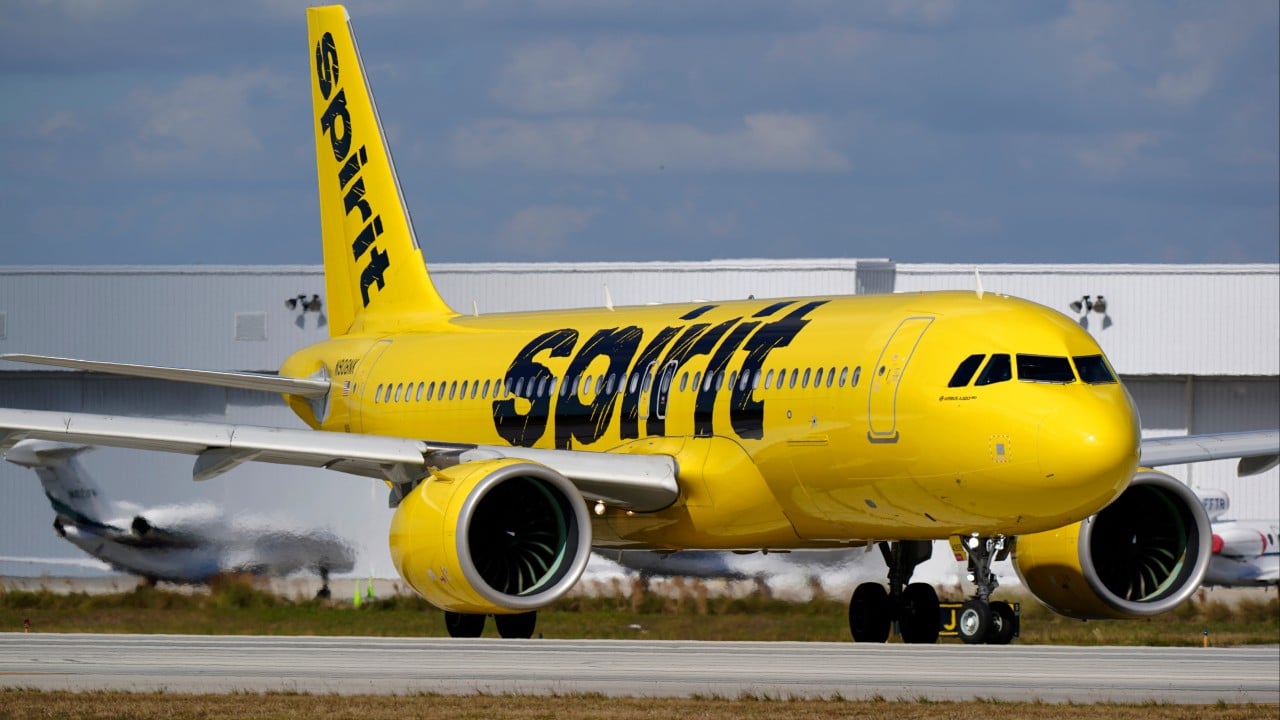
Spirit Airlines’ cessation of operations is not a singular event of misfortune but the inevitable intersection of an untenable capital structure and a geopolitical shock that acted as the final kinetic catalyst. While casual observers might attribute the collapse to a specific regional conflict, a rigorous forensic analysis reveals that Spirit’s insolvency was pre-ordained by a three-year erosion of its Unit Revenue (RASM) relative to a surging Cost per Available Seat Mile (CASM). The escalation of the Iran-Israel conflict provided the external pressure that fractured an already brittle balance sheet, turning a liquidity crisis into a terminal bankruptcy.
The Low Cost Carrier Death Spiral
The Ultra-Low-Cost Carrier (ULCC) model relies on a high-velocity capital cycle: low fares drive high load factors, which are subsidized by ancillary revenues and extremely high aircraft utilization. This model breaks when the spread between fuel-adjusted operating costs and passenger yields narrows beyond a critical threshold. Spirit’s failure can be mapped through three structural deficits that existed long before the first drone was launched in the Middle East.
1. The Pratt & Whitney GTF Engine Bottleneck
Spirit’s operational efficiency was tethered to the Geared Turbofan (GTF) engine. Widespread technical issues forced the grounding of dozens of Spirit’s A320neo aircraft for inspections. In an industry where profitability is dictated by the ability to amortize fixed costs over maximum flight hours, having 10-15% of a fleet out of service creates a permanent drag on earnings. This grounded capacity didn't just eliminate revenue; it increased the cost burden on the remaining active fleet, effectively spiking Spirit's CASM-ex fuel to unsustainable levels.
2. The Post-Merger Strategic Vacuum
The Department of Justice’s successful block of the JetBlue-Spirit merger left the carrier in a "strategic no-man's land." Management had banked on an exit strategy rather than a standalone turnaround. When the deal dissolved, Spirit was left with a massive debt load—specifically its 2025 and 2026 note maturities—without the cash flow required to refinance in a high-interest-rate environment.
3. Yield Dilution in the Domestic Market
A fundamental shift in consumer preference toward premium offerings and "premium economy" meant that Spirit’s "bare fare" model lost its competitive moat. Legacy carriers (Delta, United, American) used their Basic Economy products to price-match Spirit while offering superior network connectivity, effectively cannibalizing the ULCC customer base.
Geopolitical Kinetic Catalysts and Jet Fuel Volatility
The Iran-Israel conflict served as the exogenous shock that Spirit’s treasury could not absorb. To understand why this specific conflict was the "first casualty" for a domestic US airline, one must look at the mechanics of the global oil market and the psychology of credit markets.
The Brent-WTI Spread and Crack Spreads
Aviation fuel is not a raw commodity; it is a refined product. Geopolitical tension in the Strait of Hormuz immediately increases the risk premium on Brent crude. For an airline like Spirit, which operated on razor-thin margins and lacked the sophisticated fuel hedging desks of Delta or Southwest, a $10 jump in the price per barrel of oil translates directly to an unrecoverable operating loss.
The Credit Freeze
More damaging than the price of fuel was the immediate contraction of the credit markets. When regional instability in the Middle East spikes, "risk-off" sentiment dominates. Spirit was in the middle of desperate negotiations to restructure its $1.1 billion in loyalty-program-backed debt. The heightened global uncertainty caused by the Iran war rhetoric led bondholders to demand yields that Spirit could not service. The "war casualty" label is accurate not because of physical damage to aircraft, but because the conflict closed the window for a distressed debt exchange.
The Cost Function of Collapse
The termination of operations follows a precise logical sequence. Once an airline's "Go-Forward" cash flow projections show that daily operating costs exceed daily cash inflows, and the "burn rate" will exhaust remaining reserves before the next seasonal peak, fiduciary duty compels a shutdown.
- Fixed Cost Absorption: Spirit’s leases on its Airbus fleet continued regardless of whether planes flew. Without the ability to fly the grounded GTF-equipped planes, the "dead weight" of lease payments accelerated the cash drain.
- Labor Inflation: Post-COVID pilot and flight attendant contracts across the industry raised the floor for labor costs. Spirit could no longer maintain the "Low Cost" part of its name while competing for the same pool of labor as the Big Four.
- Ticketing Liability: As rumors of insolvency spread, "forward bookings" dropped. Travelers are loath to buy tickets for a flight three months away if they fear the company won't exist. This stopped the vital flow of "advanced cash" that airlines use as interest-free working capital.
Systematic Failure of the ULCC Thesis
Spirit’s dissolution marks the end of the first era of American ULCCs. The framework that allowed for $19 fares required three specific conditions:
- Near-zero interest rates for cheap aircraft financing.
- Stable, low-volatility fuel prices.
- An undersupply of seats in the domestic market.
By 2025, all three conditions had inverted. The US market reached a state of overcapacity, particularly on "leisure" routes like Orlando and Las Vegas, where Spirit over-indexed. This resulted in a "race to the bottom" on pricing that Spirit, with its higher debt-servicing costs, could not win.
The Mechanics of Market Re-Equilibrium
The departure of Spirit Airlines from the US skies triggers an immediate structural shift in domestic aviation. This is not merely a loss of a brand but a removal of significant Available Seat Miles (ASMs) from the system.
- Price Floor Elevation: With Spirit gone, the "price anchor" for domestic travel is removed. Legacy carriers no longer have to price Basic Economy against a $39 Spirit fare. Expect a 12-15% increase in baseline fares on former Spirit-heavy corridors.
- Asset Liquidation Value: Spirit’s most valuable assets are not its planes (many are leased) but its "slots" at constrained airports like Newark (EWR), LaGuardia (LGA), and Fort Lauderdale (FLL). The auction of these slots will likely be dominated by JetBlue and United, further consolidating the market.
- The Pilot Migration: Thousands of Spirit pilots will be absorbed into the seniority lists of larger carriers, potentially easing the pilot shortage for majors while permanently ending the career progression path that the ULCC segment once provided.
Strategic Forecast: The Death of the Independent Disrupter
The "Iran war casualty" narrative simplifies a complex corporate autopsy. The truth is that Spirit was a casualty of a Negative Margin Loop:
$$Profit = (Yield \times Load Factor) - (CASM \times ASM)$$
When $Yield$ is suppressed by competition and $CASM$ is inflated by engine failures and debt interest, $Profit$ remains negative regardless of how many passengers are squeezed onto a plane. The geopolitical trigger merely accelerated the timeline of an inevitable capital exhaustion.
The move for remaining mid-tier players is now clear: consolidation or specialization. The "middle" of the market has evaporated. Frontier and Allegiant must now decide if they can pivot to a "Premium-Low-Cost" hybrid or face the same liquidity wall that claimed Spirit. Any airline carrying a Debt-to-EBITDA ratio exceeding 5.0 in an environment of $90+ oil and 5%+ interest rates is effectively a "zombie" enterprise waiting for the next headline to trigger its liquidation.
The immediate strategic priority for the aviation industry is the re-valuation of the narrow-body fleet. If the GTF engine issues remain unresolved, the secondary market for A320neo aircraft will see a significant haircut, further damaging the collateral value of airline balance sheets across the globe. Investors should view the Spirit collapse as a stress test: it revealed that in the modern economy, geopolitical events do not cause bankruptcies; they merely expose them.
The final play for the US Department of Transportation and the DOJ is a reckoning with their previous intervention. By blocking the JetBlue merger to "protect competition," the regulators inadvertently guaranteed a monopoly on many routes by forcing the weakest competitor into a total liquidation rather than a controlled absorption. This regulatory paradox will likely define the next decade of anti-trust litigation in the transport sector.


:max_bytes(150000):strip_icc():focal(999x0:1001x2)/taylor-swift-albums-1-93026ca98408417097660e117a10a6a9.jpg)