The primary threat to the Gulf Cooperation Council (GCC) economies during periods of heightened Iranian conflict is not the immediate kinetic damage of warfare, but the permanent repricing of regional risk that erodes long-term capital efficiency. While traditional analysis focuses on crude oil price volatility, this metric is a lagging indicator of stability. The true economic cost is found in the systemic shift from productive investment toward defensive hedging, a process that fundamentally alters the cost of capital and the feasibility of "Vision" style economic transformations.
The Triad of Economic Erosion
To quantify the impact of a sustained conflict between Iran and regional or international actors, one must move beyond the "oil shock" narrative and examine the three structural pillars that sustain GCC growth:
- The Risk Premium Floor: The baseline interest rate at which sovereign and private entities can borrow.
- The Logistics Bottleneck: The physical and insurance-related constraints on the Strait of Hormuz and the Bab el-Mandeb.
- Foreign Direct Investment (FDI) Elasticity: The sensitivity of non-oil capital inflows to regional instability.
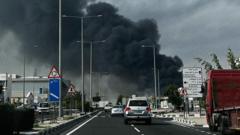
Conflict shifts these pillars from a state of expansion to a state of preservation. When a missile is fired or a tanker is seized, the immediate market reaction is a spike in Brent crude. However, the secondary reaction—the one that dictates the next decade of growth—is the upward revision of insurance premiums and the widening of credit default swap (CDS) spreads for regional sovereigns.
The Cost Function of Maritime Chokepoints
The Strait of Hormuz handles roughly 20-30% of the world’s total oil consumption. Conventional wisdom suggests that a closure would lead to a windfall for Gulf producers due to surging prices. This ignores the internal mechanics of a closed-loop economy.
The cost of trade for GCC nations is governed by the War Risk Surcharge (WRS). During periods of friction, hull and machinery insurance for vessels transiting the Gulf can increase by 500% to 1,000% within a 72-hour window. This is not a floating cost that can be easily passed to the consumer; it is a friction tax on every barrel produced and every ton of food imported.
Because nations like the UAE and Qatar rely on high-volume imports for food security and construction materials, the logistics bottleneck creates a dual-inflationary pressure. Export revenues are cannibalized by transport costs, while internal operational costs for "giga-projects" rise as supply chains move to less efficient, overland, or alternative maritime routes like the Port of Salalah or the Red Sea hubs—which are themselves subject to the same regional contagion.
The FDI Displacement Effect
Saudi Arabia’s Vision 2030 and the UAE’s "We the UAE 2031" strategy are predicated on attracting global private equity and institutional capital into non-oil sectors: tourism, technology, and renewable energy. These sectors are hyper-sensitive to security perceptions.
Investors utilize a Security Adjusted Rate of Return. If the perceived risk of asset seizure, physical destruction, or sudden regulatory shifts due to emergency mobilization increases, the required return on investment (ROI) must climb to compensate.
When the ROI threshold rises, dozens of marginal projects—those that were designed to diversify the economy—suddenly become unviable. This leads to "Capital Flight by Stagnation," where funds are not actively pulled out of the country, but new, transformative capital simply stops arriving. The result is a return to a rentier state model where the government must once again become the sole engine of growth, reversing years of privatization efforts.
Sovereign Balance Sheet Mobilization
The fiscal response to Iranian conflict typically follows a predictable, yet damaging, sequence:
- Diversion of Liquidity: Sovereign Wealth Funds (SWFs) shift their mandates from "External Growth" to "Domestic Stabilization." Instead of acquiring global tech assets, funds are redirected to support local banks and stabilize the currency peg.
- Defense Expenditure Crowding-Out: GCC states already maintain some of the highest defense-to-GDP ratios globally. Escalation forces a "Surge Spend" on missile defense systems and naval patrols. This capital is unproductive; it does not generate a multiplier effect in the way that infrastructure or education spending does.
- The Subsidy Trap: To prevent domestic unrest during periods of conflict-induced inflation, governments often expand social safety nets and energy subsidies. Once these are introduced, they are politically difficult to retract, creating a permanent drag on the national budget long after the kinetic conflict ends.
The Fallacy of the Oil Price Buffer
It is often argued that high oil prices during a conflict act as a natural hedge for the GCC. This is a short-term tactical truth but a long-term strategic lie.
Extreme price volatility accelerates the Energy Transition Velocity. When global importers face $120+ per barrel prices due to Middle Eastern instability, the political and economic mandate to decouple from hydrocarbons intensifies. Every day of conflict-driven high prices shortens the lifespan of the "Petroleum Age" by incentivizing permanent shifts in the energy mix of the West and Asia. For the Gulf, this means their primary asset is being devalued in the future to pay for a conflict in the present.
Operational Bottlenecks in the Aviation and Tourism Hubs
Dubai and Doha have positioned themselves as the "Connectors" of the global economy. The aviation sector accounts for a massive percentage of Dubai’s GDP. Conflict with Iran creates a "No-Fly Zone" reality that forces rerouting.
Rerouting increases fuel burn and flight times, making these hubs less competitive against emerging alternatives in Istanbul or Southeast Asia. Furthermore, the "Experience Economy"—luxury tourism and international conferences—cannot function in a theater of war. The reputational damage of a single intercepted projectile over a major city can take years to repair, regardless of the effectiveness of the defense systems.
Strategic Realignment Requirements
The current economic trajectory of the Gulf is incompatible with a sustained high-intensity conflict environment. To mitigate the long-term hit, GCC states must execute three specific defensive maneuvers:
First, the acceleration of redundant export infrastructure is mandatory. This involves the expansion of the East-West Pipeline in Saudi Arabia and the development of deep-water ports outside the Strait of Hormuz (such as Fujairah and Duqm) to a capacity that can handle 100% of national exports if required.
Second, the decoupling of Sovereign Credit Ratings from regional sentiment. This requires a shift toward "Fortress Balance Sheets" with higher transparency and a clear separation between political risk and commercial entity operations.
Third, the implementation of Regional Defense Integration. Fragmented defense spending is inefficient. A unified missile defense and maritime security framework reduces the individual fiscal burden on smaller states and provides a more predictable environment for international insurers.
The long-term hit from Iranian conflict is a tax on the future. It is a slow-drip erosion of the competitive advantage the Gulf has spent twenty years building. Without a pivot toward structural physical redundancy and financial transparency, the region risks a regression into a high-volatility, low-growth equilibrium that the global energy transition will eventually leave behind. The strategic play is not merely to survive the conflict, but to engineer an economy that is physically and financially disconnected from the chokepoints that Iran seeks to weaponize.