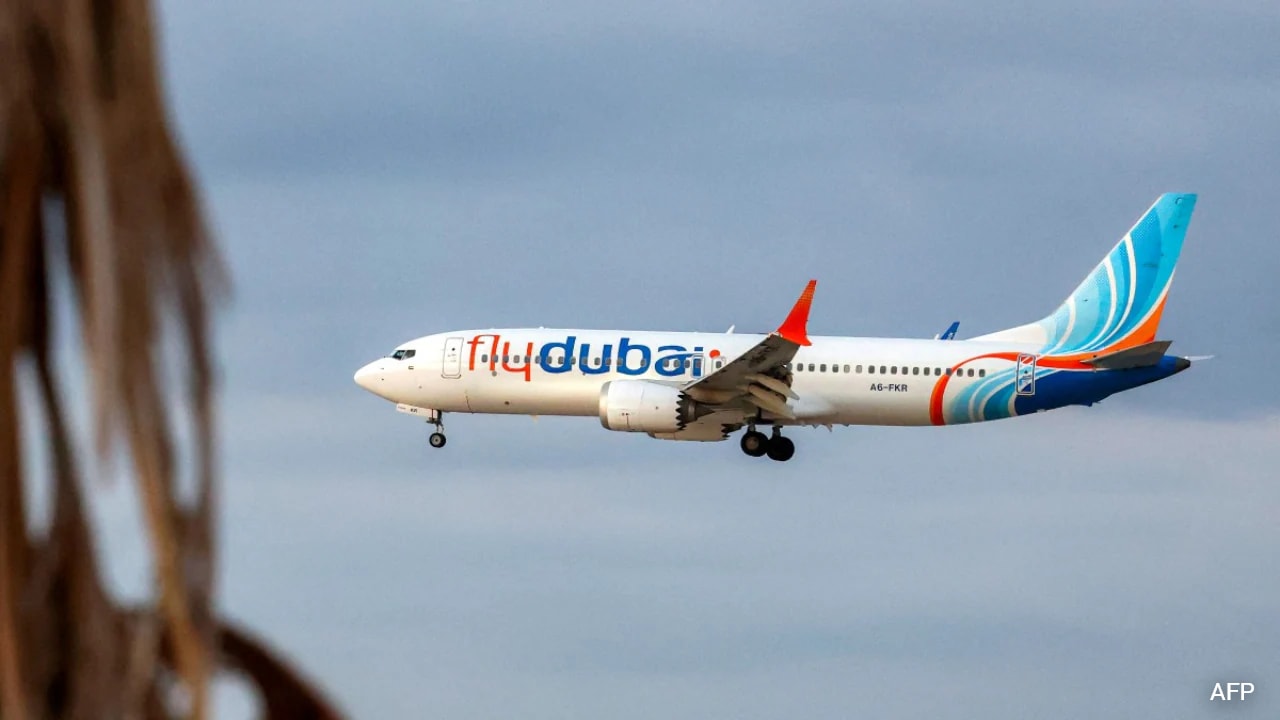
Commercial aviation is written in blood, regulatory fines, and engineering margins. When a flydubai Boeing 737 MAX operating Flight 1073 experienced a catastrophic cockpit security breach over the Middle East, the ensuing struggle shoved the airframe into an aerodynamic regime it was never certified to explore. Telemetry feeds later corroborated a descent rate touching 32,000 feet per minute, accompanied by an overspeed excursion that shredded portions of the aircraft's vertical tail structure.
The fact that this airframe did not disintegrate into a million fluttering pieces of aluminum over the desert remains a testament to the heavy-handed, conservative safety margins built into modern commercial transport design. Aviation observers frequently critique aircraft manufacturers for weight and over-engineering, but Flight 1073 exposed why those structural margins exist.
The Physics of a Terminal Plunge
When an aluminum and composite tube optimized for high-subsonic cruise at 35,000 feet is suddenly pointed at the earth at near-supersonic velocity, the laws of aerodynamics exact a brutal tax. Air does not flow smoothly around a control surface when the local speed of sound is breached by a commercial narrowbody. Shockwaves form locally over the wings and tail, altering center-of-pressure distributions and introducing violent flutter.
Flutter is the structural engineer's nightmare. It is an aeroelastic phenomenon where aerodynamic forces on a structure couple with its natural vibrational frequency, feeding energy into the system faster than the material can damp it out. Once flutter initiates on a control surface like a rudder or an elevator, structural failure can follow in fractions of a second.
During the descent of Flight 1073, the extreme dynamic pressure tore away a substantial portion of the composite rudder. The vertical stabilizer and its associated actuators were subjected to loads surpassing structural certification limits, entering structural G-force domains well above 3G.
Yet, the primary load-bearing box of the fuselage—the wing box, the central spar attachments, and the main cabin framing—held together. Why? Because aerospace structural engineering builds in a yield margin, typically 1.5 times the maximum limit load an aircraft will ever experience in normal or expected operational service. Ultimate load requirements force engineers to design parts that can bend significantly before they snap.
The Human Element Versus Structural Limits
Airliners are designed to withstand nature—turbulence, wind shear, and severe weather. They are rarely designed to survive an intentional, unconstrained vertical dive executed by a human wrestling with the flight controls while overspeed alarms blare.
The incident on Flight 1073 began when a cockpit altercation triggered a rapid nose-down pitch input. As the aircraft plunged thousands of feet in seconds, the speed brakes were ineffective against the sheer gravity-fed acceleration. The airframe crossed maximum operating Mach limits, entering an environment where the skin panels experience immense shear stress.
When the recovery pull-up was finally initiated—assisted by intervening passengers, a wounded captain who managed to trigger the cockpit access, and deadheading pilots riding in the cabin—the sudden transition from a dive to level flight imposed an immense G-load spike. Pulling up hard at high speed multiplies aerodynamic loads exponentially. A poorly designed tail assembly would have sheared completely off the fuselage, instantly removing pitch and yaw authority and turning the aircraft into an unrecoverable dart.
Instead, the aft pressure bulkhead and tail root structures absorbed the punishment. The rudder sacrificed itself, shedding material to relieve torsional stress, which ironically may have acted as an unintended load-relief valve that prevented total structural failure of the vertical stabilizer.
The Engineering Reality Behind the Resilience
Modern computer-aided design and finite element analysis allow engineers to simulate millions of stress cycles across every frame and stringer. However, physical manufacturing still relies on thick gauge aluminum alloys, heavy titanium fittings around engine mounts and landing gear, and robust fastener counts that exceed theoretical minimums.
Critics of the 737 program often point out its evolutionary airframe lineage, dating back to the late 1960s. Yet that deep iteration history means every structural weakness, fatigue crack vulnerability, and stress concentration point discovered over six decades of global service has been patched, beefed up, or redesigned. The MAX variant carries structural reinforcements in its rear fuselage and tail sections specifically designed to handle heavier gross weights and altered engine thrust vectors. Those reinforcements inadvertently created a tougher cage when the airframe was forced into an extreme flight envelope.
The aircraft ultimately touched down safely at Tabuk Airport in Saudi Arabia. The passengers walked away, but the physical evidence was stark. Stripped control surfaces and wrinkled skin panels told the story of an airframe pushed to the absolute edge of physics.
Commercial aviation relies on redundancy, but when the automation fails and the crew is compromised, the last line of defense is raw material science. The margins are not there for comfort. They are there for the day when the impossible happens at 34,000 feet.
Fubu Toy review
This video provides visual context and telemetry analysis regarding the rapid descent and structural stress experienced by the Boeing 737 MAX during the incident.