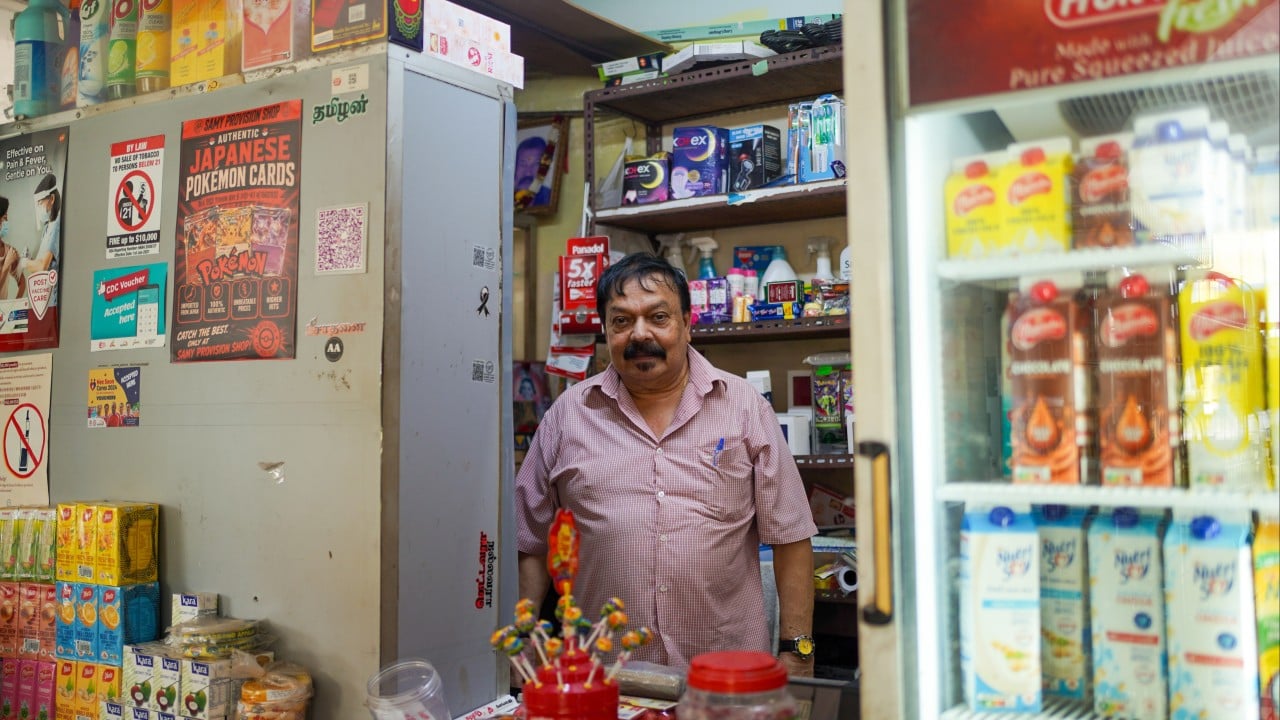
Traditional provision shops operating within the void decks of Housing and Development Board estates in Singapore face an terminal economic contraction. Observers frequently attribute this decline to generic market shifts, yet the actual mechanics involve a precise intersection of real estate cost functions, shifting consumer utility functions, and rigid regulatory frameworks. To understand why these micro-enterprises are disappearing, one must analyze the systemic friction points governing retail operations in public housing estates.
The Economic Model of the Legacy Provision Shop
The traditional provision shop relies on a high-density, low-margin business model designed for an era preceding hyper-efficient supply chains and ubiquitous digital commerce. Historically, these operators functioned as hyper-local distribution nodes. They solved a proximity problem for residents requiring immediate, low-value goods such as canned food, basic toiletries, and household sundries.
The cost structure of these enterprises typically rests on three variables: inventory acquisition costs, labor expenditure, and rental overhead. While HDB shop rentals are historically shielded from pure commercial market rates when managed under specific legacy tenancy schemes, renewals and shifting commercialization policies by master leaseholders have steadily escalated fixed occupancy costs.
Simultaneously, gross margins on high-turnover staple goods are compressed by economies of scale enjoyed by modern supermarket chains such as NTUC FairPrice, Sheng Siong, and various convenience store franchises. Because legacy operators lack purchasing power parity, their wholesale acquisition cost per unit exceeds the retail price point of large-scale competitors. This inversion of the wholesale-retail price spread destroys the core profitability engine of the traditional provision shop.
Demand-Side Substitution and Consumer Utility
Consumer behavior within HDB heartlands has undergone a structural transformation. The modern household maximizes utility through consolidated shopping trips, omni-channel fulfillment, and price transparency enabled by digital infrastructure.
The legacy provision shop fails across three key dimensions of contemporary consumer utility:
- Assortment breadth: Limited square footage restricts inventory to high-demand, low-margin SKUs.
- Price competitiveness: Inability to absorb volume discounts results in a persistent price premium for identical goods.
- Operating hours and experience: Family-operated units frequently lack the extended operating hours, climate control, and digital payment integrations expected by younger demographics.
Consequently, demographic replacement exacerbates the decline. As older residents who valued the social touchpoints and credit lines ("chits") of neighborhood shopkeepers age out, younger families treat proximity as a secondary variable behind price, assortment, and convenience. The functional utility of the provision shop approaches zero for households with access to rapid grocery delivery and dense supermarket networks within a five-minute walking radius.
The Regulatory and Structural Bottlenecks
Macro-level urban planning policies compound these operational vulnerabilities. HDB estates are systematically designed with commercial nodes—neighborhood centers and integrated malls—that concentrate retail traffic. These developments feature anchor supermarkets backed by deep capital reserves capable of absorbing short-term margin losses to capture market share.
Furthermore, labor policy constraints intensify the crisis. Singapore's tightening foreign workforce regulations and rising median local wages impose severe hiring hurdles for micro-enterprises. A single-owner or aging couple operating a provision shop cannot sustain the 12-to-14-hour daily shifts required to match the availability of corporate-backed convenience stores. When the sole proprietor faces burnout or health constraints, succession planning routinely fails because the enterprise yields a sub-market return on labor and capital. Younger generations decline to inherit a low-margin, high-labor asset with a negative net present value.
Strategic Pivot Analysis: Why Hybridization Fails
Attempts to modernize through partial interventions—such as introducing specialized imported goods, offering localized delivery, or adding digital payment gateways—frequently fail to alter the underlying unit economics.
A niche strategy targeting specialized ethnic goods or artisanal products requires an addressable market larger than a single HDB block can supply. Without a digital customer acquisition engine, these shops remain bound by foot traffic restricted to their immediate vertical stack and surrounding blocks. Conversely, attempting to compete on price against hypermarket giants leads to immediate working capital depletion.
The Terminal Equilibrium
The disappearance of the traditional provision shop represents a classic case of market rationalization driven by shifting infrastructure costs and consumer preferences. The physical void deck space previously occupied by these enterprises is progressively reallocated by state planners to higher-value community uses, eldercare facilities, or automated retail concepts that align with contemporary demographic needs.
Survival for remaining independent operators requires abandoning the legacy general-store model entirely. Transitioning to specialized micro-fulfillment hubs, B2B servicing for localized cottage industries, or high-margin service integration represents the narrow corridor away from liquidation. Operators unable to decouple their revenue streams from low-margin fast-moving consumer goods face inevitable balance sheet insolvency as fixed operational costs permanently outpace gross profit generation.



(mh=9Y7FVrqyxdiBUQYR)0.jpg)