The recurring national blackouts paralyzing Cuba are not anomalous weather events or sudden technical glitches. They represent the terminal phase of a compounding structural failure where thermodynamic asset degradation, acute fuel starvation, and macroeconomic insolvency intersect. When the National Electric System drops to a fraction of its baseline demand—such as operating with under 1,000 megawatts of available generation against a demand exceeding 2,100 megawatts—the grid crosses a mathematical threshold of instability from which conventional localized recovery is impossible. Understanding this crisis requires stripping away political rhetoric to examine the physical equations governing energy supply, distribution, and asset amortization on the island.
The Thermodynamic Deficit of Aging Infrastructure
The primary physical constraint on the Cuban energy grid is the extreme age and thermal fatigue of its base-load generation assets. The island relies predominantly on an aging fleet of oil-fired thermoelectric plants constructed during the Soviet era. These facilities were engineered for an operational lifecycle of roughly 100,000 running hours. Decades past this design limit, the infrastructure suffers from chronic metallurgical fatigue, steam pipe fracturing, and boiler degradation. Read more on a similar issue: this related article.
Maintenance operates on a purely reactive triage model rather than preventive servicing. Because foreign currency reserves are severely depleted, the state cannot procure OEM replacement parts or titanium tubing for condensers, forcing operators to cannibalize decommissioned units or fabricate substandard localized patches. Consequently, thermoelectric plants operate at a fraction of their nameplate capacity—often hovering around 34 percent efficiency. When a primary unit like the Antonio Guiteras or Ernesto Guevara plant trips offline due to a catastrophic mechanical failure, the remaining spinning reserve instantly evaporates. The transmission network, burdened by high line losses across 110 kV and 220 kV circuits, fails to redistribute the load, triggering cascading protection shut-offs that collapse the entire system into isolated regional blackouts.
The Fuel Starvation Feedback Loop
A structurally sound power plant is economically irrelevant without a continuous calorie input. Cuba's generation mix is tightly coupled to imported liquid fuels. The domestic crude oil extracted locally is heavy, highly viscous, and dense with sulfur and heavy metals. Burning this extra-heavy crude accelerates the fouling of boiler tubes and turbine blades, shortening maintenance intervals and compounding the degradation of already fragile hardware. Additional journalism by Associated Press explores similar perspectives on this issue.
To sustain operations, the state depends on imported lighter crude and fuel oil. However, external supply chains have faced unprecedented friction. Historic trade partners and regional allies, themselves grappling with domestic economic contractions or shifting geopolitical pressures, have experienced steep declines in export volumes to the island. Concurrently, financial sanctions and international shipping restrictions deter major tanker operators from calling at Cuban ports, restricting access to spot-market energy supplies.
This creates a vicious feedback loop:
- Foreign exchange shortages prevent the acquisition of light fuel oil.
- The grid is forced to burn corrosive domestic crude or operate below minimum thresholds.
- Equipment failure rates accelerate, destroying generation capacity.
- Without reliable industrial output, the export economy shrinks further, depleting the foreign reserves necessary to buy fuel.
The Mechanics of Grid Disintegration and Micro-Islanding
When total generation deficit surpasses 50 percent of peak demand, central dispatchers lose the ability to execute rolling blackouts. Rolling blackouts require a stable operational margin where load can be systematically shed from non-critical zones while preserving system frequency at 60 Hz. When the deficit widens past a critical tipping point, system frequency drops uncontrollably, threatening to burn out generator windings across the network. Automatic protective relays intervene, disconnecting every major plant to protect them from self-destruction. This results in a complete system blackout.
Post-collapse recovery follows a high-friction protocol known as micro-islanding. Because the national grid cannot be energized simultaneously from a single central point without tripping the remaining lines, technicians must fracture the network into disconnected regional pockets. Operators utilize decentralized diesel generators or small-scale distributed sources to kick-start individual thermoelectric plants, prioritizing critical nodes such as municipal water pumping stations and hospitals. These localized micro-islands struggle with synchronization; attempting to phase-lock separate regional frequencies back into a unified national grid frequently results in secondary trips and prolonged darkness.
The Macroeconomic Cost Function
The secondary and tertiary economic impacts of chronic electrical instability extend far beyond residential discomfort. The economic cost function of the grid failure is exponential:
- Refrigeration and Food Security: Extended power cuts destroy perishable food supplies in commercial and domestic settings, compounding nutritional deficits on the island.
- Hydraulic Infrastructure: Water distribution relies entirely on electrical pumps. When power fails for days, municipal water systems dry up, creating immediate public health hazards.
- Industrial Paralysis: Manufacturing, agriculture, and light industry cannot maintain continuous shift operations, driving productivity down to subsistence levels.
- Human Capital Drain: The absolute unpredictability of basic utility services accelerates demographic flight, as skilled labor and younger cohorts emigrate to seek predictable infrastructure environments.
Strategic Outlook and Structural Horizons
The structural trajectory of Cuba's energy crisis points toward a protracted decentralization of power generation. Large centralized thermoelectric plants, bound to failing supply chains and prohibitive capital expenditure requirements for rehabilitation, are structurally obsolete.
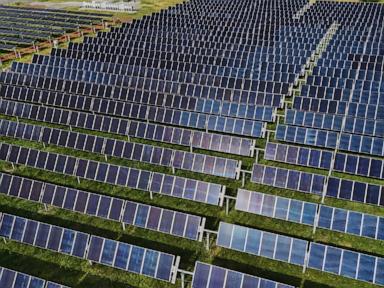
The state's pivot toward distributed renewable assets—specifically multi-megawatt solar photovoltaic arrays coupled with localized storage—represents the only viable mathematical path to reducing baseline fuel vulnerability. However, the transition velocity is bottlenecked by upfront capital requirements, supply chain constraints for photovoltaic panels and inverters, and the absence of grid-scale battery storage capable of smoothing solar intermittency. Until distributed generation reaches critical mass, the Cuban power system will remain trapped in a high-entropy state of perpetual vulnerability, where a single localized transmission fault can cascade into national darkness.