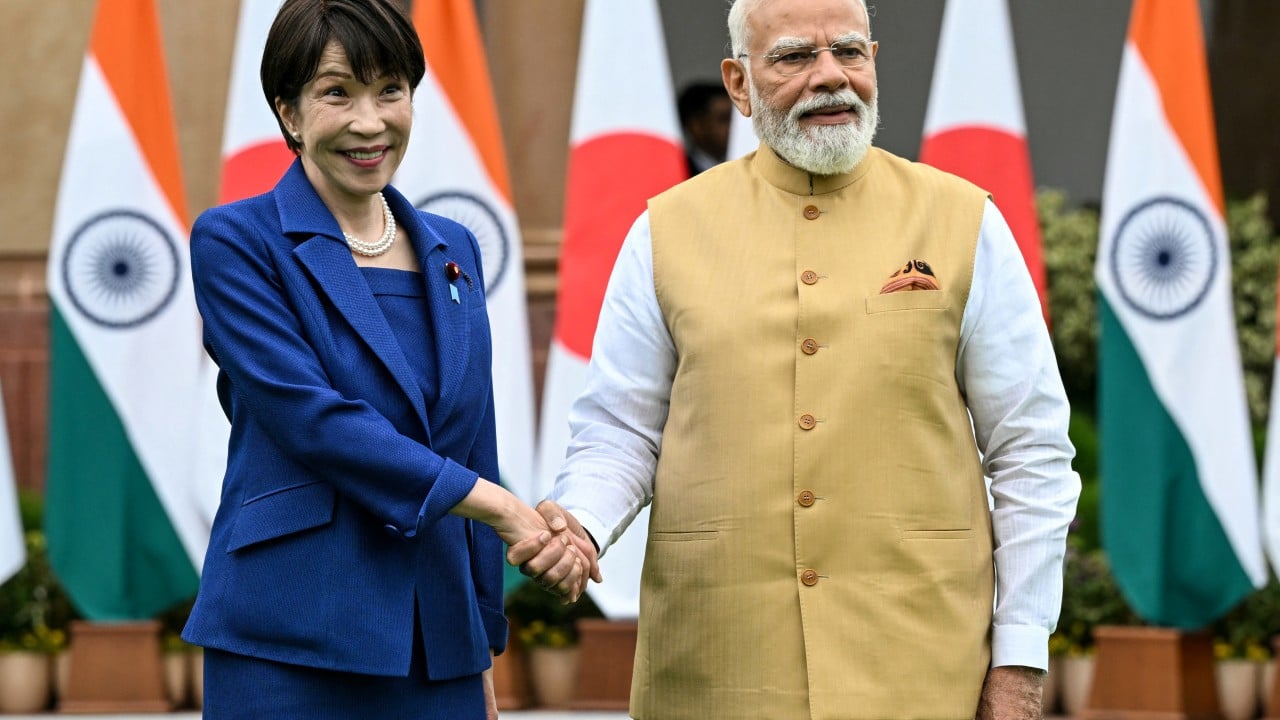
Demographic asymmetry dictates the modern bilateral economic arrangement between New Delhi and Tokyo. Japan faces an acute, compounding workforce contraction driven by a low fertility rate and an aging population, forcing its industrial base to seek external labor inputs. Concurrently, India produces a demographic dividend of young professionals entering a domestic market that cannot immediately absorb high-volume specialized technical talent at scale. Bilateral labor mobility agreements are frequently framed as simple employment matchmaking, but this perspective misses the underlying mechanics. This arrangement functions as a structural arbitrage of human capital, matching surplus engineering and technical capacity with severe structural deficits in Japanese manufacturing, IT infrastructure, and care services.
To understand how this economic mechanism operates, one must look past diplomatic communiques and examine the operational realities of bilateral labor frameworks. The interaction is governed by distinct push-and-pull factors, institutional frictions, and economic trade-offs that dictate whether labor transfers succeed or fail at scale.
The Mechanics of Demographic Asymmetry
The Japanese labor deficit is not a temporary cyclical downturn; it is a permanent structural contraction. The working-age population has declined for decades, leaving vacancies in core sectors including automotive manufacturing, precision engineering, civil construction, and healthcare. Domestic supply cannot meet replacement demand, let alone expansion requirements. Japanese corporations face stagnant productivity growth precisely because human capital inputs are physically missing from the production line.
Conversely, India's labor market is characterized by structural over-qualification and underemployment among technical graduates. Millions of engineering and vocational graduates enter the workforce annually, but high-value job creation has historically lagged behind output. This mismatch creates a high-velocity export pipeline for skilled labor.
[India: Labor Surplus / Youth Cohort]
       │
       ▼ (Bilateral Frameworks / Specified Skilled Worker Programs)
[Friction Points: Language, Credentialing, Cultural Integration]
       │
       ▼
[Japan: Structural Labor Deficit / Aging Industrial Base]
The flow of workers is regulated through specialized migration frameworks, most notably the Specified Skilled Worker (SSW) visa categories and technical intern training programs. These frameworks attempt to bridge the gap between two radically different institutional environments. However, the friction points within these channels determine the efficiency of the capital and labor transfer.
The Cost Function of Cross-Border Mobility
Deploying labor across borders involves a multi-variable cost function that includes transaction friction, linguistic acquisition, credential validation, and retention overhead. When an Indian engineer or technician transitions to a Japanese firm, the direct financial cost is borne by either the sending agencies, the employer, or the worker. The hidden economic cost, however, is manifested in operational friction.
Language acquisition represents the primary bottleneck. Japanese industrial environments operate on high-context communication systems and standardized safety protocols written entirely in Japanese. An Indian worker with world-class technical competence who lacks Japanese language proficiency suffers a severe productivity discount. The ramp-up period required to achieve operational fluency introduces a substantial lag before net economic value is realized by the host firm.
Credential recognition creates a secondary barrier. Educational standards, vocational certifications, and engineering accreditations do not automatically cross borders with parity. Japanese regulatory bodies and trade associations maintain rigorous domestic standards, often requiring supplemental testing or retraining even for qualified applicants. This dual-track credentialing system protects domestic labor standards but increases the friction coefficient of international recruitment.
The attrition rate and repatriation of capital form the final variables in the cost equation. Workers who fail to integrate culturally or face social isolation exhibit higher turnover rates. High turnover destroys the return on investment for the Japanese firm that funded the onboarding process, while simultaneously limiting the long-term wealth accumulation and skill transfer intended for the home economy.
Strategic Divergence in Sector Integration
Labor migration under these bilateral compacts is not uniform across all industries. Different sectors exhibit varying degrees of integration success based on how tightly regulated their output metrics are and how dependent they are on complex communication.
Information technology and software engineering represent the highest-efficiency integration channel. Software code, architectural frameworks, and digital project management systems operate on near-universal logic structures. Language barriers remain, but technical documentation often bridges the gap. Indian IT professionals integrate into Japanese technology firms with fewer structural impediments because the output is digital and modular.
Manufacturing and precision engineering present a more complex operational challenge. Production lines require physical proximity, real-time coordination, and strict adherence to localized shop-floor culture, such as the Kaizen continuous improvement philosophy. While Indian technical trainees possess foundational mechanical skills, adapting to the rigorous zero-defect tolerances and peer-accountability models of Japanese manufacturing plants demands extended behavioral conditioning.
Care services and healthcare face the steepest cultural and linguistic hurdles. Elderly care requires deep empathy, nuanced verbal communication, and cultural alignment. The friction here is not technical capability, but social integration. Programs targeting nursing care workers have experienced slower scaling velocities precisely because the margin for communication error in healthcare is near zero.
Systemic Limitations and Policy Bottlenecks
Despite the clear economic logic driving India-Japan labor mobility, several systemic limitations constrain exponential growth. Ignoring these constraints leads to over-optimistic projections regarding bilateral workforce integration.
Immigration policy architecture in Japan, while evolving, remains inherently conservative regarding permanent settlement. The traditional corporate preference for homogenous workforces clashes with the reality of multicultural integration. Programs like the Specified Skilled Worker framework offer pathways for medium-term employment, but they historically restrict family migration and long-term residency tracks, making the host market less competitive globally compared to Western immigration destinations.
On the Indian side, regulatory oversight of recruitment agencies requires rigorous enforcement to prevent predatory intermediary fees. When workers must pay exorbitant placement fees to third-party brokers, their net economic incentive diminishes, leading to financial distress and higher contract-abandonment rates. Transparent, state-backed recruitment channels are essential to maintain the integrity of the labor supply chain.
Furthermore, brain drain versus brain gain dynamics must be monitored. While remittances provide short-term macroeconomic support to India, the permanent loss of elite technical specialists can create localized human capital shortages in critical domestic sectors unless matched by aggressive domestic upskilling initiatives.
Operational Execution for Bilateral Scale
To transition from experimental bilateral agreements to a durable, high-volume human capital engine, institutional stakeholders must re-engineer the pipeline. Private enterprises and government ministries cannot rely on organic assimilation; they require industrialized onboarding protocols.
Bilateral training academies must be established within India, funded jointly by Japanese industrial associations and Indian educational institutions. These academies should integrate mandatory linguistic immersion with technical certification, ensuring that arriving workers achieve baseline operational readiness before setting foot in Japan.
Corporate governance structures within Japanese firms must adapt to accommodate diverse workforce models. Mentorship programs, structured career progression tracks that do not discriminate against foreign nationals, and localized support networks directly reduce attrition rates.
Scale the bilateral arrangement by tying workforce mobility to joint research and development initiatives in high-value domains such as semiconductor manufacturing, artificial intelligence, and green energy infrastructure. Elevating the engagement from blue-collar and mid-tier technical replacement to co-innovation partnerships transforms simple labor migration into strategic industrial integration.