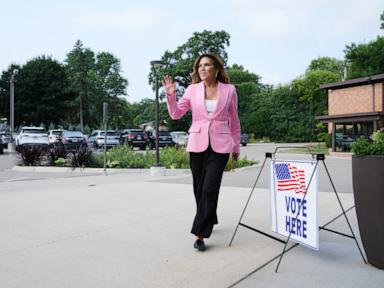
Political opportunity structures do not emerge from thin air; they are forged by institutional failures that cross the threshold of public tolerance. For two decades, the Minnesota political ecosystem has maintained a center-left equilibrium, locking out statewide Republican victors through demographic density in the Twin Cities and structural inertia. However, the emergence of multi-million-dollar social service and pandemic relief embezzlement schemes fundamentally alters the state's political calculus. Dozens of convictions related to stolen funds intended for food, shelter, and childcare programs expose deep vulnerabilities in single-party administrative governance.
This dynamic provides an analytical window into how administrative malfeasance transforms into electoral offense. Opposition parties rarely win in hostile territory by default; they require an issue that lowers the acquisition cost of swing voters. The fiscal leakage uncovered across state-contracted non-profits supplies this mechanism, creating a clear pathway for the Republican ticket—featuring Senate nominee Michele Tafoya and gubernatorial nominee Lisa Demuth—to pivot from defensive posture to structural critique.
The Three Vectors of Institutional Vulnerability
To understand why the current political realignment is taking shape, one must deconstruct the mechanics that allowed widespread fraud to persist unchecked. State governance models built on expansive social spending often prioritize distribution speed over verification rigor. This creates an imbalance within the administrative control framework.
First, the oversight deficit manifested through inadequate auditing of intermediary organizations. When public funds are funneled through private non-profits without continuous automated validation of service delivery, the marginal cost of falsifying claims drops near zero. Fraudulent entities successfully billed for non-existent clients and phantom meal distributions because verification mechanisms relied on trust-based reporting rather than zero-trust verification.
Second, single-party institutional capture reduced internal whistleblowing. In environments where legislative and executive branches share administrative alignment, the friction required to challenge program efficacy is minimized. Legislative oversight committees function less as adversarial auditors and more as administrative echoes, delaying the discovery phase of fiscal anomalies.
Third, the velocity of federal emergency funding during the pandemic overwhelmed existing bureaucratic checkpoints. The sudden injection of capital created a liquidity shock that legacy state agencies were structurally unequipped to monitor. Fraudsters exploited this operational bottleneck, turning emergency relief distribution channels into personal extraction networks.
The Electoral Cost Function and Voter Realignments
In political science, voter behavior is heavily dictated by cost-benefit friction. For a moderate or independent voter in a left-of-center electorate, crossing party lines requires a high-magnitude catalyst. Standard partisan disagreements over taxation or regulation rarely suffice to break long-standing voting habits.
Administrative incompetence, conversely, imposes a direct cognitive and moral tax on the electorate. When taxpayers realize that capital earmarked for vulnerable children or basic healthcare was diverted into private enrichment, the social contract is fractured. The political cost shifts from abstract policy debates to tangible fiscal betrayal.
The Republican strategy relies on converting this friction into an offensive weapon by separating the concept of public empathy from administrative execution. By fielding candidates who bypassed ideological extremes during the primary cycle, the party lowered the barrier for disaffected suburban voters. The core argument posits that systemic welfare failures are not anomalies of execution, but the predictable output of unchecked administrative expansion.
Counter-Cyclical Pressures and Defensive Moats
Political realignments do not occur in a vacuum, and opposition momentum faces structural countermeasures. The incumbent Democratic apparatus retains significant institutional advantages, anchored by high-turnout networks and secondary political fallout from federal interventions.
When federal authorities increase enforcement presence or launch aggressive immigration operations within urban centers, the local political dynamic shifts. Incumbents utilize these federal friction points to mobilize their core base, framing opposition candidates as aligned with disruptive external forces rather than local stewardship. Lieutenant Governor Peggy Flanagan, emerging as the top Democratic nominee, immediately pivoted to this defensive trench, attempting to tie her opponents to national figures and broader partisan controversies.
Furthermore, deep-rooted voting habits in urban centers create a high baseline of support that administrative scandals must actively erode to achieve parity. While suburban districts show measurable volatility in response to fiscal mismanagement, urban population densities anchor the statewide baseline against complete realignment.
Strategic Execution for the Opposition
Capitalizing on systemic institutional failure requires disciplined message architecture. To convert administrative outrage into legislative seats, the challenger campaign must avoid broad cultural grievances that alienate median voters and instead maintain strict focus on accountability metrics.
The path forward depends on treating the state budget as an audited balance sheet rather than an ideological battleground. By presenting a transparent framework for program verification, clawback enforcement, and structural budget reform, an opposition party transforms a temporary scandal into a permanent referendum on competence. Success in a historically blue environment requires convincing the electorate that the ruling party's administrative model is fundamentally broken at the architectural level.
Minnesota Fraud Scandal Updates
This video provides additional context regarding the congressional hearings and investigations surrounding the Minnesota fraud cases that reshaped the state's political landscape.
http://googleusercontent.com/youtube_content/1


