The disappearance or unexplained death of specialized research personnel represents a critical failure in state and corporate security infrastructure, as the loss of "tacit knowledge"—the uncodified expertise residing within a scientist’s mind—cannot be replaced by simple documentation. When the Federal Bureau of Investigation (FBI) opens inquiries into clusters of missing or deceased scientists, specifically those concentrated in geographic hubs like Los Angeles, the investigation must move beyond individual tragedy to address a systematic risk profile. These incidents suggest a vulnerability in the protection of intellectual property and national security assets that transcends typical criminal activity.
The Taxonomy of Human Capital Attrition
To analyze the gravity of these cases, one must categorize the loss of scientific personnel through a framework of strategic impact. These events do not occur in a vacuum; they represent the removal of nodes from complex intellectual networks. Building on this theme, you can also read: The Audit of Ambition.
- Sovereign Capability Erosion: Scientists working on sensitive technologies (biotechnology, quantum computing, aerospace) represent a percentage of a nation's competitive advantage. Their removal creates a developmental bottleneck.
- Intellectual Property Asymmetry: If a disappearance is linked to state-sponsored extraction or industrial espionage, the loss isn't just a life; it is the transfer of a competitive edge to a rival entity.
- Institutional Continuity Rupture: High-level researchers often lead labs that manage decades of longitudinal data. Their absence halts experimental momentum and can invalidate millions of dollars in federal or private investment.
The FBI’s focus on the Los Angeles area is statistically significant due to the density of the "Aerospace and Defense-Biotech Nexus." Southern California maintains one of the highest concentrations of researchers with security clearances in the world. A cluster in this region suggests a localized targeting vector or a shared environmental vulnerability within the defense-industrial complex.
The Mechanism of Research Vulnerability
The vulnerability of a scientist is rarely a product of their public profile but rather their proximity to "bottleneck technologies." These are specific technical problems that, if solved, unlock massive economic or military shifts. The risk profile of a researcher increases exponentially as they approach the "Proof of Concept" phase of a project. Analysts at NBC News have shared their thoughts on this matter.
The Proximity Risk Variable
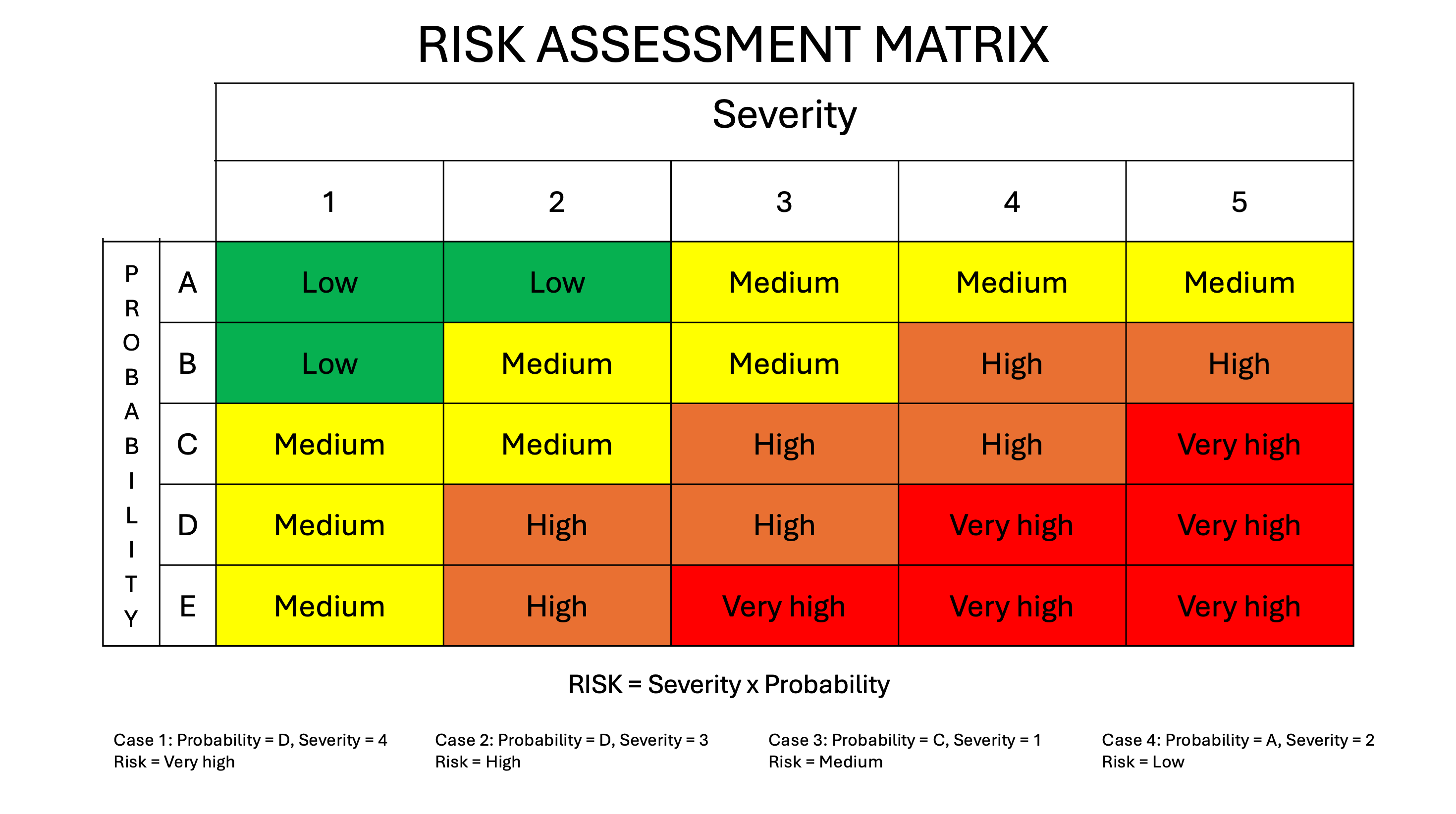
A scientist's risk is determined by a function of three variables:
- Irreplaceability: How many people globally possess the specific skill set to complete the work?
- Strategic Utility: Is the research dual-use? Does it have both civilian and military applications?
- Visibility within the Grant Ecosystem: Federal grant disclosures make the nature of a researcher's work—and its progress—publicly accessible to sophisticated actors tracking technological milestones.
These variables explain why four scientists from a single geographic region might trigger a federal response while isolated deaths in other fields do not. The FBI is looking for patterns of "Knowledge Extraction" or "Strategic Neutralization." Neutralization does not always imply malice; it can refer to the removal of a researcher from the domestic labor market via recruitment by foreign entities, which often manifests as a disappearance before it is identified as a defection or private sector poaching by a foreign power.
Statistical Anomalies vs. Investigative Bias
Critics often point to the "cluster effect" as a product of confirmation bias. In any population of thousands of researchers, a certain number of deaths and disappearances will occur by chance. However, the rigor of a federal probe rests on identifying "deviations from the baseline."
Normal attrition in the scientific community follows predictable actuarial tables: age-related illness, accidents, and standard criminal victimization. The FBI's involvement indicates that the circumstances of these four L.A. cases deviate from these benchmarks. This deviation usually takes the form of:
- The Absence of a Motive Gradient: Traditional crimes have a clear financial or personal motive. In many of these high-stakes cases, there is no evidence of theft, debt, or interpersonal conflict.
- Operational Cleanliness: The lack of forensic evidence or "noise" at the scene suggests a level of professional execution not typically found in random violent crime.
- Timing with Milestones: The proximity of the deaths to major publication dates, patent filings, or classified briefings.
The Geopolitical Context of Scientific Security
The current global climate is defined by a race for "technological sovereignty." In this environment, human capital is the primary currency. The disappearance of scientists is often a symptom of a larger, invisible conflict.
The Concept of "Gray Zone" Operations
Foreign intelligence services frequently operate in the "gray zone"—the space between normal diplomatic competition and open conflict. Targeting scientists serves two purposes in gray zone strategy:
- Delaying the Adversary: Removing a key mind can set a rival's research program back by 3 to 5 years.
- Information Siphoning: If a scientist is coerced or kidnapped, the goal is the extraction of "wetware"—the knowledge in their brain that has not yet been written down.
In the Los Angeles cases, the FBI must determine if these individuals were targets of such operations. The heavy presence of the Jet Propulsion Laboratory (JPL), various aerospace giants, and advanced medical research facilities makes the L.A. basin a high-traffic zone for foreign signals and human intelligence operatives.
Strengthening the Human Capital Perimeter
The failure to protect these individuals points to a flaw in the "Personnel Security" (PERSEC) protocols within research institutions. While facilities are hardened with biometric locks and firewalls, the individual researchers are often left vulnerable once they leave the campus.
Improving the Security Framework
To mitigate this risk, institutions must shift from a "Facility-Centric" security model to a "Researcher-Centric" model. This involves:
- Dynamic Risk Profiling: Automatically increasing protection and surveillance for researchers as they hit critical project milestones.
- Anonymized Grant Reporting: Reducing the public visibility of which specific individuals are leading sensitive breakthroughs.
- Off-Campus Support Networks: Providing secure transit and home security audits for personnel deemed "High-Value Assets" by the Department of Defense.
The challenge lies in the cultural friction between the open nature of scientific inquiry and the restrictive requirements of national security. Scientists value collaboration and transparency; security protocols require compartmentalization and silence. This friction often leads researchers to bypass security measures, creating the very openings that external threats exploit.
The Logic of Federal Jurisdiction
When the FBI takes the lead on what would normally be local police matters, it signals that the cases involve "interstate or international nexus" or "threats to national security." Under the Atomic Energy Act or the Internal Security Act, the federal government has broad latitude to intervene if the research in question involves nuclear, biological, or advanced cryptographic systems.
The investigation into the L.A. four is likely leveraging the FBI’s "Counterintelligence Division" rather than just the "Criminal Investigative Division." This shift in resources means the bureau is not just looking for a killer; they are looking for a "handler" or a state-sponsored cell.
Forensic Analysis of Patterns
The investigators will be looking for "signatures" across the cases. This includes:
- Digital Footprint Erasure: Were the victims' cloud accounts or local hard drives accessed or wiped immediately following their disappearance?
- Travel Correlates: Did any known foreign intelligence officers enter or leave the Los Angeles area in windows corresponding to the incidents?
- Preceding Anomalies: Did the scientists report feeling followed, or did they experience unusual "phishing" attempts in the months prior?
Economic Impact of Research Loss
The loss of a senior scientist can be quantified using a "Value of Lost Progress" (VLP) metric. This isn't just the salary of the individual, but the projected market value of the technology they were developing, adjusted for the delay their absence causes.
If a researcher was 80% of the way toward a breakthrough in solid-state battery density, and their disappearance forces the project to restart from the 40% mark, the economic loss includes:
- Sunk Costs: The initial investment that must now be duplicated.
- Opportunity Cost: The lost revenue from not being first to market.
- Market Devaluation: The loss of investor confidence in the institution's ability to protect its core assets.
This economic reality is why corporations and universities are increasingly viewed as "soft targets" for geopolitical rivals. It is far cheaper to eliminate or extract a scientist than it is to out-spend a superpower in R&D.
Tactical Implications for Research Leaders
The FBI’s investigation serves as a stark warning to the leadership of research universities and private defense contractors. The era of treating researcher safety as a peripheral concern is over. A strategic pivot toward "Total Asset Protection" is required.
Institutions must implement a tiered security protocol where the level of personal protection is tied directly to the "Technology Readiness Level" (TRL) of the project. A scientist working on TRL-1 (basic principles) requires standard protections; a scientist at TRL-7 (system prototype demonstration in an operational environment) requires executive-level security.
Furthermore, the data surrounding these disappearances must be centralized. Currently, local police departments often treat these cases as isolated incidents. A national "Researcher Attrition Database" would allow for the identification of micro-trends across different jurisdictions, enabling the FBI to move from a reactive to a proactive posture.
The Los Angeles cluster is not merely a series of tragic events; it is a data point indicating a breach in the nation’s intellectual armor. The investigation must yield a new standard for how the individuals driving the future of technology are shielded from the very forces their work seeks to disrupt. Any failure to adapt these protocols ensures that the most valuable minds will remain the most vulnerable targets in a global competition that no longer respects the boundaries of the laboratory.
Strategic defense must now move to the individual level, acknowledging that in a knowledge-based economy, the most critical infrastructure is the human mind. High-value researchers should be integrated into a "Continuity of Knowledge" plan that includes both physical protection and aggressive digital shadowing to detect threats before they manifest in a disappearance.