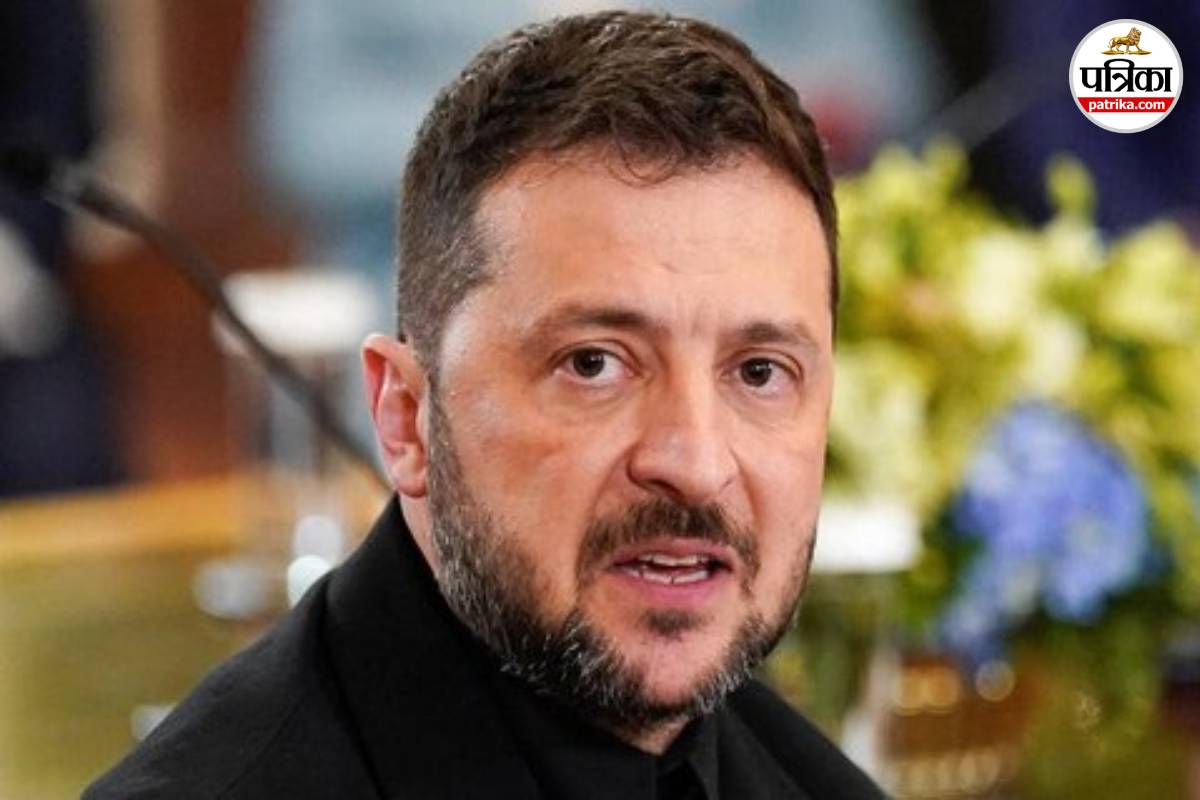
The removal of a top military commander during an active war of attrition introduces systemic risks that extend far beyond tactical reorientation. When Ukrainian President Volodymyr Zelensky executed a structural realignment at the apex of the military command, the decision triggered immediate domestic political friction and public demonstrations. This phenomenon exposes a fundamental structural vulnerability in democratic wartime governance: the tension between civilian political authority and autonomous military leadership. Dismissing a deeply entrenched military chief during an existential conflict alters the internal balance of state power, destabilizes public trust, and introduces operational friction across the theater of war.
To analyze the strategic implications of this command restructuring, the event must be broken down through a rigorous structural framework. Rather than viewing the domestic backlash as a mere political disagreement, it must be evaluated as a systemic reaction to a disrupted equilibrium.
The Three Pillars of Wartime Civil Military Friction
Wartime leadership relies on a delicate equilibrium between elected civilian officials and appointed military strategists. When this relationship degrades, it manifests across three distinct institutional pillars.
The Bureaucratic Authority Divergence
Civilian leadership operates on political cycles, narrative management, and international diplomacy. Military leadership operates on resource attrition, kinetic realities, and operational feasibility. In an extended war, these two modes of thinking inevitably diverge. Civilian authorities require constant, visible victories to sustain international aid coalitions and domestic morale. Military commanders, facing the material realities of ammunition shortages and troop fatigue, prioritize defensive consolidation and strategic patience. The removal of a defense chief is often the terminal result of this structural divergence, where the civilian executive attempts to reassert dominance over an independent military apparatus.
The Public Legitimacy Transfer
In prolonged conflicts, public trust frequently shifts from political institutions to the armed forces. As economic hardship increases and mobilization policies become more intrusive, the civilian executive suffers a depreciation in political capital. Conversely, the military command, insulated from policy failures and directly associated with national survival, accumulates significant institutional prestige. Displacing a popular military leader forces a sudden, involuntary transfer of legitimacy back to the state apparatus. This structural shock frequently acts as a catalyst for civil unrest, as seen when citizens take to the streets to protest command changes, viewing the removal not as a strategic adjustment but as a political purge.
The Coalition Confidence Function
Foreign security assistance is highly sensitive to perceptions of domestic stability. International donors evaluate risk based on the predictability of the recipient state's command architecture. A sudden, highly visible rupture in the military hierarchy signals internal fragmentation. This complicates the procurement pipeline, as external actors re-evaluate the continuity of long-term strategic plans and the security of intelligence-sharing protocols.
The Operational Cost Function of Command Realignment
Replacing the architect of a national defense strategy during active operations imposes immediate, measurable costs on the military apparatus. These costs are institutional, psychological, and systemic.
[Operational Friction] = (Doctrine Discontinuity) + (Command Staff Attrition) - (Sustained Tactical Momentum)
The primary operational variable affected is the continuity of doctrine. A change at the absolute top requires an immediate recalibration throughout the entire chain of command. Subordinate commanders must adapt to new strategic priorities, altered risk tolerances, and different communication styles. During this transition window, decision-making cycles slow down, creating a temporary window of vulnerability that opposing forces can exploit.
The second limitation involves institutional memory. A wartime commander possesses unquantifiable tacit knowledge regarding troop capabilities, logistical bottlenecks, and adversarial behavior patterns. This knowledge cannot be transferred via formal briefings. Removing the individual who managed the defensive architecture for years creates an information asymmetry inside the general staff.
The third variable is the disruption of institutional loyalty. Military organizations are built on deeply ingrained hierarchies and personal networks. A forced leadership change generates friction within the officer corps, as personnel are reassigned, promoted, or retired to align the command structure with the new leadership’s philosophy. This internal churn diverts administrative energy away from the primary objective of kinetic defense.
The Mechanics of Public Destabilization Under Mobilization Pressures
Domestic protests during a war are rarely caused by a single isolated event. The dismissal of a defense chief serves as an accelerant for underlying structural grievances, most notably the strain of human resource mobilization.
- The Mobilization Dilemma: To sustain an attritional war, the state must continuously conscript fresh personnel. This policy directly impacts the civilian population, creating widespread socioeconomic strain.
- The Credibility Deficit: When conscription is demanded by a military commander perceived as highly competent, the public accepts the sacrifice as a operational necessity. When the same demands are made by a political executive that has just removed that commander, the public views the sacrifice through a lens of skepticism.
- The Protest Trigger: The removal of the military chief removes the insulation between the civilian population and the political leadership. The public no longer directs its anxieties at the abstract realities of war; instead, it targets the specific political decisions of the executive branch.
This structural dynamic explains why hundreds of citizens protested on the streets following the leadership change. The demonstrations were not merely expressions of support for an individual; they were systemic rejections of the political centralization of wartime authority.
Strategic Alternatives and Risk Mitigation Protocols
When civilian leadership determines that a change in military command is mathematically necessary due to strategic stagnation, specific protocols must be deployed to minimize institutional shock.
The first protocol requires a phased transition rather than an abrupt dismissal. A prolonged handover period allows for the continuity of operational planning and stabilizes the confidence of foreign allies. By framing the transition as a planned rotation rather than a sudden termination, the executive branch dampens the potential for domestic political exploitation.
The second protocol involves the immediate integration of the outgoing commander into an advisory or diplomatic role. Retaining the individual within the broader national security architecture signals to the public and the armed forces that institutional memory is being preserved rather than discarded. This neutralizes the narrative of a political purge and maintains a unified front.
The third protocol demands absolute transparency regarding the strategic rationale for the change, presented without compromising operational security. The executive must communicate a clear, forward-looking doctrine that justifies the transition, thereby shifting the public discourse from personal political rivalries to collective strategic evolution.
Failing to execute these protocols converts a necessary command adjustment into a self-inflicted political crisis. The stability of a state engaged in high-intensity conflict depends on the absolute synchronization of its political will and its military execution. When that synchronization breaks down, the primary threat to the state shifts from the external adversary to internal fragmentation.