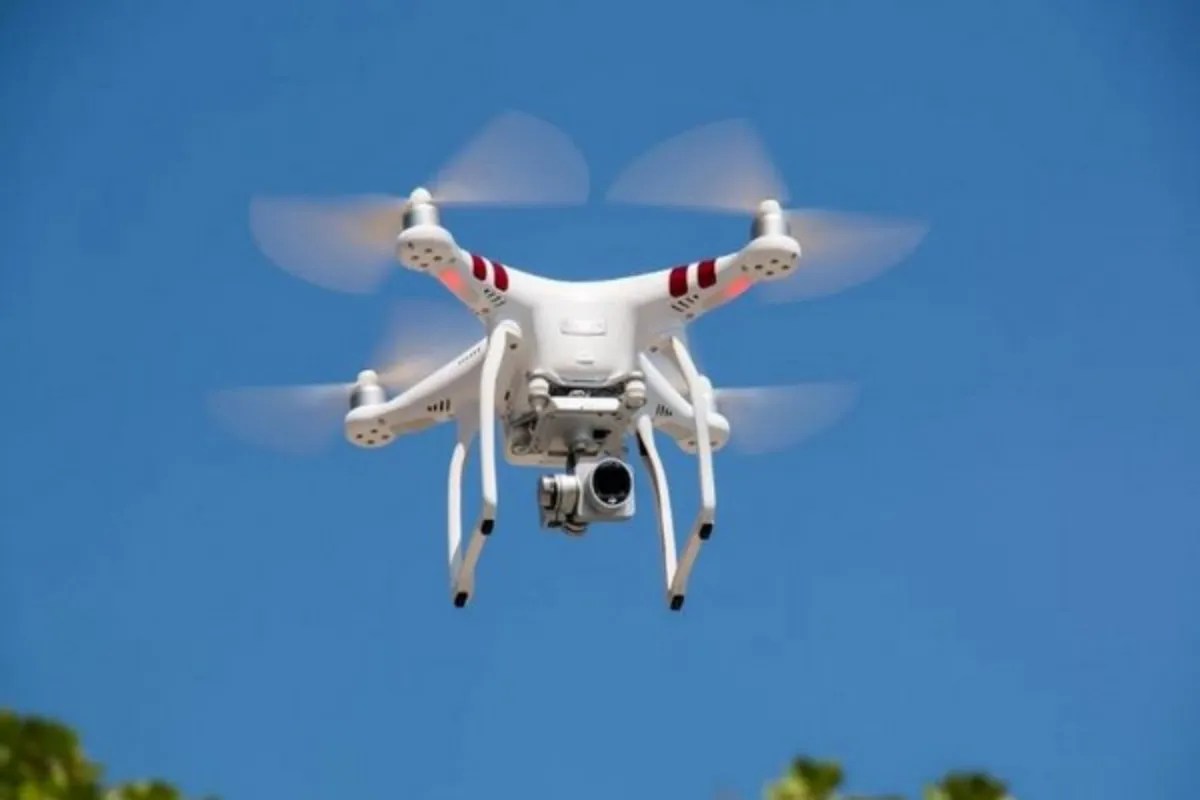
Recent surges in Unmanned Aerial Vehicle deployments along the Line of Control signal a structural shift in asymmetric infiltration economics. When state-sponsored or non-state actors transition from traditional human-borne infiltration routes to low-altitude aerial vectors, the calculus governing border defense equations changes fundamentally. This shift is not merely tactical; it represents a systematic effort to exploit the friction points inherent in legacy ground surveillance grids through cost-effective, high-disruption aerial platforms.
The Economic Asymmetry of Aerial Infiltration
The primary driver behind the adoption of drone-based logistics in disputed border zones is cost imposition. Traditional border security relies on high-capital infrastructure: fencing, thermal imaging arrays, seismic sensors, and concentrated troop deployments. Against this dense grid, conventional infiltration carries an extraordinarily high attrition rate and severe operational risk for the initiating actor. Meanwhile, you can explore related developments here: Riyadh Hits a Wall as Islamabad Draws the Line and Regional Security Fractures.
Drone technology inverts this dynamic. Consumer-grade and modified commercial quadcopters or fixed-wing platforms can be procured, modified, and launched at a fraction of the capital expenditure required to intercept them.
- Low Marginal Cost: A commercial drone carrying payload capacities ranging from two to ten kilograms requires negligible capital investment compared to the defensive resources expended to track, intercept, or neutralize it.
- Deniability and Dispersal: Launch sites can be mobile, civilian-adjacent, and rapidly evacuated, minimizing the footprint left behind by operators.
- Payload Diversification: Beyond reconnaissance, these platforms serve a dual-purpose logistics function, transporting communications equipment, currency, and improvised explosive components directly to pre-coordinated drop zones.
This creates a severe cost-benefit imbalance for the defender. Intercepting low-radar-cross-section, low-altitude targets often requires sophisticated electronic countermeasures, kinetic interceptors, or dedicated short-range air defense systems that cost exponentially more than the incoming threat asset. To see the complete picture, check out the detailed article by The Guardian.
Topographical Vulnerabilities and Radar Horizons
The geographical realities of the Line of Control—characterized by deep valleys, rugged ridgelines, and complex terrain masking—dictate the limits of technical surveillance. Ground-based radar networks and line-of-sight optical devices face severe physical constraints in mountainous environments.
[Launch Zone] ---> (Terrain Masking / Valley Floor) ---> [Radar Blind Spot] ---> [Target Drop Zone]
When operators route drones along riverbeds, narrow gorges, or below the radar horizon of stationary observation posts, they effectively weaponize the topography.
- The Ground Clutter Problem: Low-flying, slow-moving aerial objects blend into the background radar signature of rising terrain, foliage, and avian activity, complicating automated threat discrimination.
- Acoustic Masking: Ambient environmental noise in high-altitude environments—such as wind shear and fast-moving water—masks the acoustic signature of electric-propulsion drones until they are within close proximity of the observation perimeter.
- Visual Satiation: Security personnel monitoring static feeds experience cognitive degradation over prolonged observation periods, increasing the probability of missed detections during micro-window transits.
Operational Objectives Beyond Reconnaissance
While aerial assets initially served a strictly intelligence-gathering function, their operational utility has evolved into a multi-tiered vector for sustaining illicit networks on the opposing side. Understanding the mechanics of this evolution requires analyzing the three distinct phases of modern drone-enabled supply chains.
First, real-time tactical reconnaissance allows operators to map patrol timings, blind spots, and sensor coverage gaps. This intelligence is fed back to ground cells, optimizing the transit windows for contraband and personnel movement.
Second, payload delivery bypasses physical barriers entirely. By mapping precise GPS coordinates for autonomous drop operations, handlers eliminate the need for human couriers to cross heavily mined or fortified boundary segments. The payload is secured via remote-release mechanisms, retrieved by local operatives, and integrated into regional criminal or insurgent networks.
Third, psychological friction remains an unquantified objective. Persistent aerial presence, even when intercepted or neutralized, forces the defending military apparatus to maintain a heightened state of operational readiness, draining logistical energy, wearing out technical components, and creating a state of perpetual vigilance along extended frontlines.
Systemic Counter-Measures and Detection Bottlenecks
Countering low-altitude, low-signature aerial incursions requires a departure from traditional air defense philosophies designed for high-altitude tactical aircraft or ballistic trajectories. The solution space is bound by distinct engineering trade-offs.
- Acoustic Arrays: Highly sensitive directional microphones can detect rotor blade frequencies before visual or radar acquisition, but they suffer from high false-positive rates in windy, mountainous terrain.
- Radio Frequency (RF) Triangulation: Tracking the control link between the operator and the drone allows defenders to pinpoint launch locations, though autonomous pre-programmed flight paths utilizing internal waypoint navigation render RF-dependent detection methods obsolete.
- Directed Energy and Soft-Kill Systems: Portable frequency jammers and spoofing devices can force a drone to return to home or land prematurely, yet these systems require close proximity to the flight path and face line-of-sight limitations in broken terrain.
The integration of multi-layered sensor fusion—combining thermal imaging, acoustic signatures, and low-level active radar—represents the baseline required to establish a continuous denial ring. However, no single technical layer provides complete mitigation.
Strategic Forecast
As commercial drone autonomy, battery energy density, and navigation redundancy improve, the reliance on tethered control links will diminish entirely. Future iterations will likely feature machine-vision-guided navigation that operates in total electronic silence, rendering classic signal-jamming countermeasures ineffective.
To break this escalating cycle, defense architectures must shift from reactive interception toward proactive disruption at the manufacturing and distribution nodes of the supply chain, combined with dense, distributed point-defense networks capable of achieving high-probability kills at minimal marginal cost. The ongoing escalation along the Line of Control is a preview of how low-cost autonomous systems will continually reshape border security economics.