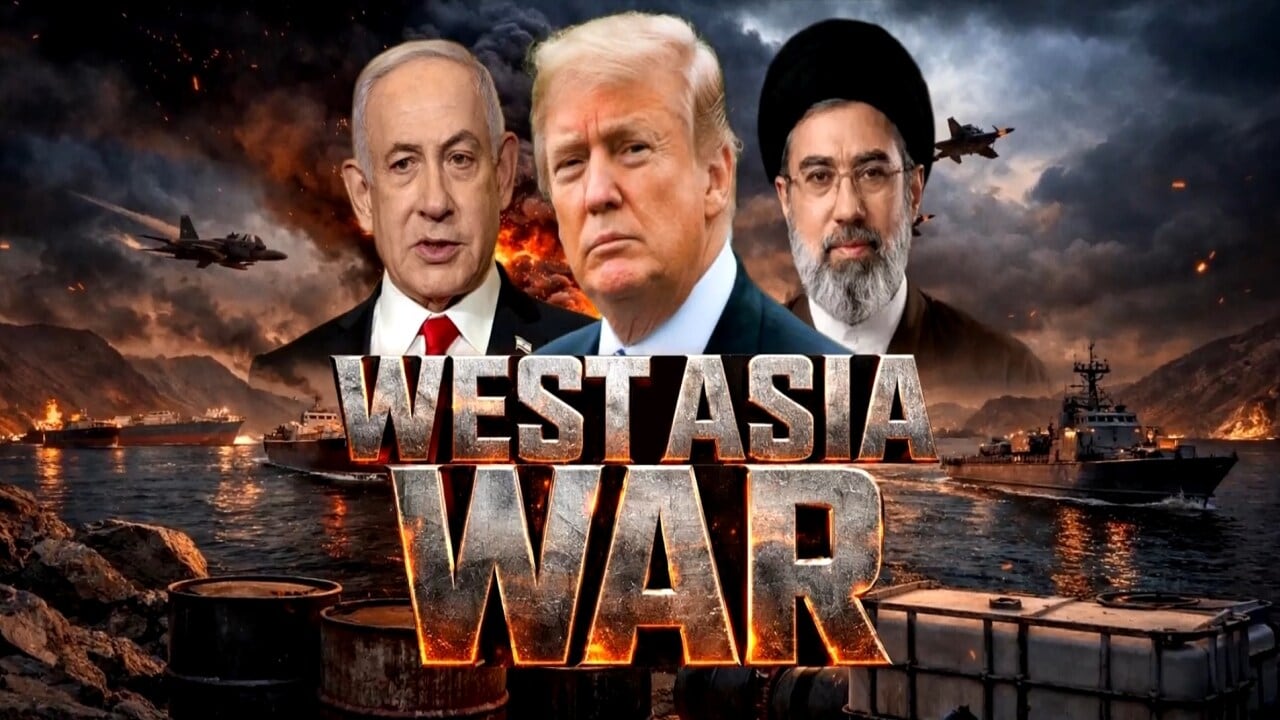
The financial press is currently obsessed with a ghost. They’ve dusted off the 1970s playbook, screaming about $150 oil and a global shipping freeze because of the "West Asia Crisis." They tell you that the Strait of Hormuz is a "chokepoint" that could bring India and the West to their knees. They are wrong. They are lazy. And they are ignoring the structural shifts in energy and naval power that make 2026 look nothing like 1973.
The consensus view suggests that any friction between Washington and Tehran inevitably leads to a tanker blockade. This is a fundamental misunderstanding of how modern leverage works. Iran doesn't want to close the Strait; they want to tax it through tension. Closing it is a suicide pill for their own economy, which still moves significant volumes of "dark fleet" crude to China. You don't burn down your own front door to keep the neighbors out.
The Myth of the Hormuz Chokepoint
Every time a drone flies near a tanker, analysts start drawing red arrows on maps. They treat the Strait of Hormuz as if it’s a physical gate that can be locked. It’s not. It’s a 21-mile-wide stretch of water. Yes, the shipping lanes are narrow, but the idea that Iran can "close" it indefinitely is a fantasy that ignores the reality of 5th Fleet presence and the rapid development of bypass infrastructure.
Take a look at the actual numbers. Saudi Arabia’s East-West Pipeline (Petroline) can move 5 million barrels per day (bpd) to the Red Sea. The UAE’s Habshan-Fujairah pipeline bypasses Hormuz entirely, dumping 1.5 million bpd directly into the Gulf of Oman. We aren't in the era of total dependency anymore. When "experts" scream about India’s energy security being tied solely to this one waterway, they are ignoring the fact that India has been aggressively diversifying its mix, including a massive pivot toward Russian grades that don't even touch the Persian Gulf.
If you’re betting on a permanent oil spike, you’re betting against engineering. The friction in West Asia is a feature of the market now, not a bug. It’s priced in. The real risk isn't a physical blockade; it's the insurance premiums and the "war risk" surcharges that shipping companies use to pad their margins. You're being squeezed by middle-men in London and Singapore, not by a naval blockade in Bandar Abbas.
Why "Iran-US Talks 2.0" is a Distraction
The media is salivating over the prospect of a new nuclear deal or a "Grand Bargain." They frame it as a binary: war or a deal. This is a false choice. We are entering a period of "Permanent Low-Level Friction." Neither side wants a treaty because a treaty requires accountability.
Washington needs a "bogeyman" to justify its presence in the region and to keep its defense contractors fed. Tehran needs an external enemy to suppress internal dissent and justify its "Resistance Economy." They aren't looking for a handshake; they are looking for a managed stalemate.
For India, the "concern" shouldn't be whether a deal happens. The concern should be the shifting currency dynamics that these talks hide. While the world watches the Strait, the real war is being fought in central bank ledgers.
The Currency War is Already Over (And the Dollar Won)
There’s a popular narrative that the "West Asia Crisis" will accelerate de-dollarization. People point to India buying oil in Rupees or the rise of the Petroyuan. I’ve seen traders lose fortunes betting on the death of the Petro-dollar. It’s a seductive story, but it’s mathematically illiterate.
To buy oil in Rupees, the seller (Iran, Russia, or the Saudis) must have something to buy from India in Rupees. If they don't, they end up with mountains of a currency they can't spend on the global market. This is why the Russia-India Rupee trade hit a wall—Russia ended up with billions in Indian banks that it couldn't use to buy German machinery or Chinese electronics.
The "Currency War" the competitor article mentions is a skirmish, not a revolution. Until there is a liquid, transparent, and deep alternative to the US Treasury market, every "alternative" currency trade is just an expensive barter system. If you’re an Indian importer, stop worrying about the Rupee replacing the Dollar. Start worrying about the Dollar's strength crushing your margins as the Fed keeps rates higher for longer to combat the very inflation these regional tensions cause.
The India-Centric Fallacy
Indian media loves to frame every global event through the lens of "How this affects Delhi." They argue that India’s strategic autonomy is at risk. Let’s be blunt: India is in a position of strength that it refuses to acknowledge.
India is the world’s largest buyer of "distressed" oil. While the West moralizes about sanctions, India has built a refining machine that turns cheap, sanctioned crude into high-grade diesel for the European market. India isn't a victim of the West Asia crisis; it is the primary beneficiary of the resulting market inefficiency.
By keeping the "crisis" at a simmer, India can continue to demand massive discounts from Tehran and Moscow. If peace broke out tomorrow and the Strait of Hormuz became a boring, safe waterway, those discounts would vanish. The "concerns" you hear from the Ministry of External Affairs are often a tactical smoke-screen. They want the volatility because volatility creates arbitrage.
Your Strategic Playbook is Obsolete
Most businesses are told to "hedge" against oil volatility by buying futures or stockpiling. That’s 20th-century thinking. In 2026, the risk isn't the price of the commodity; it’s the reliability of the data.
We are seeing a massive increase in "spoofing" and AIS-disabling among the global tanker fleet. About 10% of the world's oil is moving on ships that officially "don't exist" or are reporting false locations. If you are making supply chain decisions based on official shipping data, you are looking at a curated reality.
- Ignore the "Talks": Whether there is a 2.0 deal or not doesn't change the underlying supply-demand balance. Shale is still the swing producer, and US production is at record highs.
- Watch the Spread, Not the Price: The difference between Brent and Urals (or the "Iranian Light" discount) tells you more about geopolitical reality than any headline from Geneva or Doha.
- Bet on Infrastructure, Not Diplomacy: The real winners are the ports outside the Persian Gulf. Watch Salalah in Oman and Gwadar in Pakistan. That’s where the power is shifting.
The "West Asia Crisis" isn't a catastrophe waiting to happen. It is the status quo. It is a managed, profitable, and highly choreographed dance between powers that have no intention of actually going to war. The only people who get hurt are those who believe the headlines.
Stop looking for the "game-changer." There isn't one. There is only the grind of regional players trying to squeeze an extra 2% out of a decaying energy system. If you want to understand the future of the Hormuz risks, look at the pipeline maps, not the naval deployments.
War is expensive. Managed tension is a business model. Choose which one you’re going to fund.