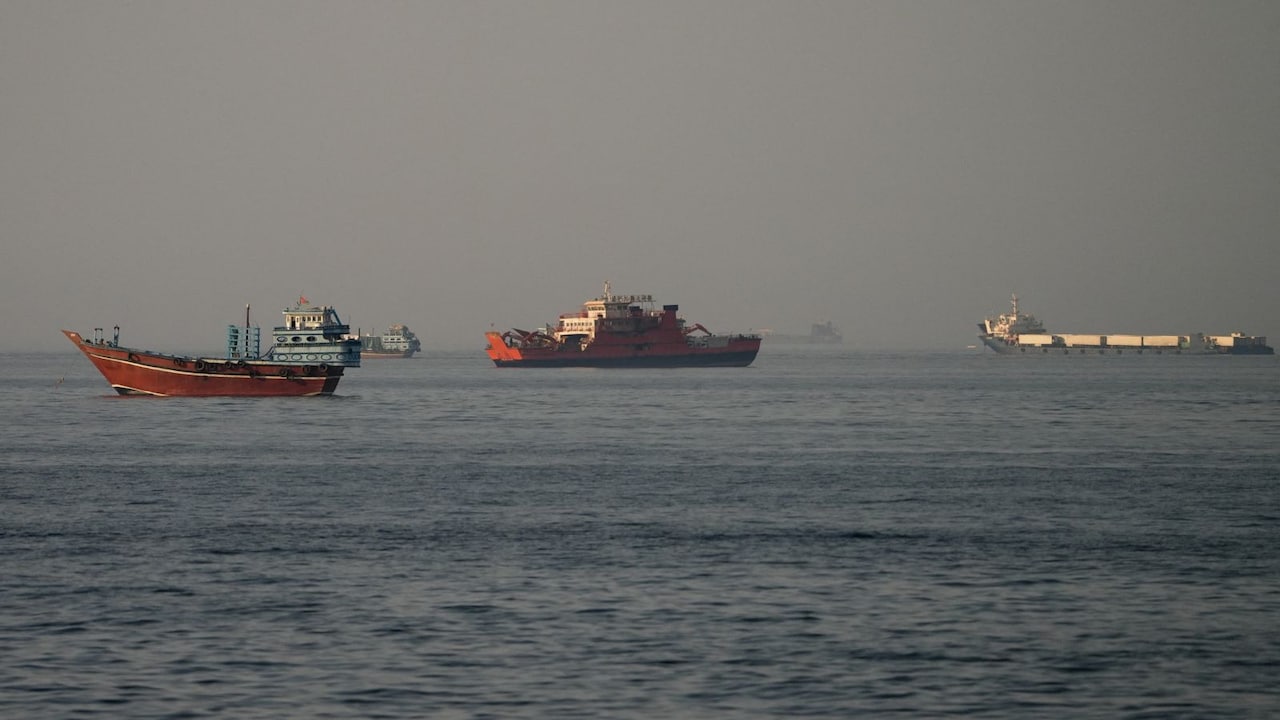
The maritime industry loves a good ghost story, and nothing gets insurance underwriters and cable news talking heads sweating faster than the threat of naval mines in the Strait of Hormuz.
The standard narrative is predictable. A rogue actor drops a few vintage contact mines into the world’s most critical oil chokepoint. The Pentagon panics. Shipping giants halt their fleets. Industry analysts scream that clearing the waterway will take weeks, paralyzing global trade and sending oil to two hundred dollars a barrel. You might also find this similar coverage insightful: The Architecture of ERL Quantifying the Commercial Theater of Eli Russell Linnetz.
It is a neat, terrifying story. It is also completely wrong.
The "weeks of delays" narrative is a fundamental misunderstanding of modern naval trade craft, marine underwriting reality, and the actual mechanics of asymmetric naval warfare. The threat in Hormuz isn't that mines will physically block ships for a month. The threat is that bureaucratic cowardice and algorithmic insurance modeling will cause a self-inflicted economic stroke. As extensively documented in recent coverage by The Wall Street Journal, the effects are worth noting.
The Logistics of the Lazy Consensus
Let’s dismantle the foundational myth: that a handful of cheap mines can easily shut down a thirty-mile-wide strait for weeks on end.
The panic-mongers treat the Strait of Hormuz like a narrow canal. It isn't. The shipping lanes themselves—the Traffic Separation Schemes—consist of two-mile-wide inbound and outbound lanes separated by a two-mile-wide buffer zone. More importantly, the water outside these designated lanes is highly navigable for modern deep-draft tankers.
When an analyst says "mine clearance takes weeks," they are assuming a peacetime clearing operation conducted by the book. They picture a slow, methodical sweep by Avenger-class countermeasure ships or Sea Dragon helicopters mapping every single piece of junk on the seabed.
That is not how a crisis plays out.
[Standard Shipping Lane] -> Report of Mine -> Algorithmic Fleet Halt
                                                    |
                                        (The Real Vulnerability)
                                                    |
[Alternative Deep-Water Track] -> Visual/Sonar Escort -> Continuous Flow
In an actual escalation, the response is immediate adaptive routing. Naval forces do not need to clear the entire strait to keep oil moving; they only need to clear and secure a single, narrow transit corridor. Modern side-scan sonar, autonomous underwater vehicles (AUVs), and expendable mine disposal systems like the Seafox can verify and clear a thin, high-priority track in hours, not weeks.
I have watched logistics firms burn millions of dollars idling vessels in the Persian Gulf based on outdated satellite intelligence and overblown risk assessments. The physical risk of a tanker striking a mine is statistically negligible compared to the systemic risk of letting your fleet sit like sitting ducks in open water while waiting for a "one hundred percent safe" declaration that never comes.
The Flawed Premise of Modern Maritime Insurance
If the physical threat can be bypassed or neutralized quickly, why does the global economy shudder whenever a mine threat is rumored?
Because the real chokepoint isn't the water. It’s the underwriters in London.
The Joint War Committee (JWC) of the Lloyd's Market Association designates the Persian Gulf and the Gulf of Oman as listed areas for hull war, piracy, terrorism, and related perils. The moment a mine threat is validated, war risk premiums do not just rise—they mutate.
- The Seven-Day Rule: War risk cover is typically quoted for a seven-day period. In a high-tension scenario, underwriters shorten this window or revoke coverage entirely, forcing shipowners to renegotiate terms for a single transit.
- The Algorithmic Panic: Modern maritime insurance relies heavily on automated risk modeling. A single reported incident triggers an exponential spike in premiums, often making a transit financially unviable even if the physical probability of hitting a mine is less than one in ten thousand.
This creates a perverse incentive structure. The threat of naval mining achieves its strategic objective without a single mine ever detonating. The goal of an adversary isn't to sink a supertanker; it is to trigger the risk-averse clauses in western corporate contracts. By treating the issue as a purely kinetic, military problem, the shipping industry plays right into the hands of asymmetric actors.
High-Tech Sweeping vs. Low-Tech Realities
People often ask: Can’t modern mine counter-measure (MCM) technology solve this instantly?
The honest answer is uncomfortable. Yes, autonomous tech has radically shrunk detection timelines, but the operational deployment remains bottlenecked by human bureaucracy.
Consider the mechanics of a modern minefield. An adversary isn't just dropping World War I-era tethered contact mines that bob on the surface. They are using bottom mines—influence mines that sit on the muddy floor of the strait and detonate based on acoustic, magnetic, or pressure signatures.
The Detection Breakdown
| Mine Type | Detection Method | Neutralization Time | Risk Level |
|---|---|---|---|
| Moored Contact | Visual / Surface Sonar | Minutes (Mechanical Sweep) | Low |
| Bottom Acoustic | Side-Scan Sonar / AUV | Hours (Target Identification) | Medium |
| Pressure Influence | High-Resolution Bathymetry | Days (Requires Signature Simulation) | High |
A pressure mine cannot be easily fooled by a remote-controlled drone mimicking a ship's acoustic signature. It measures the displacement of water as a massive hull passes overhead. To clear these, you cannot just sprint through the water with advanced tech.
But here is the contrarian reality: you do not need to clear them if you change how you sail.
Tankers can alter their displacement signatures by adjusting speed and draft configurations. By slowing transits to a crawl through suspect areas, the pressure signature drops below the detonation threshold of most commercial-grade influence mines. The industry treats speed as a fixed variable dictated by delivery schedules. In doing so, they sacrifice tactical flexibility for logistical convenience.
Stop Asking When the Strait Will Open
The premise of the entire conversation is broken. The media asks, "When will the strait reopen?" as if someone is going to pull down a giant "Closed" sign.
The strait never closes. It fractures into different tiers of risk tolerance.
While state-backed Western mega-fleets anchor and wait for naval escorts, smaller, non-aligned operators with different risk profiles and sovereign insurance guarantees continue to sail. We saw this during the Tanker War of the 1980s, and we see it today in contested waters globally. The flow of commodities does not stop; it merely reroutes through shadow fleets and alternative corporate structures that operate outside the traditional Lloyd's architecture.
If you are running a supply chain that depends on energy transiting the Middle East, planning for a "three-week shutdown" is a rookie mistake. You are burning capital preparing for a cinematic event that will not happen, while completely ignoring the real danger: a prolonged, grinding war of economic attrition where insurance premiums bleed your margins dry while the physical shipping lanes remain perfectly wide open.
Stop waiting for military guarantees. Diversify your underwriting structures, demand dynamic routing protocols from your carriers, and realize that in modern economic warfare, the biggest vulnerability is your own risk-management policy.