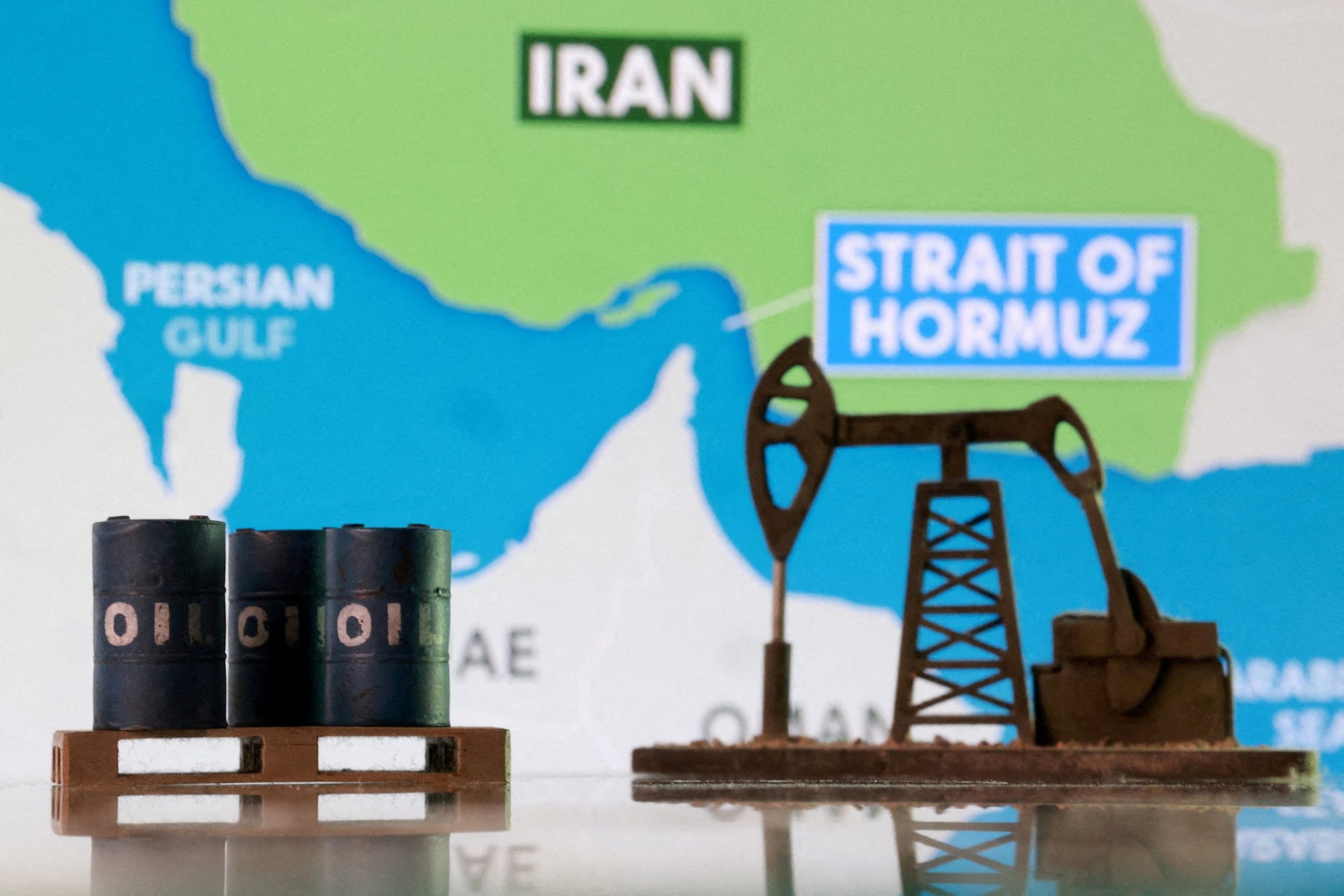
You’ve probably heard of the Strait of Hormuz in a high school geography class or a dry news segment about geopolitics. It’s a tiny sliver of water between Oman and Iran. But right now, that 21-mile-wide passage is the single biggest reason your grocery bill looks like a car payment.
When the news talks about a "blockade" or "shipping constraints" in the Middle East, it’s easy to tune out. It feels far away. But the global economy doesn't care about distance. Because about 20% of the world’s liquefied natural gas (LNG) and 25% of all seaborne oil pass through that one chokepoint, a closure isn't just a military headache. It's a direct tax on your life.
If you’re wondering why your $100 grocery run now costs $135, or why filling up your tank feels like a mugging, look no further than the Persian Gulf. Here is exactly how this mess is hitting your household budget.
The Invisible Tax on Everything You Eat
Most people assume the Strait of Hormuz only matters for gasoline. That’s a massive misconception. The real "killer" for your budget isn't just the pump; it's the plate.
The Persian Gulf is the world's fertilizer factory. The region accounts for roughly 40% of globally traded urea exports and 30% of ammonia. These aren't just chemistry terms; they’re the literal fuel for global farming. When the Strait is blocked, those shipments stop.
- Higher Production Costs: Farmers are now paying nearly double for nitrogen-based fertilizers. In April 2026, urea prices at the NOLA benchmark spiked from $470 to nearly $800 per ton.
- Yield Drops: When fertilizer gets too expensive, farmers use less of it. Less fertilizer means smaller harvests. Smaller harvests mean you pay more for bread, corn, and soy.
- The Lag Effect: Even if the Strait reopened tomorrow, the damage is baked in. Farmers are making planting decisions right now based on these insane costs. You’ll be paying for this at the supermarket well into 2027.
Your Energy Bill is Decoupled from Reality
If you live in the U.S., you might think we’re safe because we produce our own oil and gas. Honestly, that’s not how the market works. Energy is a global commodity.
When 21 million barrels of oil a day get stuck behind a blockade, the global price of crude rockets. Since the near-total closure following recent escalations, oil prices have remained drastically elevated. In California, gas has already surged past $6 per gallon. Even in "cheap" states, the national average is creeping toward $5.
But it’s the utility bill that really stings. Natural gas power plants generate over 40% of U.S. electricity. Because the U.S. now exports massive amounts of LNG, our domestic prices are tied to the global market. When Asian and European LNG futures skyrocket—which they have by over 50% since the crisis began—your local utility company raises your rates to keep up with global demand. You aren't just paying for your heater; you’re outbidding a factory in Japan for the same gas.
The Canned Goods and Packaging Crisis
Ever notice that a can of soda or a tin of soup costs 20% more than it did six months ago? It’s not just "inflation." It’s the materials.
The Strait of Hormuz is a vital exit point for aluminum and petrochemicals used to make plastics. The price of aluminum on the London Metal Exchange has climbed toward $3,400 per ton.
- Beverages: Aluminum is the largest single input cost for soda and beer. Expect to pay at least 3 to 5 cents more per can just for the container.
- Plastics: Polyethylene and polypropylene (used for milk jugs, shampoo bottles, and food wrap) have surged by nearly 20%.
- Consumer Goods: From trash bags to the plastic wrap on your meat, the cost of packaging is being passed directly to you. Manufacturers like ConAgra and Campbell’s have already warned that these costs are too high for them to absorb.
Why Asia’s Pain is Your Pain
You might wonder why we care if 89% of the oil through the Strait goes to Asia. It’s because Asia is the world’s factory.
When Japan, South Korea, and China face an energy crisis, their manufacturing costs explode. The semiconductor in your new phone, the parts for your dishwasher, and the clothes in your closet all require energy to make and ship. If China has to pay 40% more for power, you’re going to pay 10% more for that new laptop.
There is no "local" economy anymore. A ship stuck in the Strait of Hormuz is a price hike on a shelf in Ohio.
What You Can Actually Do About It
You can’t open the Strait yourself, but you can stop your budget from bleeding out. Stop waiting for prices to "go back to normal." In this kind of geopolitical climate, "normal" is a moving target.
- Lock in your energy rates: If your utility provider offers a fixed-rate plan, take it. Volatility is the only guarantee right now.
- Bulk buy non-perishables now: The packaging and fertilizer costs haven't fully trickled down to every brand yet. If you see a deal on canned goods or dry staples, grab them. They won't be cheaper in six months.
- Audit your fuel consumption: It sounds like basic advice, but at $6 a gallon, small changes matter. Combine your errands. If you were thinking about switching to an EV or a hybrid, the math just got a lot more persuasive.
The blockade isn't just a headline. It's a systematic drain on your bank account. The longer the "contested transit" lasts, the more these costs will settle into the floor of the global economy. Don't get caught off guard by the next grocery bill.