Every time Israelis head to the ballot box, the exact same lazy foreign-policy headline gets dusted off in New Delhi and Tel Aviv. You know the drill. Pundits breathlessly ask whether Benjamin Netanyahu’s political survival or defeat will make or break the India-Israel relationship.
They treat a multi-billion-dollar geopolitical architecture like a fragile high school romance between two leaders. If Bibi stays, the hugs continue and the drones keep shipping. If Bibi falls, New Delhi supposedly needs to hit the panic button.
Both sides of that argument are dead wrong.
We are past the October 27, 2026 Knesset election, the dust has settled on a fractured 120-seat parliament, and former IDF Chief of Staff Gadi Eisenkot is grinding through coalition talks after receiving President Isaac Herzog's mandate. Yet the commentary class is still asking the wrong question. Obsessing over whether Narendra Modi has better personal chemistry with Netanyahu or Eisenkot completely misses the structural reality of how West Asia works today.
Bilateral defense contracts and agricultural tech transfers will not collapse if Netanyahu loses the prime minister's chair. The real threat to India-Israel ties has nothing to do with who sits in Jerusalem's Balfour residence—and everything to do with whether Israel’s next government can stop sabotaging India's broader regional survival strategy.
The Bromance Myth Is Diplomatic Malpractice
Let’s kill the personality cult narrative first.
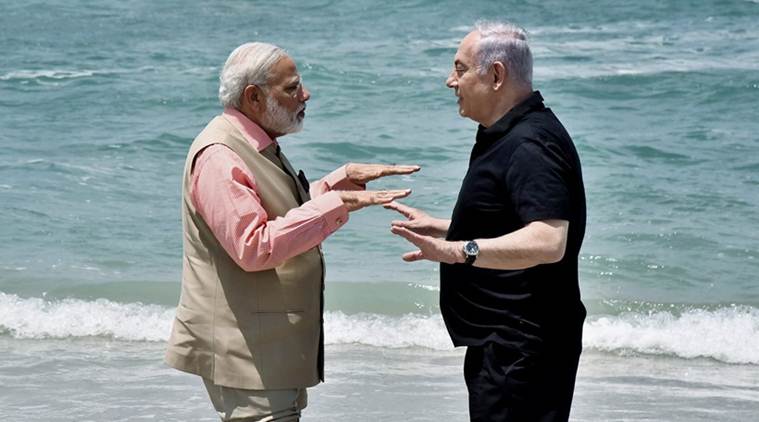
When commentators frame India-Israel relations around the 2017 Haifa beach walk or Modi's February 2026 address to the Knesset, they confuse public relations with statecraft. Yes, Modi and Netanyahu elevated bilateral relations to a Special Strategic Partnership for Peace, Innovation & Prosperity in early 2026. Yes, they pose well for cameras.
None of that is why the relationship exists.
I have watched defense procurement teams and foreign ministry bureaucrats work through three different Indian prime ministers and a revolving door of Israeli coalitions. Nations do not sign classified intelligence-sharing pacts or co-develop air defense systems because two politicians like each other's tweets. They do it because the math demands it.
Look at the institutional plumbing underneath the photo ops:
- Hard Trade Numbers: Bilateral merchandise trade hit roughly $3.93 billion in FY 2025-26, up from $3.63 billion the previous year, making India Israel’s second-largest Asian trading partner.
- Infrastructure Skin in the Game: India's Adani Group holds a $1.18 billion majority stake operating Haifa Port. You do not walk away from a Mediterranean port terminal because a Knesset coalition shifts.
- Active Trade Frameworks: Negotiators wrapped up the second round of India-Israel Free Trade Agreement (FTA) talks in July 2026. The bureaucratic machinery is already in motion.
- Deep Defense Integration: In February 2026 alone, 30 Indian and 26 Israeli defense firms sat down in Israel to lock in joint production.
Even if you look at Gadi Eisenkot—the man leading the 48-seat opposition bloc and trying to stitch together a coalition out of a deadlocked Knesset—the idea that he would downgrade ties with New Delhi is laughable. Eisenkot spent decades at the top of the Israeli military establishment, serving as IDF Chief of Staff from 2015 to 2019. He knows the Israeli defense industry relies on Indian scale and capital to fund its own research and development.
A change in Jerusalem changes the tone of the phone calls, not the cargo manifests.
Why Netanyahu’s Win or Loss Actually Matters (And Not How You Think)
If the bilateral plumbing is bulletproof, why should anyone in New Delhi care about the outcome of the 2026 Israeli election?
Because India does not live in a bilateral vacuum. India’s biggest geopolitical vulnerability is not a cooling of ties with Tel Aviv; it is being forced to choose between Israel and the rest of West Asia.
Competitor articles routinely treat India's balancing act as a neat diplomatic trick that New Delhi can pull off indefinitely. That is pure delusion. Following the 2025 clashes and the February 2026 US-Israeli strikes on Iran, the regional buffer that allowed India to quietly befriend everyone has evaporated. Former Indian diplomats like Anil Trigunayat have pointed out the obvious danger: India's strategic partners are actively shooting at each other.
Here is where the Israeli election outcome actually bites:
- The IMEC Chokehold: India’s flagship connectivity dream—the India-Middle East-Europe Economic Corridor (IMEC)—runs directly from Gulf ports through Saudi Arabia and Jordan straight into Israel’s Haifa Port. Without Saudi normalization, IMEC is just a pretty map in a G20 brochure.
- The Coalition Trap: Netanyahu’s 53-seat right-wing and religious bloc relies heavily on hardline partners like Bezalel Smotrich and Itamar Ben-Gvir. That coalition explicitly passed a Knesset resolution rejecting Palestinian statehood and expanded West Bank settlements—the exact red lines Riyadh refuses to cross.
- The Gulf Diaspora Exposure: Millions of Indian workers live in the Gulf Cooperation Council (GCC) states, sending home tens of billions in remittances while New Delhi relies on those same states for energy security. Every time an Israeli government escalates a multi-front regional war, India’s economic lifeline trembles.
An Eisenkot-led government—even if shaky and forced to rely on outside support from Arab parties like Ra'am or the Joint List—offers something Netanyahu’s coalition structurally cannot: a less volatile diplomatic posture that keeps the door cracked open for Gulf normalization.
Note the nuance here. Eisenkot is no dove. He ran Israel's covert air campaign against Iranian targets in Syria and has openly dismissed immediate Palestinian statehood. Yet a centrist-led cabinet unburdened by far-right messianic ministers can restrain settlement expansion, release Palestinian Authority revenues, and engage Washington on regional de-escalation. For India, that difference is worth far more than another warm embrace on an airport tarmac.
The Contrarian Catch Nobody Wants to Admit
Before anyone in New Delhi pops champagne over a potential post-Netanyahu era, let's look at the ugly downside of this thesis.
Netanyahu offered India one massive, underrated asset: predictable unilateralism.
When New Delhi needed emergency defense supplies, cyber capabilities, or diplomatic backing without lectures on human rights or domestic Indian politics, Netanyahu delivered without hesitation. A broad, fragile unity or minority government in Israel—Cobbling together Yashar, Naftali Bennett’s Together, Avigdor Liberman’s Yisrael Beiteinu, and Yair Golan’s Democrats—will be paralyzed by internal contradictions.
Look at the math from the October 27 vote:
| Political Bloc / Grouping | Knesset Seats (out of 120) | Core Strategic Reality |
|---|---|---|
| Netanyahu Bloc (Likud, Shas, UTJ, Otzma Yehudit, RZP) | 53 seats | Disciplined on security, toxic to Gulf normalization |
| Eisenkot Opposition Bloc (Yashar, Together, Democrats, Yisrael Beiteinu) | 48 seats | Acceptable to Gulf states, internally divided on domestic and Gaza policy |
| Arab-Led Parties (Joint List, Ra'am) | 19 seats | Kingmakers who refuse to back Netanyahu, yet taboo for right-leaning oppositionists |
A government built on 48 Jewish opposition seats plus outside Arab backing—or a messy rotation deal—spends 80 percent of its energy just trying not to collapse before Tuesday.
Imagine a scenario where Eisenkot successfully forms a government by December 2026, only for it to fracture within twelve months over Haredi military conscription or Gaza governance. During that political paralysis, big-ticket strategic initiatives—like finalizing the India-Israel Free Trade Agreement or pushing through sensitive technology transfers—get stuck in bureaucratic purgatory. Netanyahu, for all his regional volatility, knew how to bulldoze Israeli ministries into prioritizing India. A fractured coalition might simply be too distracted by domestic survival to close big deals.
Stop Reading Tea Leaves and Watch These Three Metrics
If you want to know where India-Israel ties are actually headed over the next 24 months, ignore the speeches at diplomatic receptions. Track the friction points that actually move capital and weapons.
- The FTA Signature Date: The Terms of Reference were signed in November 2025, and two rounds of negotiations finished by July 2026. If a new Israeli coalition cannot ratify a finalized free trade agreement by mid-2027, it proves domestic political gridlock is actively slowing economic integration.
- China’s Re-Entry into Israeli Tech: Under intense US pressure, Netanyahu’s governments reluctantly sidelined Chinese infrastructure and tech bids. As foreign policy analysts have noted, a post-Netanyahu coalition looking for economic breathing room might test the waters on renewed commercial engagement with Beijing. If Chinese firms creep back into Israeli ports or tech sectors, New Delhi’s strategic comfort level will plummet immediately.
- Riyadh’s Posture on Haifa: Watch Saudi capital flows, not Israeli press releases. If Gulf sovereign wealth funds begin seriously committing capital to overland rail links connecting to Haifa Port, it means Israel's political shift successfully unlocked IMEC. If Riyadh continues hedging with alternative corridors through Iraq or Syria, Israel’s internal election solved nothing for India.
The pundits asking whether Netanyahu's fate will save or doom India-Israel ties are fighting the last war. That partnership is already institutionalized in steel, silicon, and port concrete. The only question that matters now is whether Israel's next government can stop setting fire to the neighborhood India needs to trade with.
For further perspective on how a post-Netanyahu transition impacts New Delhi's broader West Asia strategy, watch India-Israel Ties Beyond Netanyahu, which breaks down the strategic continuity behind the diplomatic headlines.