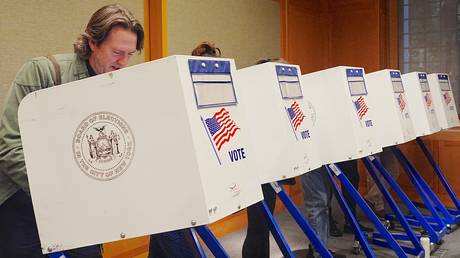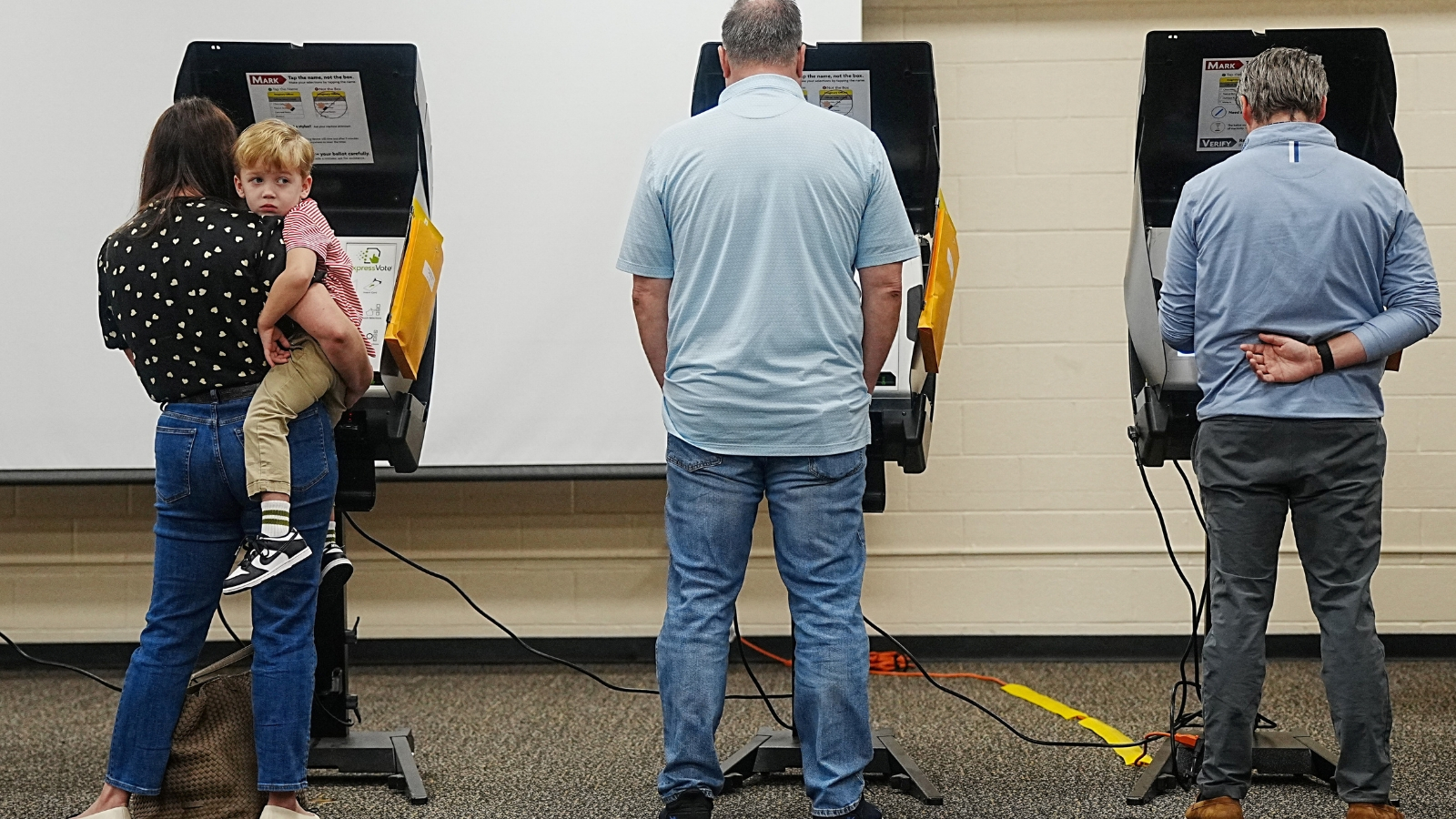
Every major news network spent the first week of November 2026 lying to you with a straight face. They put glossy maps on touchscreens, hired former campaign strategists to yell over touch-and-go county percentages, and pretended the United States actually announces election results on Election Night.
It does not. It never has.
If you are still asking how votes are counted and when the 2026 midterm results will be announced, you are asking the wrong question entirely. You are treating a decentralized, multi-week administrative audit like a Monday Night Football broadcast. Mainstream explainers love to feed this addiction. They publish neat, sanitized timelines explaining when polls close on the East Coast versus the West Coast, reassuring readers that patience is a virtue while implying that an official winner emerges the moment a television desk flashes a checkmark.
That checkmark is not an official result. It is a statistical bet placed by private media corporations—specifically the Associated Press and the National Election Pool—based on exit polls, historical precinct modeling, and incomplete unofficial tallies. Official results do not exist until weeks after the polls close. Until state canvassing boards certify the final totals, every number you see on a cable chyron is glorified guesswork.
I have spent years dissecting election administration, watching campaigns burn millions of dollars on legal challenges during the post-election canvass while pundits declare the race over on Tuesday night. The gap between media projections and statutory certification is where modern political paranoia breeds. When outlets treat Election Night as the finish line rather than the starting gun of a mandatory verification process, every legitimate administrative delay looks like a conspiracy.
The Lie of the Election Night Finish Line
Let’s dismantle the biggest myth in American politics. There is no federal election system in the United States. There are fifty separate state systems, broken down further into more than 10,000 local county and municipal jurisdictions. Each operates under different statutory deadlines, equipment standards, and processing rules.
When a news anchor tells you that 85 percent of the vote is in, that number itself is a fabrication. No local clerk knows the exact denominator of total cast ballots until every drop box is emptied, every military ballot arrives from overseas, and every provisional envelope is investigated. The "expected vote" percentage displayed on your screen is an algorithm's estimate of turnout. When that algorithm underestimates mail-in volume in a suburban county, the "percentage reporting" magically drops backward from 92 percent to 84 percent at two in the morning. To an uneducated viewer, that looks like ballots appearing out of thin air. In reality, a media data analyst just fixed a bad denominator.
Standard election guides gloss over this mechanical reality. They tell you that polls close at 7:00 PM or 8:00 PM Eastern and that counting begins immediately. They fail to mention that counting is the fastest, easiest part of the job. Tabulation machines—optical scanners built by vendors like Dominion, ES&S, and Hart InterCivic—can read hundreds of paper ballots per minute. If elections were merely about feeding paper into a scanner, the entire country would be finished by midnight.
The delay happens before the ballot ever touches a scanner. It happens in the verification trench.
Why Mail Ballots Break the Cable News Clock
Walk into any central counting facility in Maricopa County, Arizona, or Allegheny County, Pennsylvania, during a midterm cycle, and you will see why television timelines are absurd. Mail-in voting did not break the system, nor did it introduce widespread fraud. What it did was shift the labor bottleneck from Election Day precinct workers to central administrative staff.
An in-person voter checks in at a polling place, signs the poll book, verifies their identity, and feeds their ballot directly into a precinct tabulator. The verification happens before the ballot is cast.
A mail-in ballot reverses that sequence. The voter casts the ballot in private, seals it inside a secrecy sleeve, places it inside an outer affidavit envelope, signs the declaration, and mails it back. When that envelope arrives at the county elections office, the real work begins:
- Intake and Sorting: Clerks scan the barcode on the outer envelope to log receipt in the statewide voter registration database, ensuring that specific voter cannot also vote in person.
- Signature Verification: Human reviewers or automated signature-recognition software compare the signature on the outer envelope against the reference signatures on file from the voter's registration card or DMV records.
- Curing: If a signature is missing, mismatched, or the voter forgot to date the envelope where state law requires it, the ballot is segregated. Many states provide a statutory "cure period"—often ranging from a few days to over a week after Election Day—giving the voter time to prove their identity and fix the defect.
- Extraction and Flattening: Once approved, bipartisan teams slice open the outer envelopes, remove the secrecy sleeves, extract the ballots without linking the voter's identity to their choices, and flatten paper creases so the optical scanners do not jam.
Here is the contrarian truth that partisan commentators on both sides ignore: slow counting is the direct result of security measures. Every rule demanding stricter signature checks, bipartisan observation at every table, and paper audit trails adds hours or days to the clock. You can have fast results, or you can have hyper-verified paper-ballot audits. You cannot demand maximum security and also demand a winner before your bedtime on Tuesday night.
The Blue Shift and Red Mirage Are Structural Artifacts
Mainstream coverage treats the "red mirage" and "blue shift" as mysterious phenomena. They are basic logistics.
In states like Pennsylvania and Wisconsin, state legislatures historically prohibited local election officials from processing mail-in ballots before Election Day morning. Meanwhile, states like Florida and Arizona allow pre-processing weeks in advance.
Watch what happens when you compare the two. Florida reports massive batches of mail and early votes minutes after polls close because those envelopes were opened, verified, and scanned days earlier. Pennsylvania cannot even begin slicing open envelopes until 7:00 AM on Tuesday while simultaneously managing thousands of physical polling places. Consequently, Pennsylvania reports fast precinct-level Election Day totals first—which skew heavily Republican—and spends the next three days digging through mountains of mail-in ballots—which skew heavily Democratic.
Neither shift indicates manipulation. It is simply the order in which different stacks of paper enter the building. Yet every two years, media outlets treat this entirely predictable schedule as breaking drama, fueling endless speculation while clerks are literally just running letter openers across envelopes.
What Actually Happens Between Election Day and Certification
If you want to understand when midterm results are actually finalized, ignore the networks and look at state statutory calendars. The post-election period is governed by a rigid legal sequence known as the canvass.
Step 1: The Unofficial Night-Of Tally
On election night, precinct tabulators print out physical results tapes. Poll workers post one copy on the precinct door for public inspection and transmit the digital totals—via secure cellular modems or physical memory cards driven under police escort—to the county central office. These numbers are strictly unofficial.
Step 2: Provisional Ballot Adjudication
Every election produces thousands of provisional ballots. These are cast by voters whose names do not appear on the precinct poll book, who moved without updating their registration, or who requested a mail ballot but showed up to vote in person without surrendering the mail ballot. Election boards cannot count these on Tuesday night. Staff must research every single provisional envelope against state databases over the following week to confirm eligibility and prevent double voting.
Step 3: Overseas and Military Ballots
Under the federal Uniformed and Overseas Citizens Absentee Voting Act (UOCAVA), ballots from service members stationed abroad and overseas civilians must be counted even if they arrive days after Election Day, provided they were postmarked or signed on time. States like California, New York, and Illinois also accept domestic mail ballots postmarked by Election Day that arrive up to one or two weeks later. You cannot announce a final result while legal ballots are still flying across the Atlantic in military mail pouches.
Step 4: Risk-Limiting Audits and Recounts
Before certifying, most states now conduct mandatory post-election audits. In a risk-limiting audit, officials use statistical sampling to hand-count random batches of paper ballots and compare them against the machine totals. If a race falls within a razor-thin margin—typically 0.25 percent to 0.5 percent depending on state statute—an automatic recount triggers, pushing the timeline back by another two to three weeks.
Step 5: County and State Certification
Only after every provisional ballot is resolved, every military ballot is logged, and every audit clears do county canvassing boards sign the official abstract of votes. Those certified abstracts go to the Secretary of State or State Board of Elections, which issues the formal Certificate of Election. In California, that certification deadline sits 38 days after Election Day. In New York, it takes weeks. Even in fast-moving states, certification rarely happens less than ten days after polls close.
Dismantling the Worst Questions Voters Ask
Search engines flood with predictable, panicked queries every November. Most of them rest on completely broken assumptions.
When will we know who controls the House and Senate?
You will know when enough uncalled races cross the statistical threshold where the trailing candidate has no mathematical path to victory given the remaining uncounted ballots. In a wave election, the AP might call control by midnight. In a closely divided House where 15 districts in California, New York, and Arizona hang on 2,000 votes apiece, control of Congress routinely takes ten to fourteen days to determine. That is not a failure of democracy. That is math.
Why do some states stop counting overnight?
They do not stop counting out of laziness or secret plotting. Election workers are human beings—often retirees working 16-hour shifts for minimal pay. When a county sends staff home at 1:00 AM, it is because exhausted workers make clerical errors, mismatch batch sheets, and jam scanners. Locking the facility under bipartisan observation and camera surveillance until 8:00 AM protects accuracy.
Why can’t the US use electronic voting like other countries to get instant results?
Countries like Brazil and India get near-instant results because they use direct-recording electronic machines with no voter-marked paper ballots and centralized national election authorities. American cybersecurity experts—including researchers at MIT and the Brennan Center—fiercely oppose paperless electronic voting because software cannot be audited independently after the fact. The United States intentionally chose slower paper-based systems because paper provides physical proof that survives a cyberattack. Speed is the enemy of auditability.
The Downside of Trading Speed for Verification
My insistence that you ignore Election Night projections comes with a real cost, and pretending otherwise would be dishonest.
The multi-week gap between Election Day and official certification creates an information vacuum. And in modern politics, an information vacuum is immediately filled by bad actors, partisan fundraising machines, and algorithmic outrage. When results take two weeks to finalize, public trust erodes even when the underlying administration is spotless. Campaigns exploit the ambiguity to raise emergency legal funds, and losing candidates use the slow drip of mail-in ballots to claim the outcome was manipulated after the fact.
Furthermore, decentralized rules create genuine inequities. A voter in Oregon gets their ballot weeks early, drops it in a box, and tracks it online. A voter in a state with restrictive mail-in rules and underfunded county offices might wait three hours in line only to see their county take a week to process provisional ballots. Decentralization protects against a single point of failure, yet it guarantees wildly inconsistent voter experiences across state lines.
How to Actually Track an Election Without Losing Your Mind
If you want to follow midterm results like an insider rather than a captive audience member for cable news ad breaks, change how you consume data:
- Ignore the statewide percentage bar. Look instead at the county-by-county breakdown of remaining ballot types. Experienced analysts do not care that 80 percent of the vote is in; they care whether the remaining 20 percent consists of rural Election Day precinct drops or urban mail-in batches.
- Bookmark the Secretary of State's raw data feed, not a news homepage. State election websites update directly from county canvassing servers. Television networks ingest that exact same feed, wrap it in flashy graphics, and add commentary designed to keep you anxious through the next commercial break.
- Watch the "undervote" and provisional counts in tight races. When a race is separated by 800 votes, the winner will not be decided by scanning regular ballots. The race will be decided in county board meetings where party lawyers argue over whether a stray ink mark counts as voter intent or whether a missing envelope date invalidates a ballot.
Stop refreshing cable news live blogs at midnight hoping for certainty. Election Night is nothing more than a rough first draft written in pencil. The real election happens quietly in fluorescent-lit county warehouses over the next three weeks, one verified envelope at a time.